Multiple Key Hosts and Network Structure Shape Viral Prevalence Across Multispecies Communities of Bees
Patrycja Pluta, Annika L. Hass, Kathrin Czechofsky, Catrin Westphal, Robert J. Paxton

TL;DR
This study identifies key host species in bee communities that drive viral spread, challenging the assumption that honeybees are the only main hosts.
Contribution
A novel quantitative framework combining field data, models, and Bayesian inference to identify key viral hosts in multispecies bee communities.
Findings
Honeybees are primary reservoirs for deformed wing virus and black queen cell virus.
Bumblebee Bombus lapidarius drives the spread of acute bee paralysis virus.
Viral dynamics are primarily explained by exposure to key hosts rather than community effects.
Abstract
Emerging infectious diseases (EIDs) threaten biodiversity, yet identifying key host species in complex ecological communities remains a major challenge. Here, we develop a quantitative framework combining field data, epidemiological modelling, simulations, and Bayesian inference to pinpoint key viral hosts in multispecies bee communities. Using flower–visitor interaction data and molecular virus screening, we estimate species‐specific basic reproduction numbers (R 0) and assess the role of both key hosts and community metrics in virus transmission and persistence. We show that, while honeybees often act as primary reservoirs for deformed wing virus and black queen cell virus, others, such as the bumblebee Bombus lapidarius , can drive the spread of acute bee paralysis virus. Viral dynamics are primarily explained by exposure to key hosts, while community effects are not as pronounced.…
Genes, proteins, chemicals, diseases, species, mutations and cell lines named across the full text — each resolved to its canonical identifier and authoritative record.
Click any figure to enlarge with its caption.
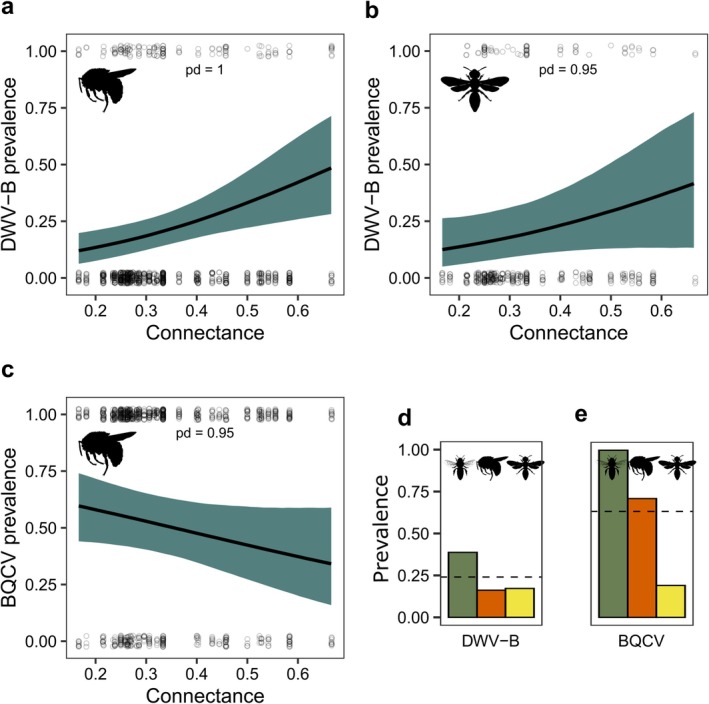 Figure 1
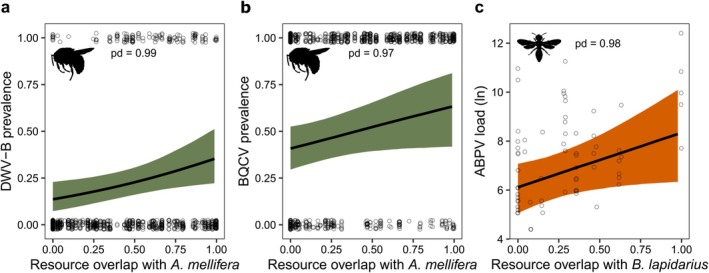 Figure 2
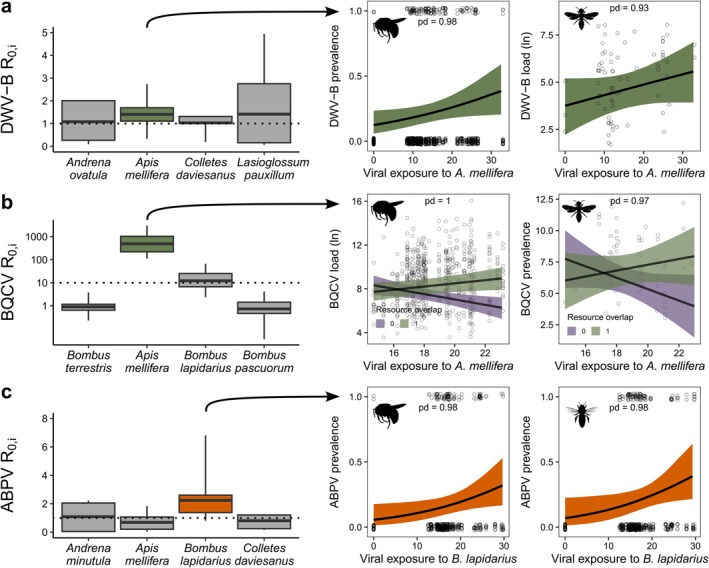 Figure 3
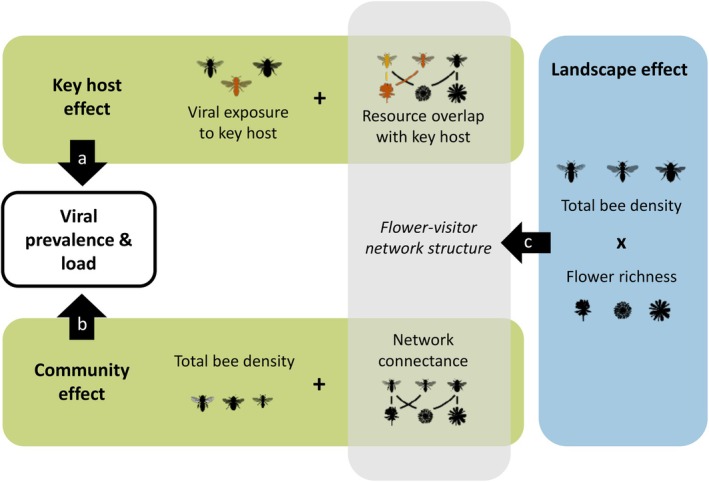 Figure 4
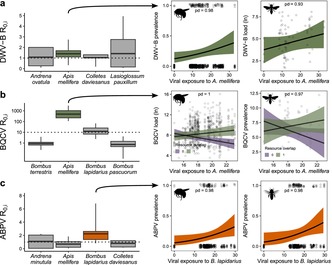 Figure 5
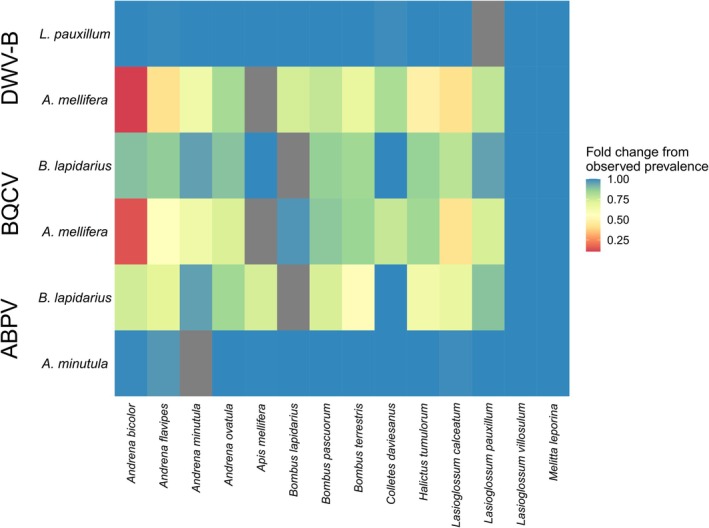 Figure 6
Peer Reviews
No public reviews on file for this paper yet. If you reviewed it on a platform where reviews are public (OpenReview, ICLR, NeurIPS, ICML), you can paste yours below so the community can read it here.
Videos
No videos yet. Explain this paper in a talk, walkthrough, or lecture? Add one.
Taxonomy
TopicsInsect and Pesticide Research · Insect and Arachnid Ecology and Behavior · Plant and animal studies