Yeast elongation factor homolog New1 protects a subset of mRNAs from degradation by no-go decay
Max Müller, Lena Sophie Tittel, Elisabeth Petfalski, Kaushik Viswanathan Iyer, Alina-Andrea Kraft, Stefan Pastore, Tamer Butto, Marie-Luise Winz

TL;DR
The yeast protein New1 prevents certain mRNAs from being degraded by a process called no-go decay, which affects essential proteins and causes growth issues when New1 is missing.
Contribution
New1 is shown to protect specific mRNAs from no-go decay, revealing a novel role in mRNA stability and cellular growth regulation.
Findings
New1 absence causes ribosome queuing and mRNA degradation via no-go decay triggered by Hel2.
139 target mRNAs are identified with unique structural and queuing features.
NGD leads to downregulation of essential proteins like Pgk1 and Gpm1 in New1-deficient cells.
Abstract
New1 is a homologue of the essential yeast translation elongation factor eEF3. Lack of New1 has been shown to induce ribosome queuing upstream of the stop codon on messenger RNAs (mRNAs) with specific C-terminal lysine and arginine codons. Here, we used ultraviolet crosslinking and analysis of complementary DNA (cDNA), long-read nanopore sequencing, and proteomics to address the consequences such queues have for the yeast cell. We show that these queues represent collisions, recognized by collision sensor Hel2, triggering mRNA degradation via canonical no-go decay (NGD). We identified 139 target mRNAs, on which decay is initiated by Cue2-mediated cleavage upstream of the stop codon. Compared to other collision-prone mRNAs, ending on the same C-terminal codons, these targets are characterized by stronger secondary structures upstream of the stop codon, longer queues, and stronger queuing…
Genes, proteins, chemicals, diseases, species, mutations and cell lines named across the full text — each resolved to its canonical identifier and authoritative record.
Click any figure to enlarge with its caption.
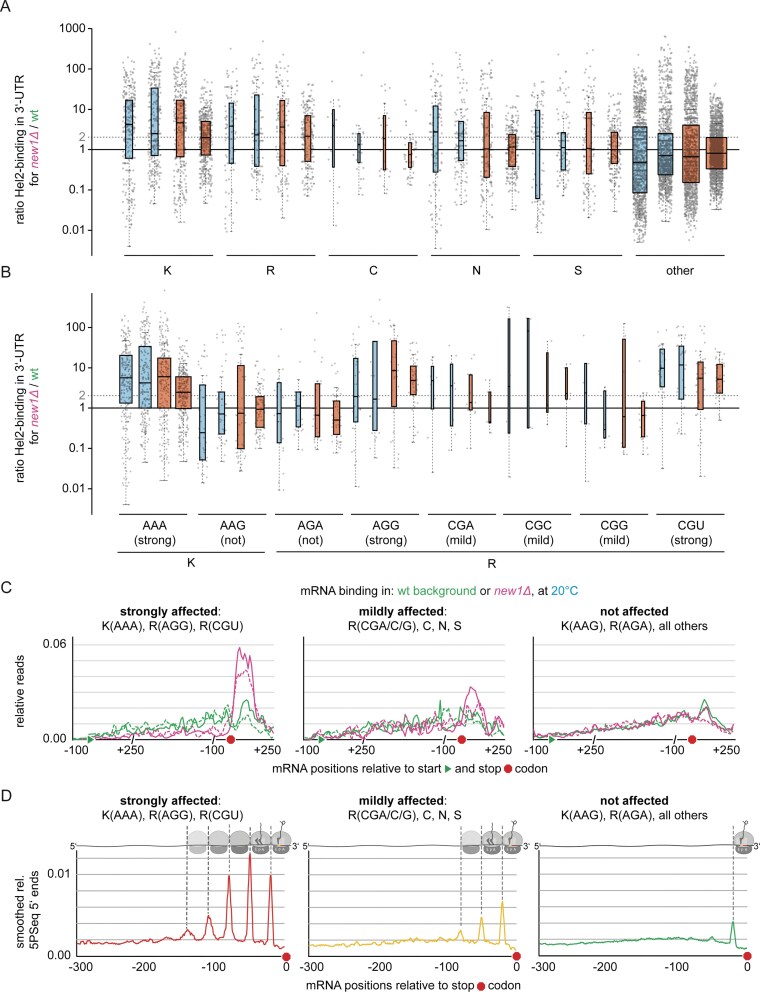 Figure 1
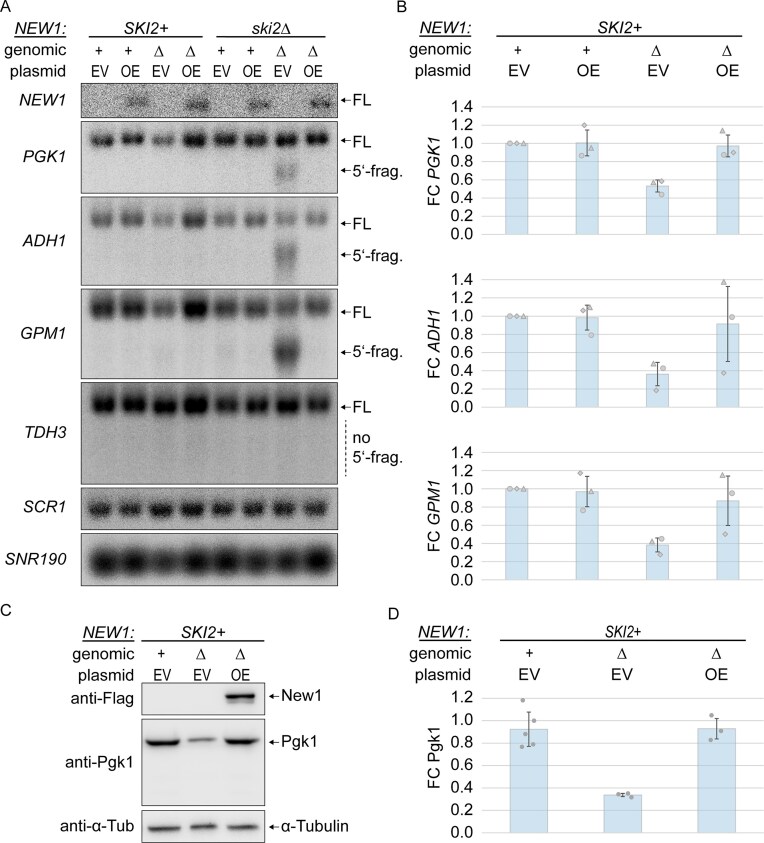 Figure 2
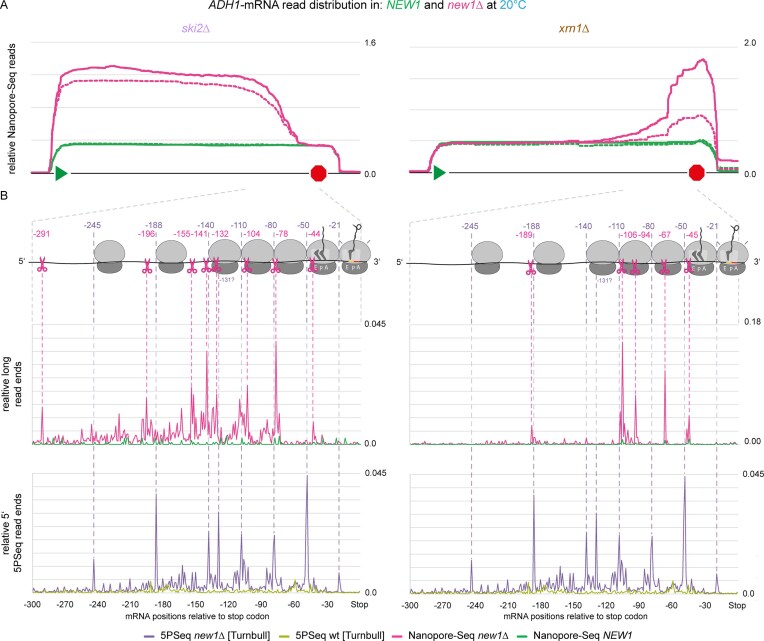 Figure 3
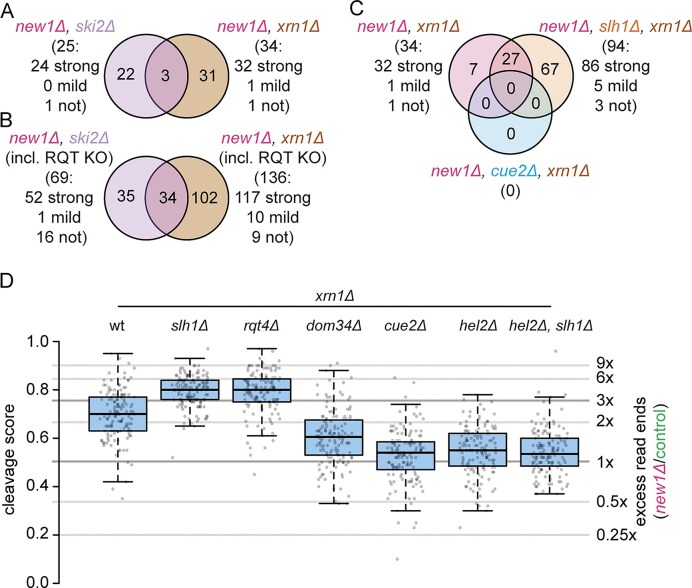 Figure 4
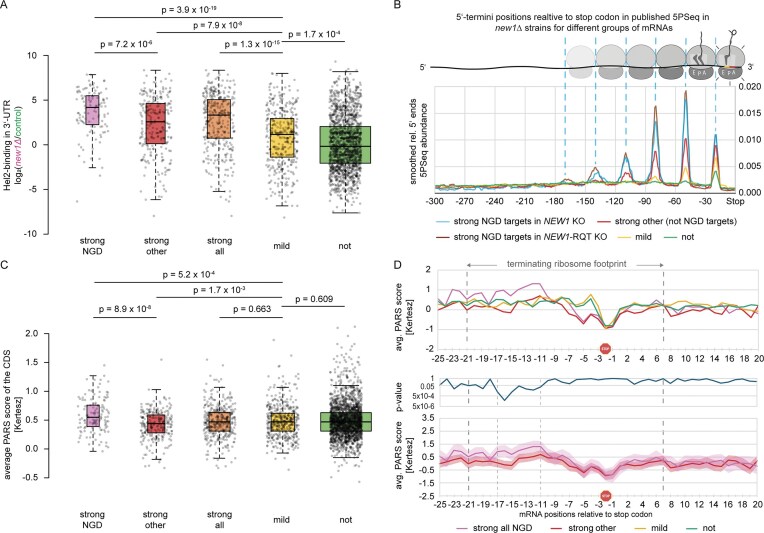 Figure 5
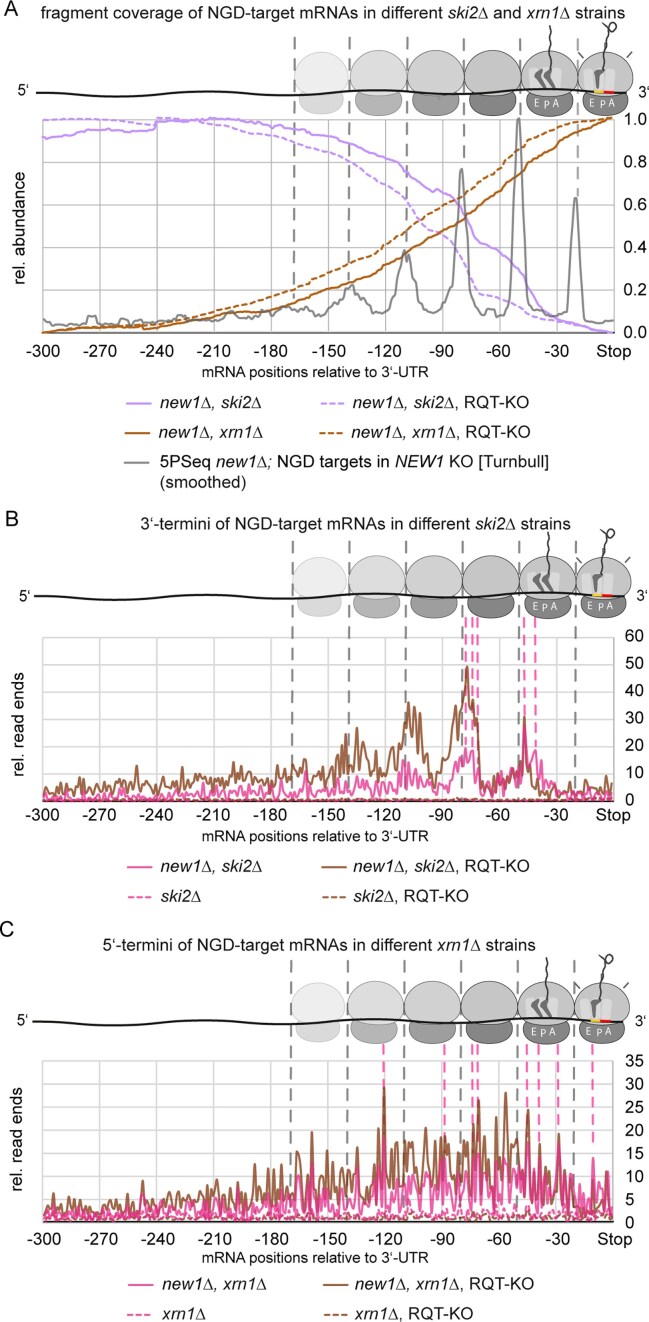 Figure 6
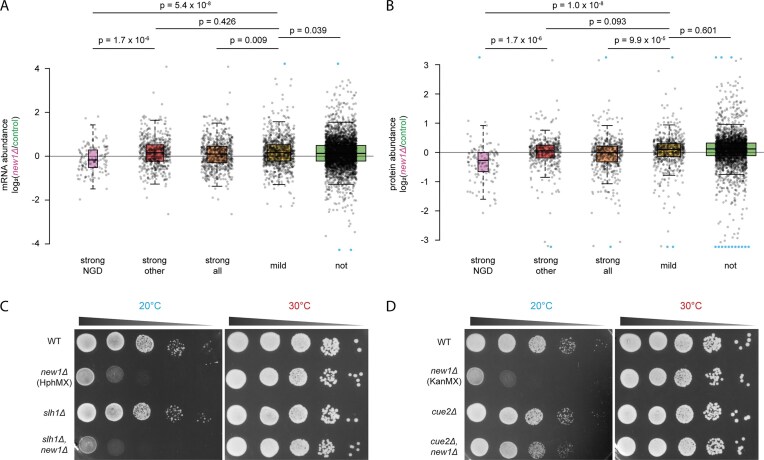 Figure 7
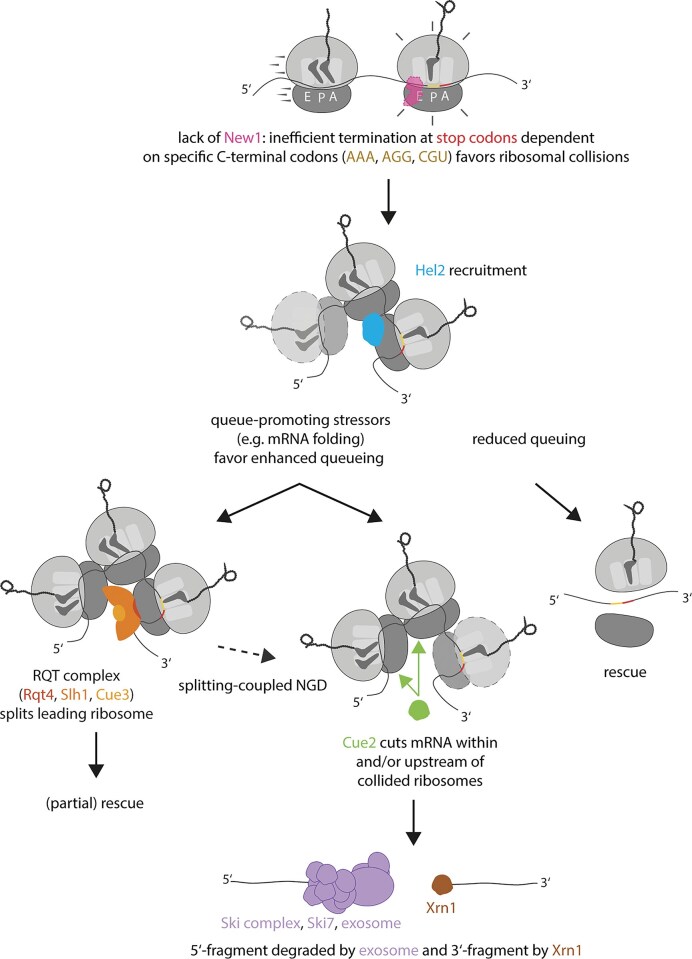 Figure 8
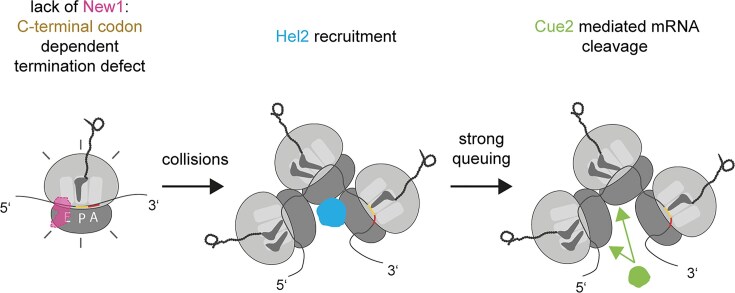 Figure 9
Peer Reviews
No public reviews on file for this paper yet. If you reviewed it on a platform where reviews are public (OpenReview, ICLR, NeurIPS, ICML), you can paste yours below so the community can read it here.
Videos
No videos yet. Explain this paper in a talk, walkthrough, or lecture? Add one.
Taxonomy
TopicsRNA and protein synthesis mechanisms · RNA Research and Splicing · RNA modifications and cancer