Tuning valley polarization of moiré trapped biexcitons by fine structure occupation in WS2/WSe2 heterostructures
Yufei Jiang, Yongzhi She, Xinke Cheng, Qinghai Tan, Jinlong Yang, Yilong Zhao, Peiwu Liu, Min Wu, Xiaotian Dai, Zengkai Wang, Hongbing Cai, Nan Pan, Xiaoping Wang

TL;DR
Researchers found a way to control valley polarization in WS2/WSe2 heterostructures by manipulating biexcitons, achieving up to 55% polarization at 120 K.
Contribution
The study demonstrates tunable valley polarization in moiré-trapped biexcitons through fine structure occupation.
Findings
Valley polarization of moiré-trapped biexcitons reaches ~55% at 120 K.
Fine structure splitting of 2.77 meV is observed and matches theoretical predictions.
Abstract
Two-dimensional transition metal dichalcogenides (TMDs) heterostructures formed moiré superlattices have emerged as a new platform for exploring correlated excitonic states and valleytronic phenomena. Despite the significant progress in moiré-trapped single excitons, the valley polarization and fine structure of moiré-trapped biexcitons remain poorly understood, with the existing studies reporting only limited or zero polarization and lacking insight into the underlying mechanisms. Here, we study the moiré-trapped interlayer biexcitons in WS2/WSe2 heterostructures through power- and temperature-dependent photoluminescence (PL) spectroscopy. We find that the valley polarization of these biexcitons can be effectively tuned, reaching ~\documentclass[12pt]{minimal} \usepackage{amsmath} \usepackage{wasysym} \usepackage{amsfonts} \usepackage{amssymb} \usepackage{amsbsy}…
Genes, proteins, chemicals, diseases, species, mutations and cell lines named across the full text — each resolved to its canonical identifier and authoritative record.
Click any figure to enlarge with its caption.
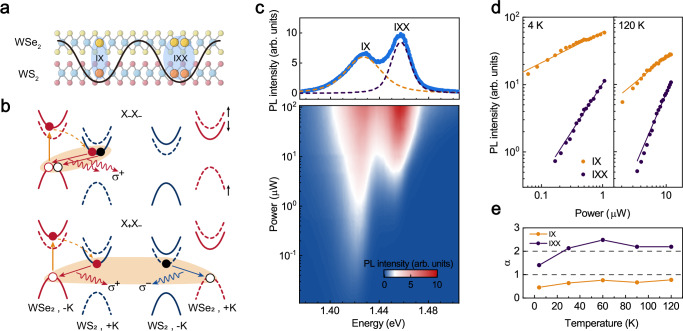 Figure 1
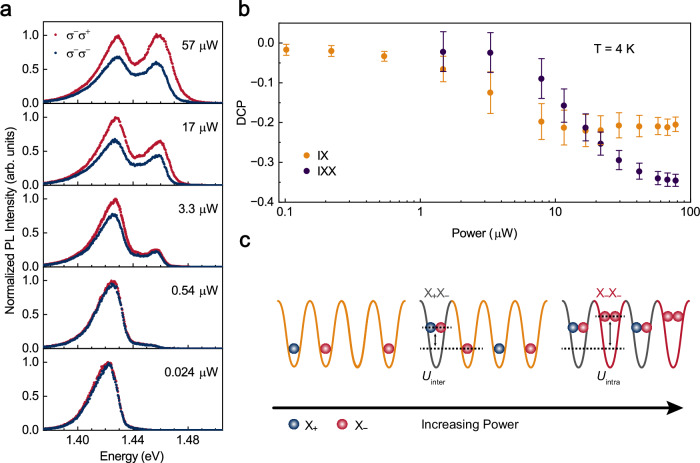 Figure 2
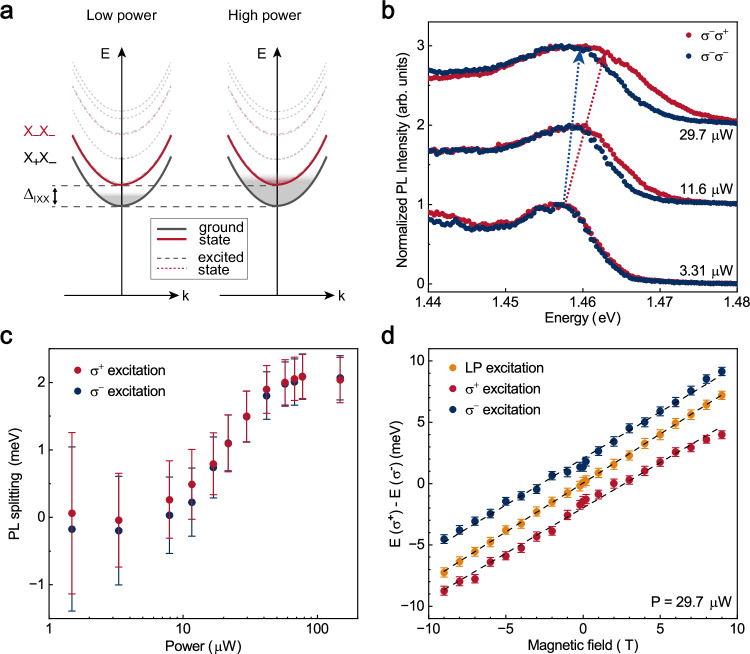 Figure 3
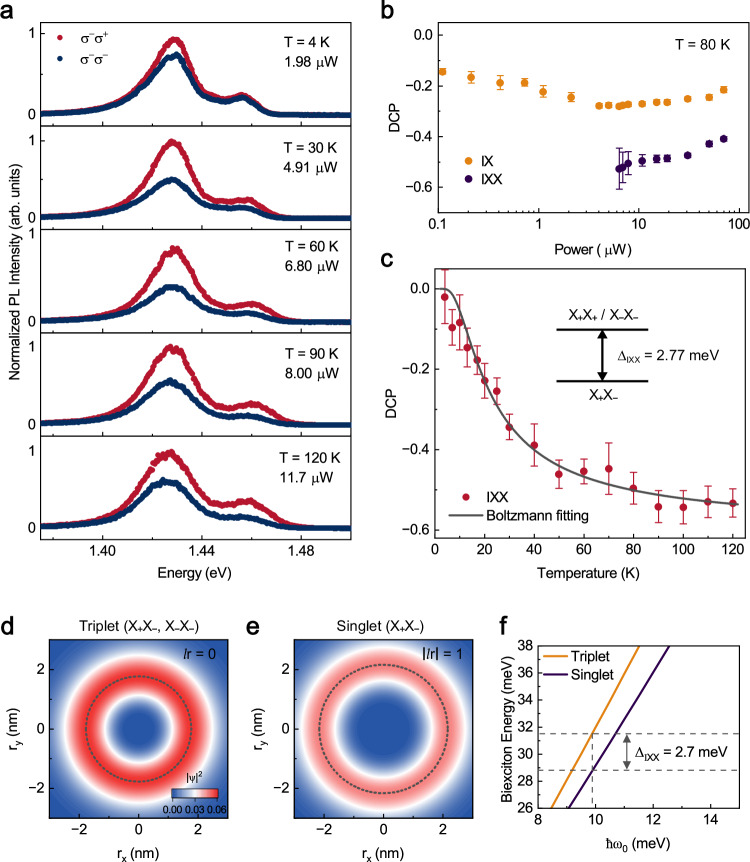 Figure 4
Peer Reviews
No public reviews on file for this paper yet. If you reviewed it on a platform where reviews are public (OpenReview, ICLR, NeurIPS, ICML), you can paste yours below so the community can read it here.
Videos
No videos yet. Explain this paper in a talk, walkthrough, or lecture? Add one.
Taxonomy
Topics2D Materials and Applications · Graphene research and applications · Organic and Molecular Conductors Research