Operationally classical simulation of quantum states
Gabriele Cobucci, Alexander Bernal, Martin J. Renner, Armin Tavakoli

TL;DR
The paper introduces classical models to simulate quantum states by combining devices that cannot generate superpositions, offering insights into quantum coherence and classical limitations.
Contribution
The novel contribution is introducing classical models that stochastically combine devices to simulate quantum states and determining exact noise rates for classical simulation.
Findings
Classical models can simulate quantum states using stochastically coordinated devices.
Exact noise rates for classical simulation of quantum state spaces are determined.
Connections between classicality and quantum concepts like joint measurability and EPR steering are revealed.
Abstract
A classical state-preparation device cannot generate states in relative superposition. We introduce classical models in which devices that are individually unable to generate states with relative superposition can be stochastically coordinated to simulate sets of quantum states. These models have natural operational interpretation in prepare-and-measure scenarios and they can account for many non-commuting quantum state sets. We develop systematic methods both for classically simulating quantum sets and for showing that no such simulation exists, thereby certifying quantum coherence. In particular, we determine the exact noise rates required to classically simulate the entire state space of quantum theory. We also reveal connections between the operational classicality of sets and the well-known fundamental concepts of joint measurability and Einstein-Podolsky-Rosen steering. Here, we…
Genes, proteins, chemicals, diseases, species, mutations and cell lines named across the full text — each resolved to its canonical identifier and authoritative record.
Click any figure to enlarge with its caption.
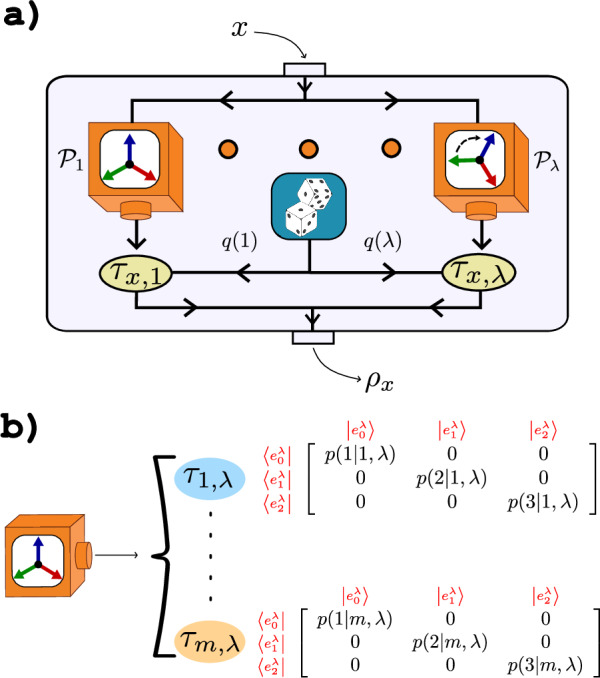 Figure 1
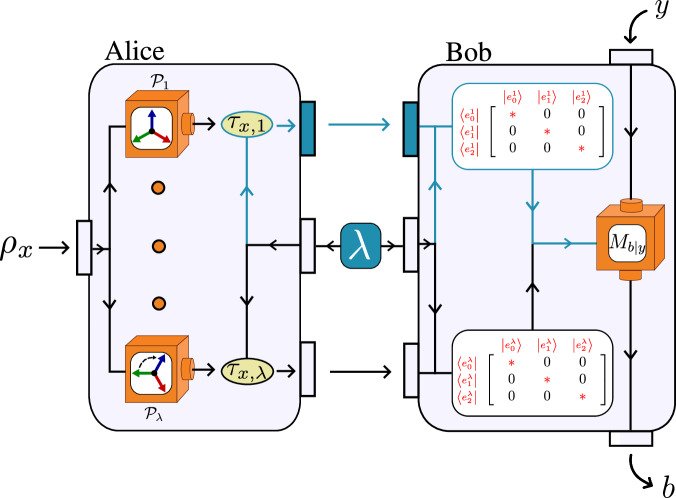 Figure 2
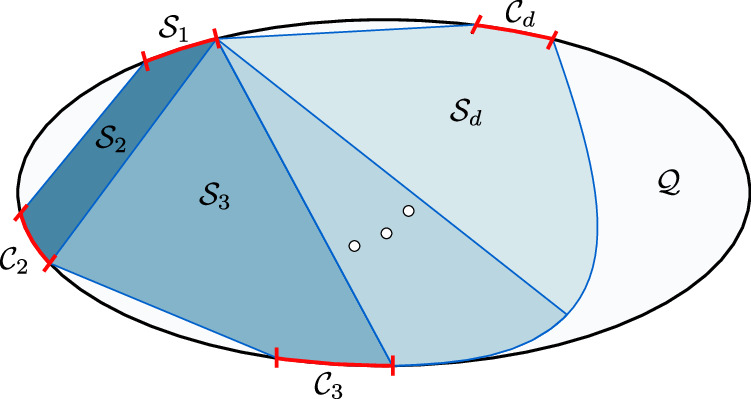 Figure 3
 Figure 4
Peer Reviews
No public reviews on file for this paper yet. If you reviewed it on a platform where reviews are public (OpenReview, ICLR, NeurIPS, ICML), you can paste yours below so the community can read it here.
Videos
No videos yet. Explain this paper in a talk, walkthrough, or lecture? Add one.
Taxonomy
TopicsQuantum Mechanics and Applications · Quantum Computing Algorithms and Architecture