Bernoulli’s principle-mediated Cl2 electrosynthesis
Zhihao Nie, Guoliang Xu, Jingjing Duan, Markus Antonietti, Sheng Chen

TL;DR
A new electrochemical system uses Bernoulli’s principle to efficiently and cost-effectively produce chlorine gas (Cl2) by controlling gas migration and preventing product crossover.
Contribution
A novel Cl2 electrosynthesis method using Bernoulli’s principle for gas separation in a three-phase system without membranes.
Findings
The system achieves Faradaic efficiencies of 96.3% to 87.6% across a wide current density range.
The method reduces Cl2 production costs by 6.75%, saving about $1.17 million annually compared to traditional methods.
The pH-tolerant design allows Cl2 production under varying electrolyte conditions without a membrane.
Abstract
Existing technologies for chlorine (Cl2) synthesis are generally suffered from low productivity or high production cost. Guided by Bernoulli’s principle, here we report an efficient yet cost-effective electrochemical system for Cl2 electrosynthesis, which is composed of anodic chlorine evolution reaction (CER) connected to gas chamber by triple-phase gas diffusion layer. The key is to modulate gas diffusion layer by Bernoulli’s principle, wherein the pressure difference at triple-phase boundary drives oriented Cl2 migration directly into gas chamber, thus preventing the crossover of anodic/cathodic products. By further joining with a pH-tolerant catalyst, a standalone prototype device is built for high-rate Cl2 production, operating at the Faradaic efficiencies of 96.3% ~ 87.6% in the current density range of 0.1 ~ 1.14 A cm−2, having superior Cl2 synthesis performance. Further…
Genes, proteins, chemicals, diseases, species, mutations and cell lines named across the full text — each resolved to its canonical identifier and authoritative record.
Click any figure to enlarge with its caption.
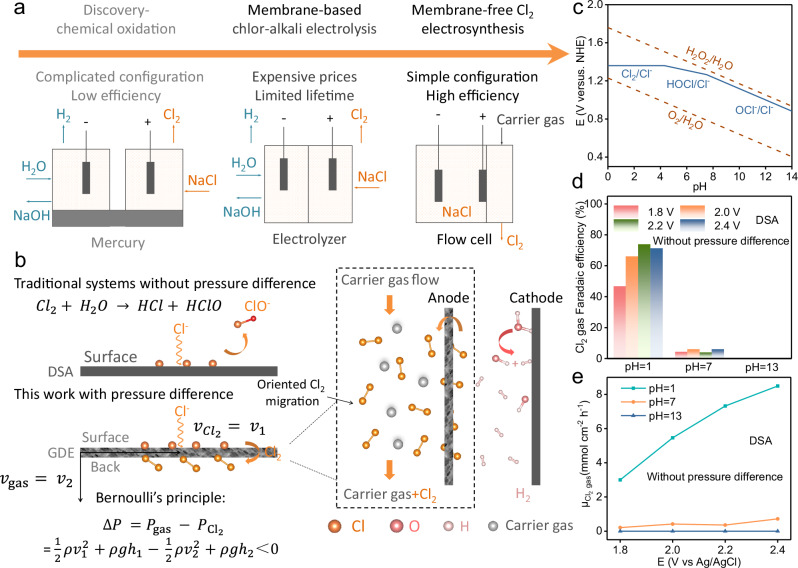 Figure 1
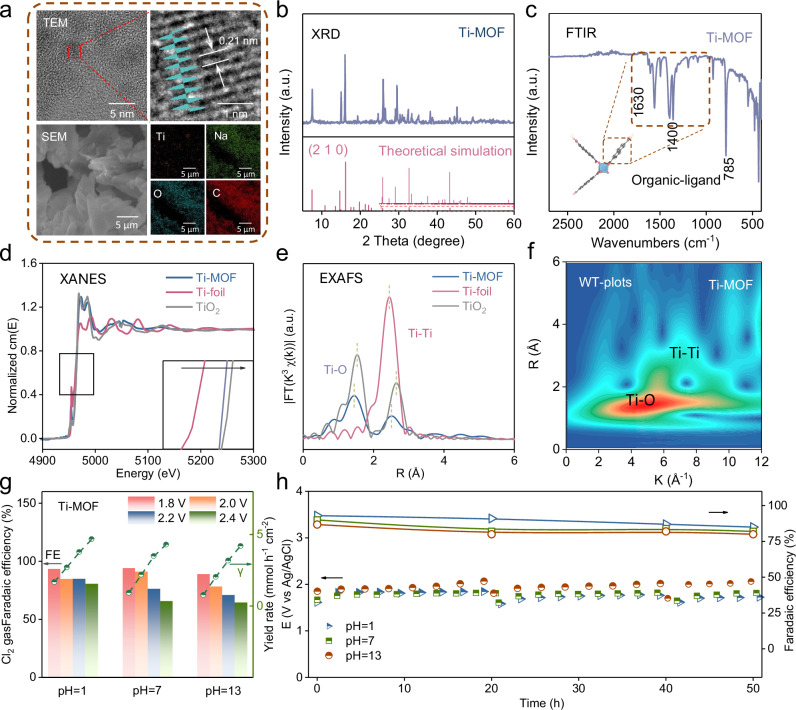 Figure 2
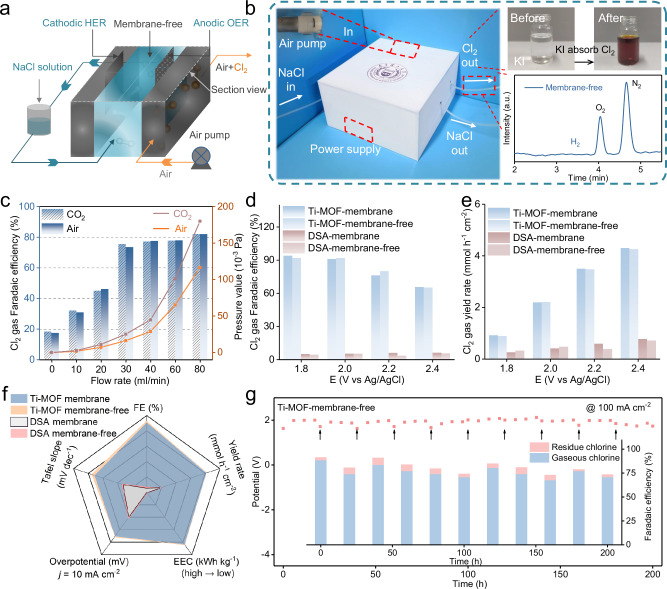 Figure 3
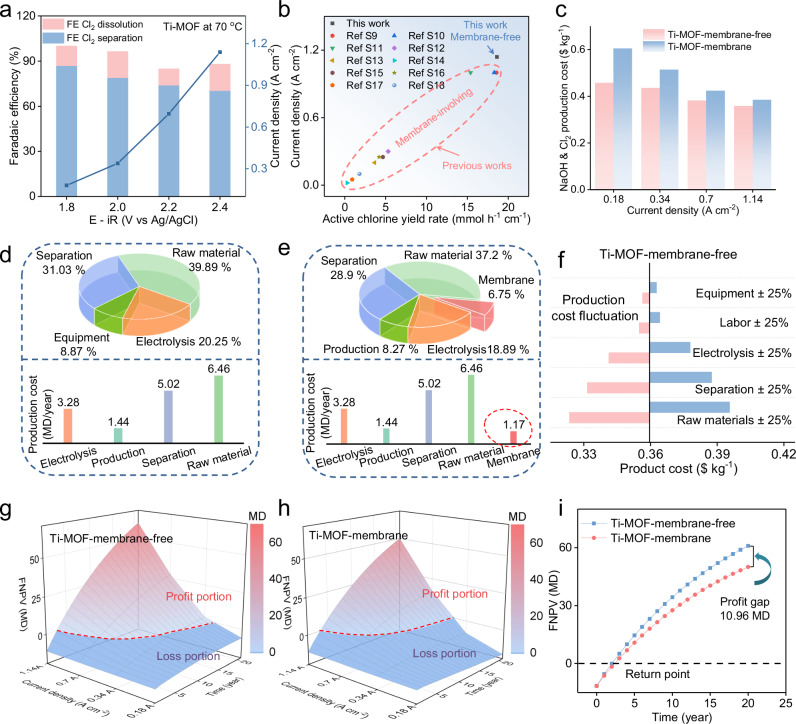 Figure 4
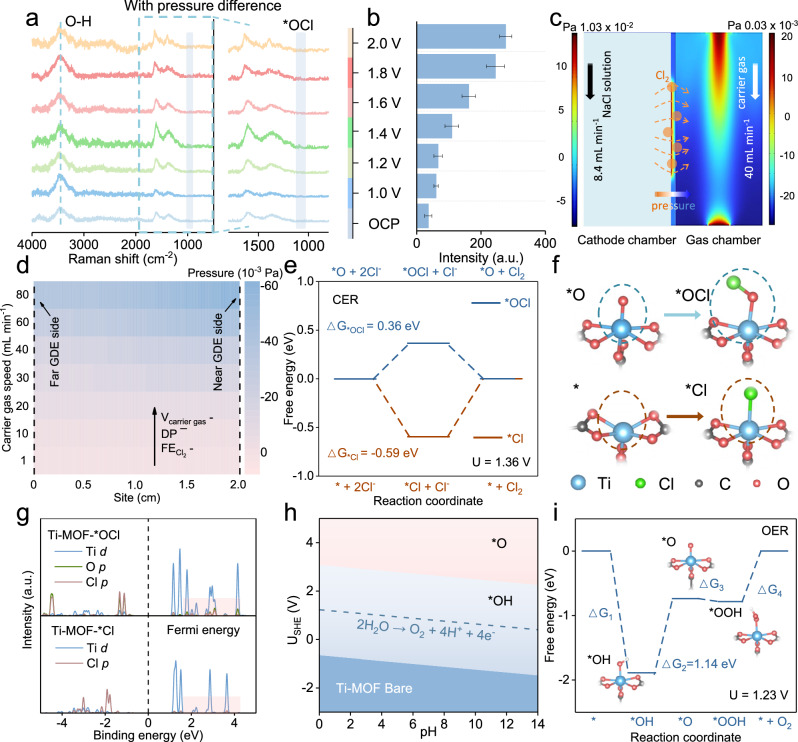 Figure 5
Peer Reviews
No public reviews on file for this paper yet. If you reviewed it on a platform where reviews are public (OpenReview, ICLR, NeurIPS, ICML), you can paste yours below so the community can read it here.
Videos
No videos yet. Explain this paper in a talk, walkthrough, or lecture? Add one.
Taxonomy
TopicsEnvironmental remediation with nanomaterials · Water Treatment and Disinfection · Membrane-based Ion Separation Techniques