Virtual reality–based assessment of visuo-vestibular integration in vestibular migraine and migraine: static and dynamic visual vertical and rod-and-frame tests
Hanifi Korkmaz, Sibel Çıplak, Rania Alkahtani

TL;DR
This study uses virtual reality to assess balance and visual perception in people with vestibular migraine and migraine, finding that dynamic tests better reflect their daily challenges.
Contribution
A novel VR-based protocol combining static and dynamic visuo-vestibular tests for evaluating vestibular migraine.
Findings
VM patients showed greater SVV and DSVV deviations compared to healthy controls.
RFT revealed strong visual dependence in VM patients, with significant group differences.
DSVV and RFT scores correlated more strongly with disability than static SVV.
Abstract
Vestibular migraine (VM) is the most common cause of episodic vertigo, yet its diagnostic markers remain limited. Perception of verticality, measured via static subjective visual vertical (SVV), dynamic SVV (DSVV), and the rod-and-frame test (RFT), provides insight into visuo-vestibular integration. Traditional approaches, however, often test these paradigms in isolation with limited ecological validity. To evaluate a novel virtual reality (VR)-based protocol combining SVV, DSVV, and RFT to characterize visuo-vestibular integration in VM, migraine without vestibular symptoms (M), and healthy controls (HC). Fifty participants (VM n = 15, M n = 15, HC n = 20) completed VR-based SVV, DSVV, and RFT assessments using the BalanceVR system. Disability was assessed using the Dizziness Handicap Inventory (DHI) and Migraine Disability Assessment (MIDAS). Between-group differences were analyzed…
Genes, proteins, chemicals, diseases, species, mutations and cell lines named across the full text — each resolved to its canonical identifier and authoritative record.
Click any figure to enlarge with its caption.
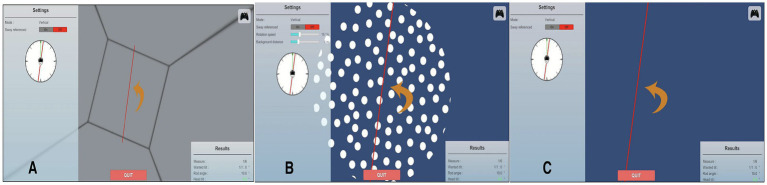 Figure 1
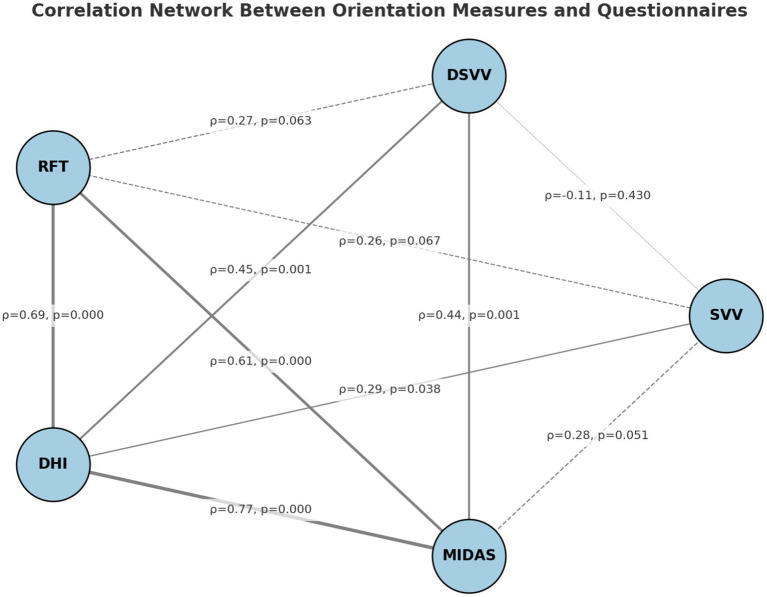 Figure 2
Peer Reviews
No public reviews on file for this paper yet. If you reviewed it on a platform where reviews are public (OpenReview, ICLR, NeurIPS, ICML), you can paste yours below so the community can read it here.
Videos
No videos yet. Explain this paper in a talk, walkthrough, or lecture? Add one.
Taxonomy
TopicsVestibular and auditory disorders · Tactile and Sensory Interactions · Hearing, Cochlea, Tinnitus, Genetics