Design and optimization of CIGS-based solar cell with surface dielectric nanostructures arrangement
Fatma M. Abdel Hamied, Roaa I. Mubarak, K. R. Mahmoud, Mohamed Farhat O. Hameed, S. S. A. Obayya, R. El-Bashar

TL;DR
This paper presents a new design for CIGS solar cells using dielectric nanostructures to improve efficiency and reduce costs.
Contribution
A novel cubic AlAs nanoparticle design is introduced, achieving higher absorption and efficiency in CIGS solar cells.
Findings
Cubic AlAs nanoparticles achieved 93.5% average absorption, a 31.7% improvement over the baseline.
The cubic design's power conversion efficiency reached 17.6%, up from 12.56% in conventional designs.
The approach offers cost-effective, high-efficiency solar cells with reduced material usage.
Abstract
This study introduces a novel design of copper indium gallium selenide (CIGS) thin-film solar cells by incorporating aluminum arsenide (AlAs) dielectric nano-particles on the front surface. Three nanoparticle geometries-cubic, cylindrical, and spherical—are explored to enable broadband light absorption and enhance overall device efficiency. The optimization of structural parameters is performed using the particle swarm optimization (PSO) algorithm in conjunction with the Lumerical finite-difference time-domain (FDTD) solver. Simulation results demonstrate that the cubic nanoparticle design delivers the highest performance, achieving an average absorption of 93.5%, corresponding to 31.7% improvement over the baseline cell. The enhanced performance of cubic AlAs nano-particles arises from their support of broadband, high-order Mie resonances, enabled by sharp edges and flat facets.…
Genes, proteins, chemicals, diseases, species, mutations and cell lines named across the full text — each resolved to its canonical identifier and authoritative record.
Click any figure to enlarge with its caption.
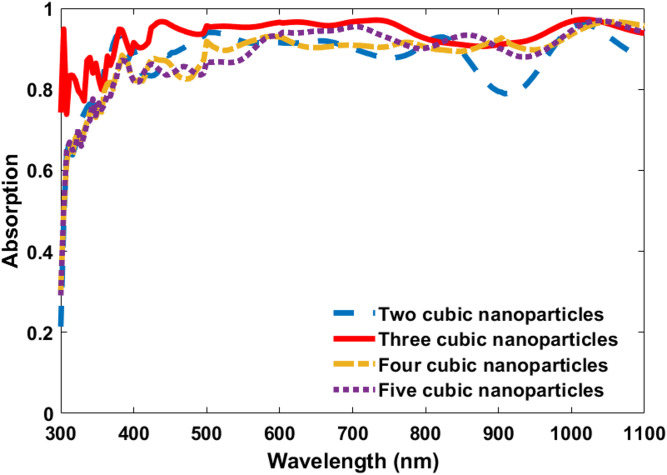 Figure 10
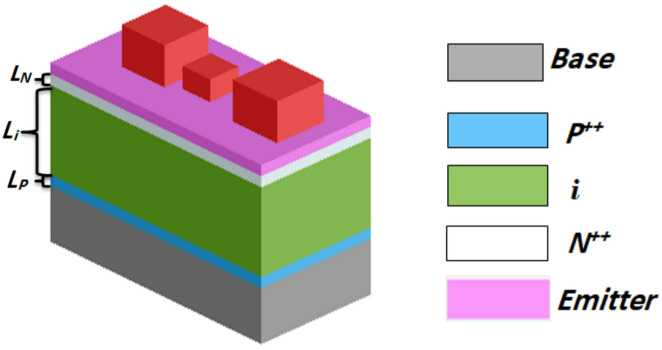 Figure 11
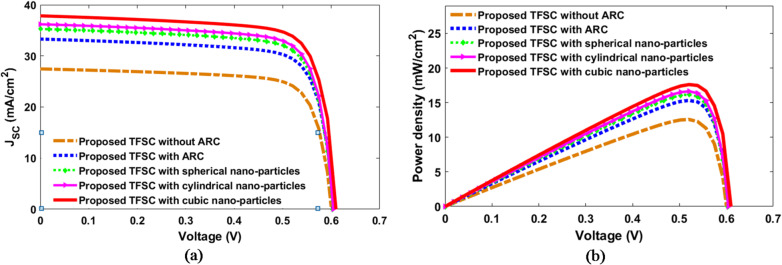 Figure 12
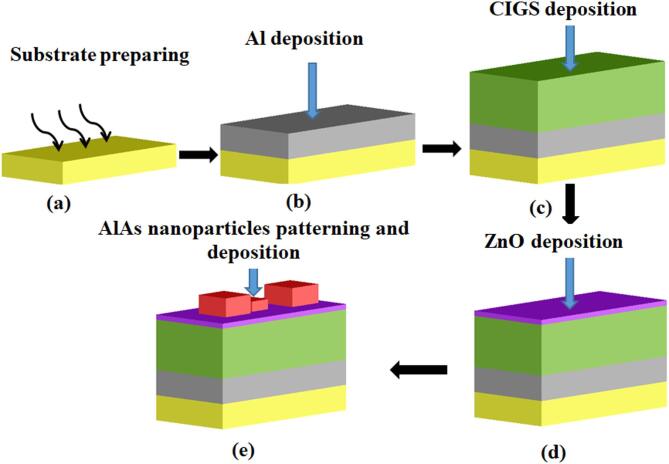 Figure 13
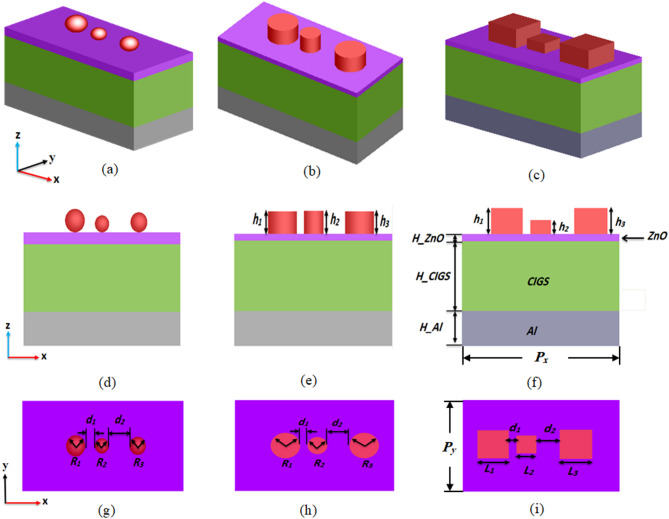 Figure 1
 Figure 2
 Figure 3
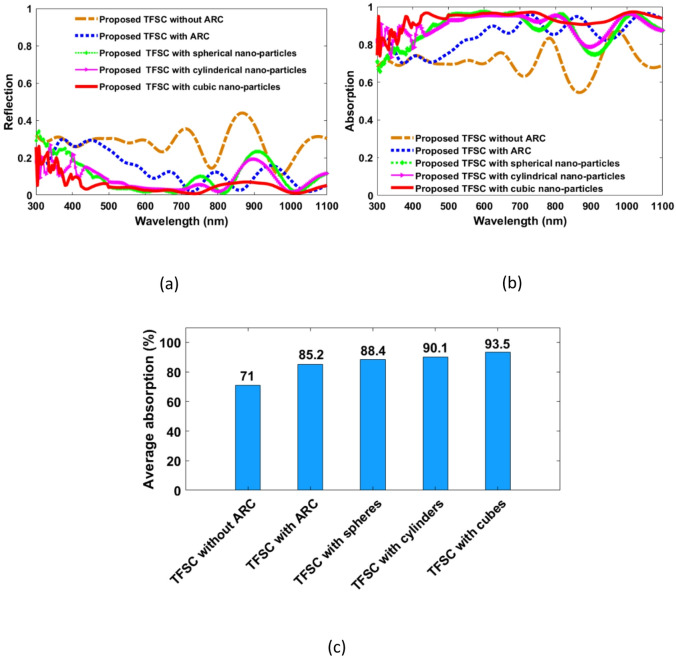 Figure 4
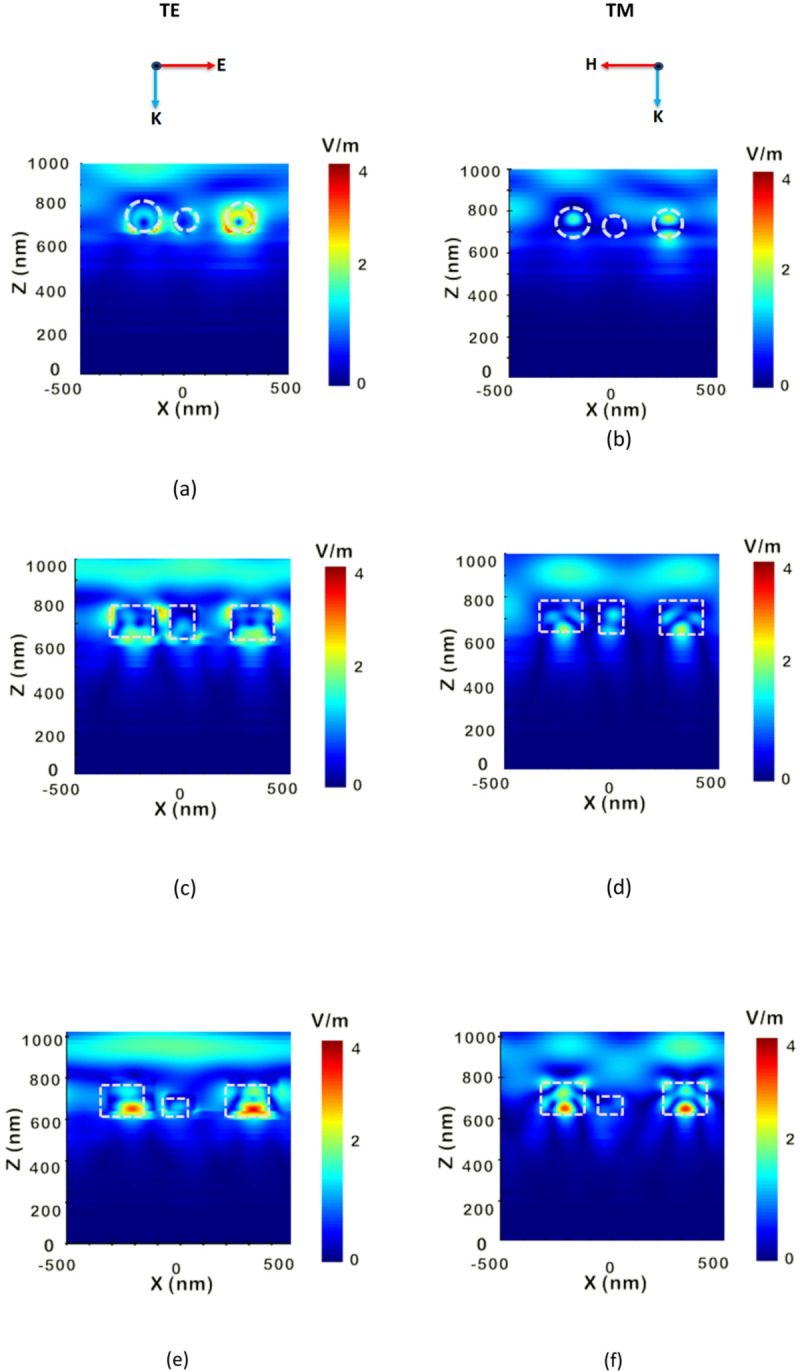 Figure 5
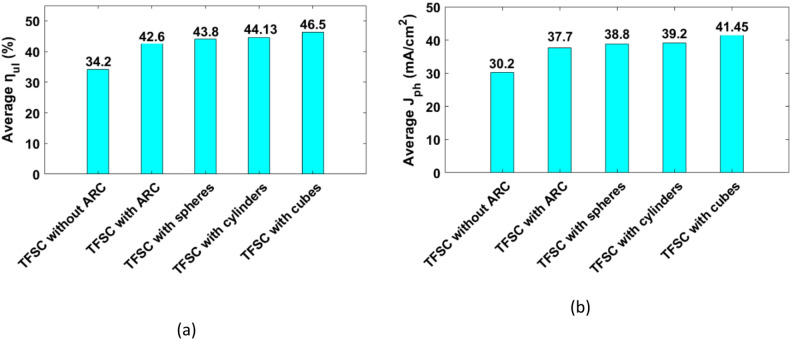 Figure 6
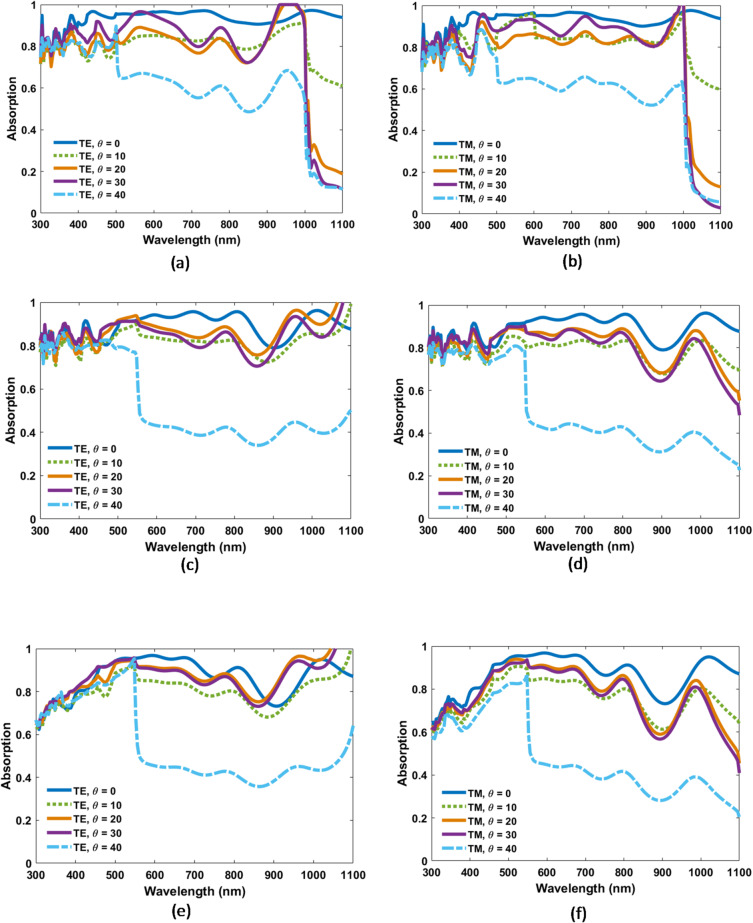 Figure 7
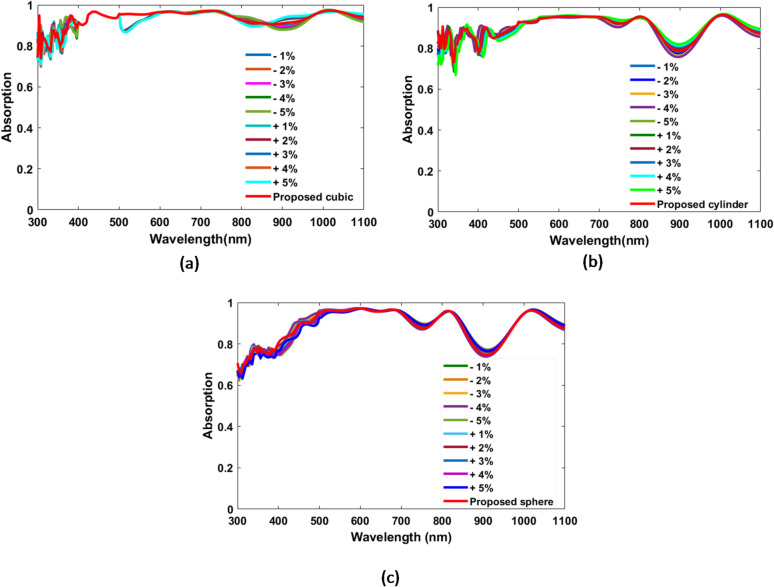 Figure 8
 Figure 9
Peer Reviews
No public reviews on file for this paper yet. If you reviewed it on a platform where reviews are public (OpenReview, ICLR, NeurIPS, ICML), you can paste yours below so the community can read it here.
Videos
No videos yet. Explain this paper in a talk, walkthrough, or lecture? Add one.
Taxonomy
TopicsChalcogenide Semiconductor Thin Films · ZnO doping and properties · Optical Coatings and Gratings