Dual-channel high-speed functional photoacoustic microscopy with ultra-wide field of view
Van Tu Nguyen, Carlos Taboada, Jesse Delia, Tri Vu, Luca Menozzi, Soon-Woo Cho, Jing Li, Nishad Jayasundara, Anthony DiSpirito, Junjie Yao

TL;DR
A new dual-channel photoacoustic microscope captures large areas quickly and clearly, enabling detailed studies of whole organs or bodies in live animals.
Contribution
DC-PAM introduces a dual-channel design that achieves ultra-wide field of view without sacrificing speed or resolution.
Findings
DC-PAM achieves an ultra-wide FOV of 22.5 × 24 mm² with ~15 s functional imaging time.
Proof-of-concept experiments show DC-PAM's utility in tracking physiological processes in zebrafish, mice, and glassfrogs.
The system supports whole-organ and whole-body imaging in freely moving or active animals.
Abstract
Photoacoustic microscopy (PAM) systems often face challenges in simultaneously achieving high speed, high resolution, high sensitivity, and a large field of view (FOV). To address this challenge, we have developed dual-channel PAM (DC-PAM) that can expand the FOV without compromising the imaging speed, detection sensitivity, or spatial resolution. DC-PAM has two identical, independent channels of laser excitation and acoustic detection. It exploits two facets of a single hexagon scanner to concurrently steer the dual excitation laser beams and the resultant acoustic waves. DC-PAM achieves an ultra-wide FOV of 22.5 × 24 mm² with a total functional imaging time of ~15 s. Proof-of-concept experiments were conducted using DC-PAM on freely-swimming zebrafish, hypoxia-challenged mice, and sleeping glassfrogs, all of which benefit from the large FOV and high imaging speed to track the dynamic…
Genes, proteins, chemicals, diseases, species, mutations and cell lines named across the full text — each resolved to its canonical identifier and authoritative record.
Click any figure to enlarge with its caption.
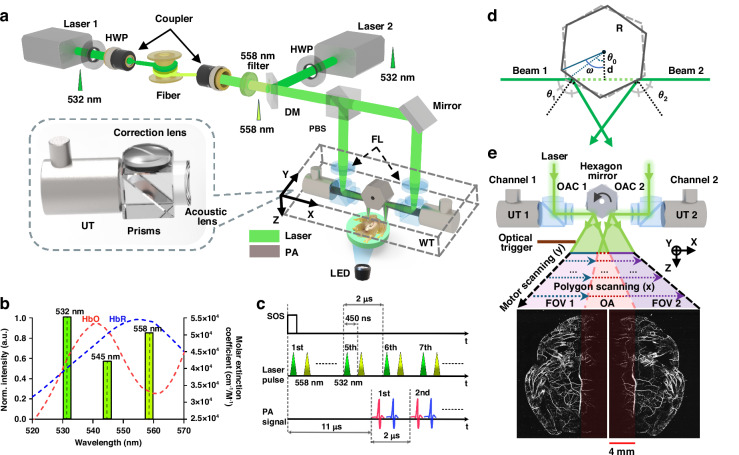 Figure 1
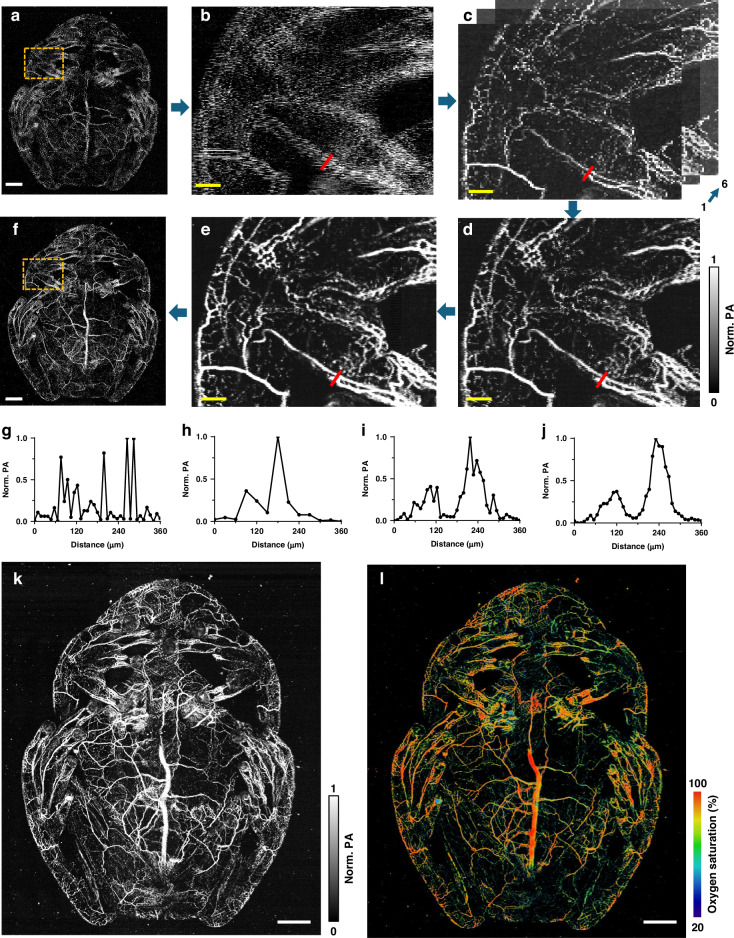 Figure 2
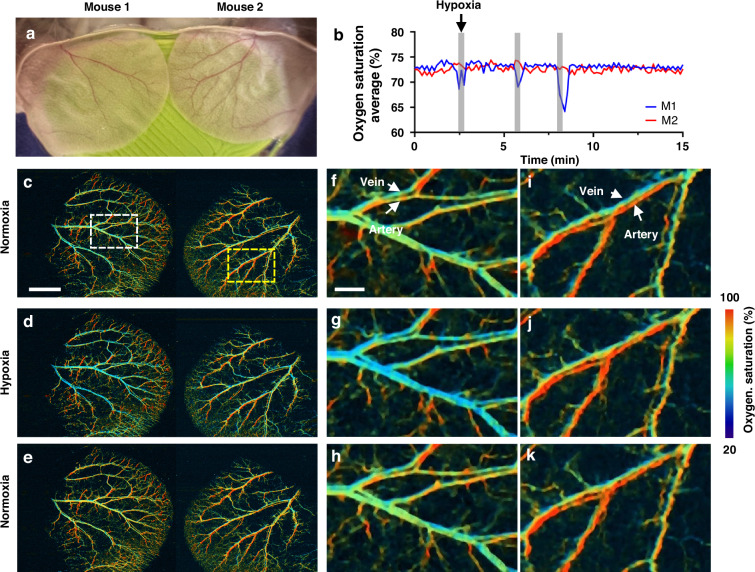 Figure 3
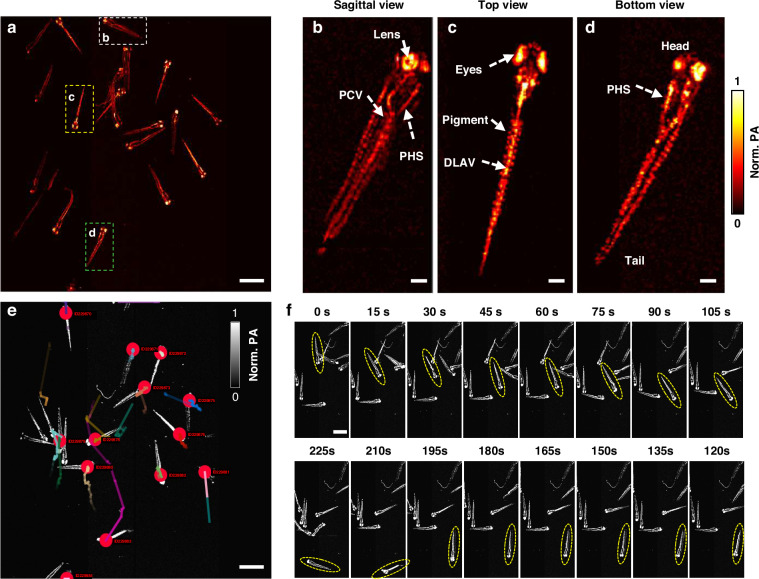 Figure 4
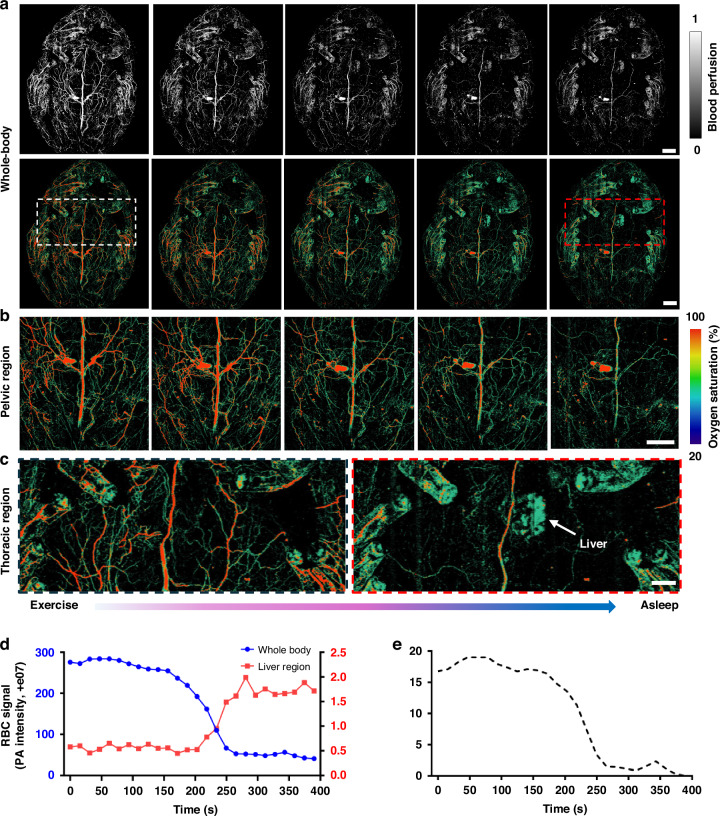 Figure 5
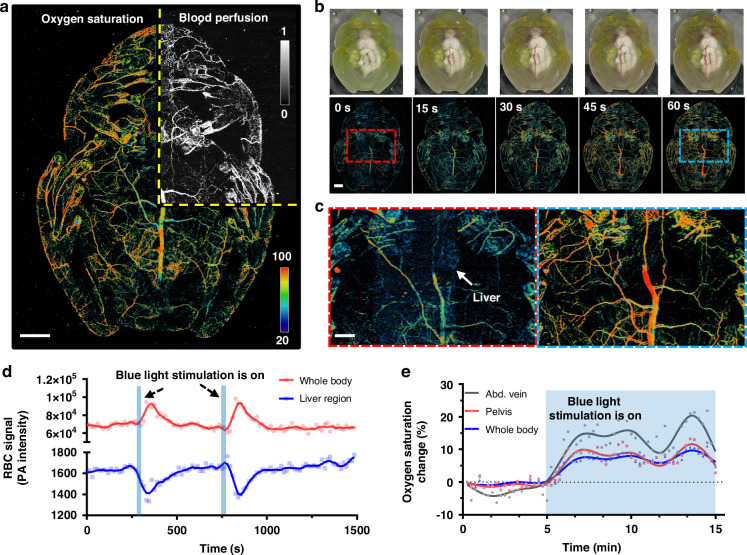 Figure 6
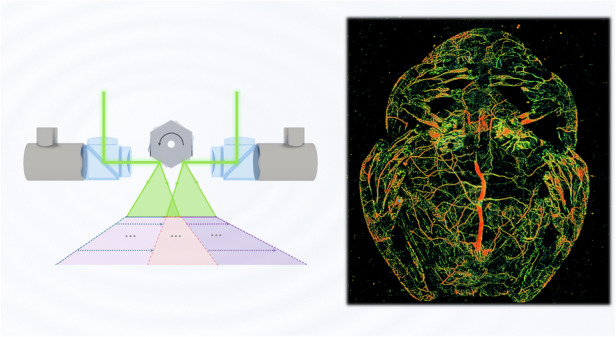 Figure 7
Peer Reviews
No public reviews on file for this paper yet. If you reviewed it on a platform where reviews are public (OpenReview, ICLR, NeurIPS, ICML), you can paste yours below so the community can read it here.
Videos
No videos yet. Explain this paper in a talk, walkthrough, or lecture? Add one.
Taxonomy
TopicsPhotoacoustic and Ultrasonic Imaging · Digital Holography and Microscopy · Advanced Fluorescence Microscopy Techniques