Inactivation of Ebola, Nipah, and Lassa viruses in tissue using neutral buffered formalin, MagMAX lysis/binding solution, or TriPure isolation reagent
Katherine A. Davies, Stephen R. Welch, Brian H. Harcourt, Christina F. Spiropoulou, Jessica R. Spengler

TL;DR
This study shows that Ebola, Nipah, and Lassa viruses in tissues can be effectively inactivated using specific solutions, allowing safer handling at lower biocontainment levels.
Contribution
The study provides validated inactivation protocols for three high-consequence viruses using common laboratory reagents.
Findings
Neutral-buffered formalin and MagMAX lysis/binding solution effectively inactivated all three viruses.
TriPure isolation reagent also achieved ≥ 4 log10 reduction in viral load.
Inactivation was confirmed at multiple timepoints, supporting safe downstream analyses.
Abstract
Samples known or suspected to be infected with high-consequence viruses such as Ebola, Nipah, and Lassa must be handled under high biocontainment. Studies involving animal infections with these pathogens can generate tissues that require downstream analyses, including molecular assays and histopathology, which are more readily performed, or in some cases only feasible, at lower containment levels. Before removal from high containment for analyses at lower containment levels, specimens must undergo validated inactivation procedures. Here, we quantified viral load reduction in tissues infected with these pathogens following treatment with neutral-buffered formalin for 10 min, 1 h, 3 days, or 7 days, and MagMAX lysis/binding solution concentrate or TriPure isolation reagent for 1 or 10 min. To ensure accurate detection of any residual infectious virus, samples were purified through resins…
Genes, proteins, chemicals, diseases, species, mutations and cell lines named across the full text — each resolved to its canonical identifier and authoritative record.
Click any figure to enlarge with its caption.
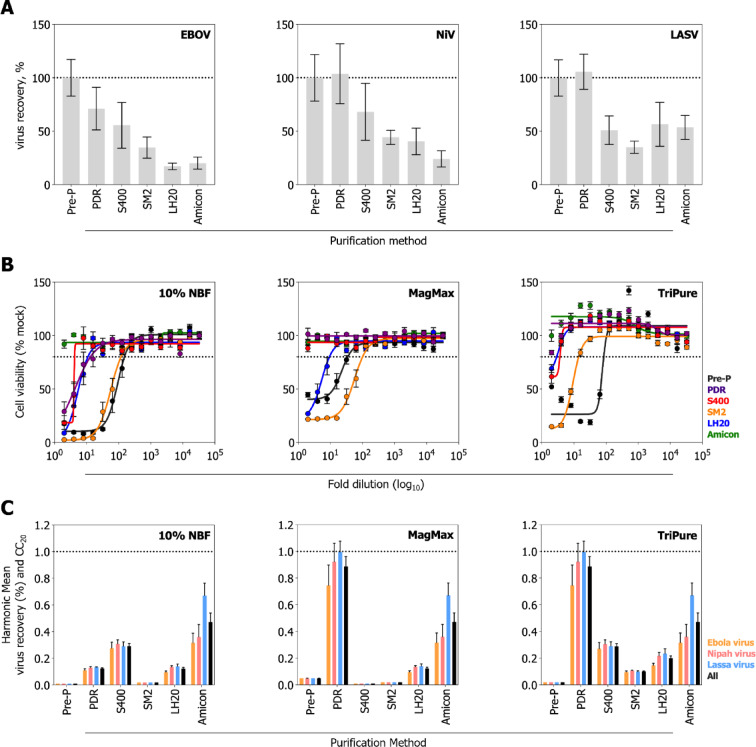 Figure 1
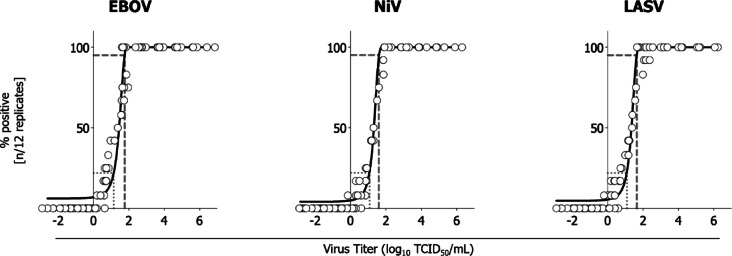 Figure 2
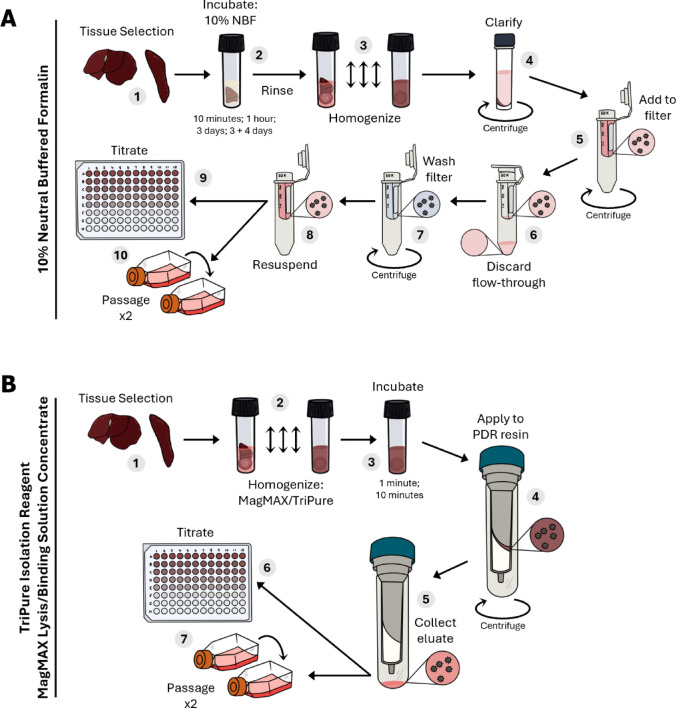 Figure 3
Peer Reviews
No public reviews on file for this paper yet. If you reviewed it on a platform where reviews are public (OpenReview, ICLR, NeurIPS, ICML), you can paste yours below so the community can read it here.
Videos
No videos yet. Explain this paper in a talk, walkthrough, or lecture? Add one.
Taxonomy
TopicsViral Infections and Outbreaks Research · Infection Control and Ventilation · Dental Research and COVID-19