Design of precision therapeutics for a CKD risk allele by targeting Shroom3-Rock interaction
Anand Reghuvaran, Ashwani Kumar, Qisheng Lin, Nallakandi Rajeevan, Khadija Banu, Zeguo Sun, Hongmei Shi, Gabriel Barsotti, EM Tanvir, John Pell, Sudhir Perincheri, Chengguo Wei, Bhavya Bharathan, Marina Planoutene, Anne Eichmann, Valeria Mas, Weijia Zhang, Lloyd G. Cantley

TL;DR
This study identifies a specific part of the Shroom3 protein involved in kidney fibrosis and develops targeted treatments to reduce fibrosis without causing proteinuria.
Contribution
The study identifies the Shroom3-Rock interaction as a target for precision therapeutics in kidney disease.
Findings
ASD2-domain deletion of Shroom3 reduces Rock activation and profibrotic signaling in cell and mouse models.
Small molecule inhibitors of Shroom3-Rock interaction mitigate kidney fibrosis in mice.
Albuminuria is avoided in ASD2Δ-Sh3 mice, unlike with other Shroom3 mutants.
Abstract
Enhancer variants in Shroom3 associate with renal fibrosis (TIF), but with reduced albuminuria. Detailed mechanisms for these pleiotropic effects are unclear. Here, we focus on identifying the specific profibrotic Shroom3 motif and separating this from its anti-proteinuric function. Given the role for Rho-kinases (Rock) in TIF, and the interaction of Rock with Shroom3 ASD2-domain, we hypothesized that Shroom3-mediated Rock-activation is crucial for profibrotic function. To test this, we develop transgenic tools that overexpress wild-type- (WT-Sh3) or ASD2-domain deletion- Shroom3 (ASD2Δ-Sh3). During TIF, Shroom3 and Rock co-expression occur in injured tubular cells and fibroblasts. In tubular- & fibroblast- lines, ASD2Δ-Sh3 overexpression reduce Rock activation, and pro-fibrotic/pro-inflammatory transcripts downstream of TGFβ1/Wnt/Ctnnb1-signaling vs WT-Sh3. In vivo, inducible global-,…
Genes, proteins, chemicals, diseases, species, mutations and cell lines named across the full text — each resolved to its canonical identifier and authoritative record.
Click any figure to enlarge with its caption.
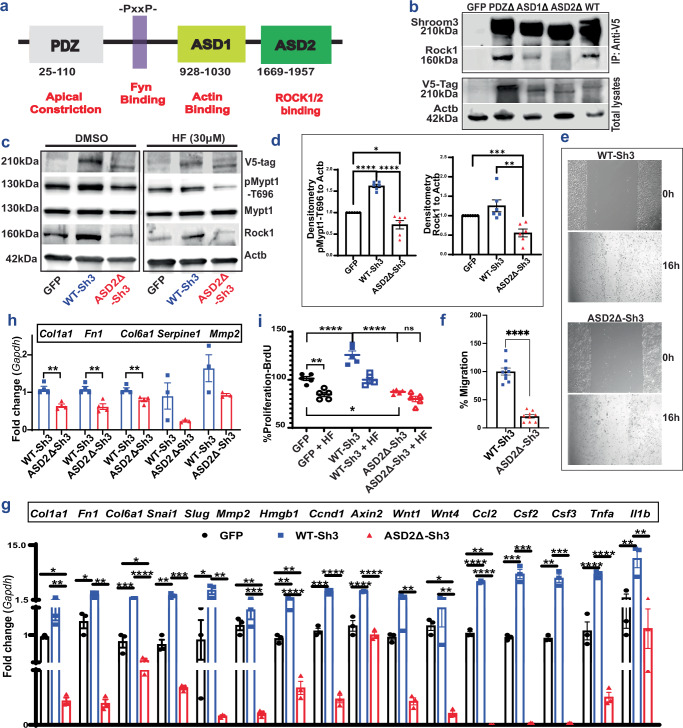 Figure 1
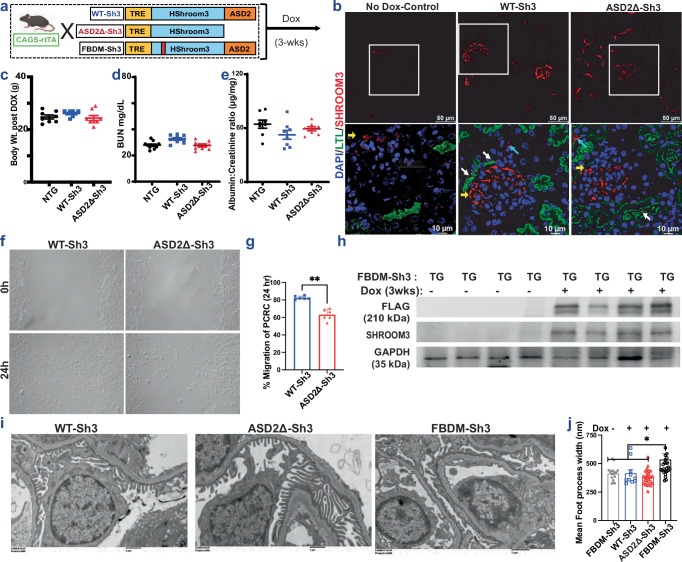 Figure 2
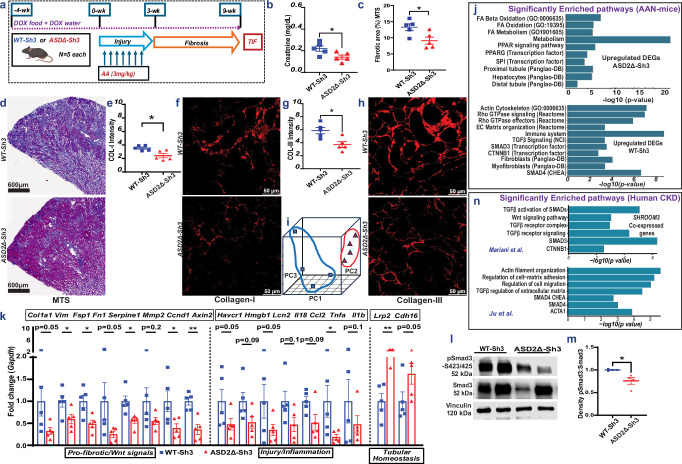 Figure 3
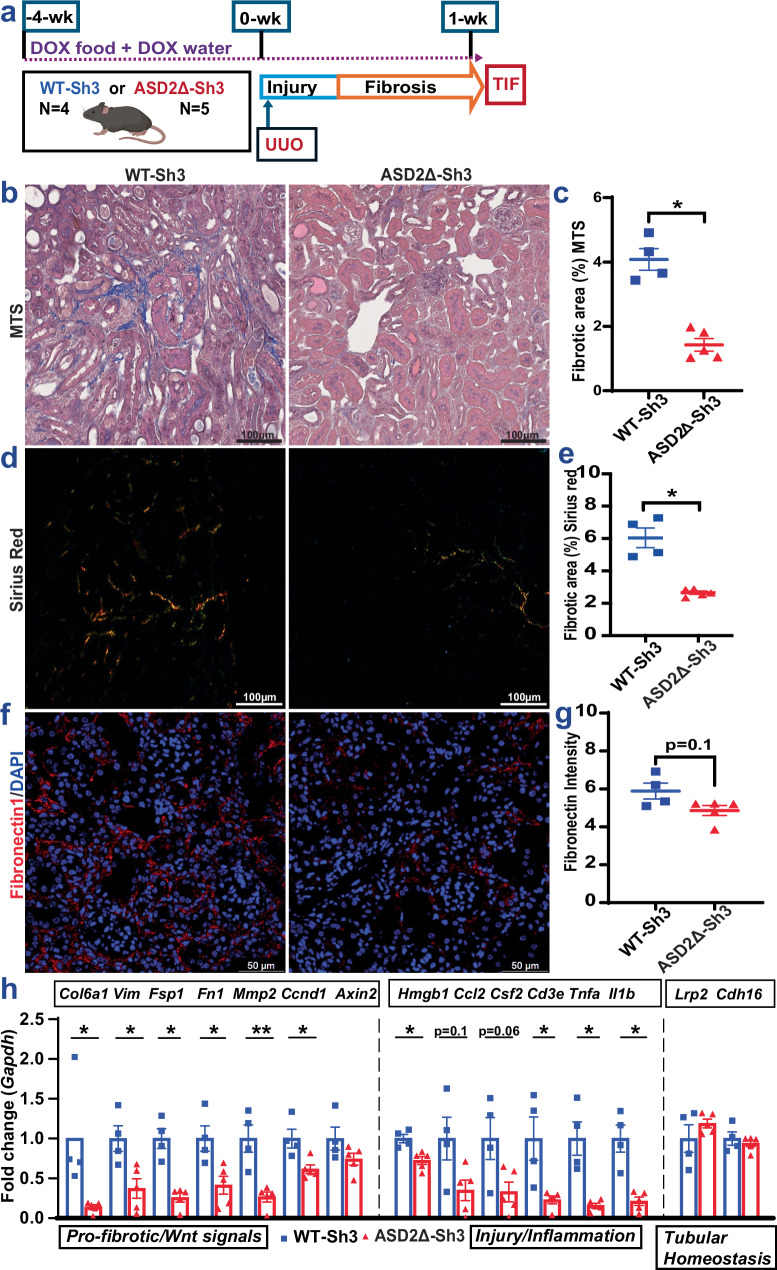 Figure 4
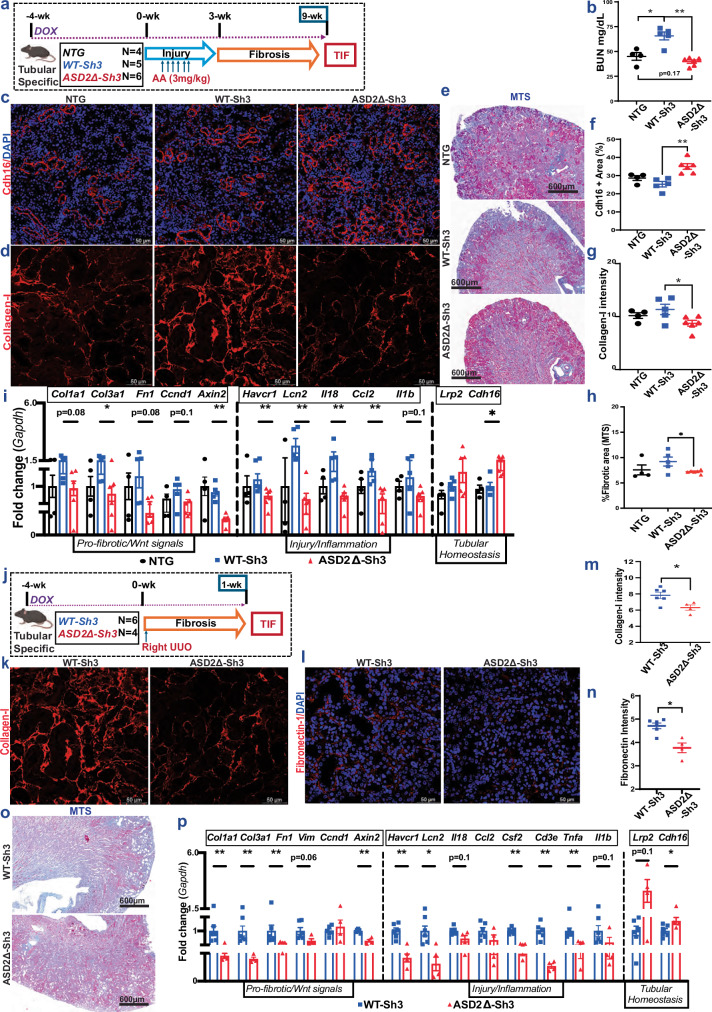 Figure 5
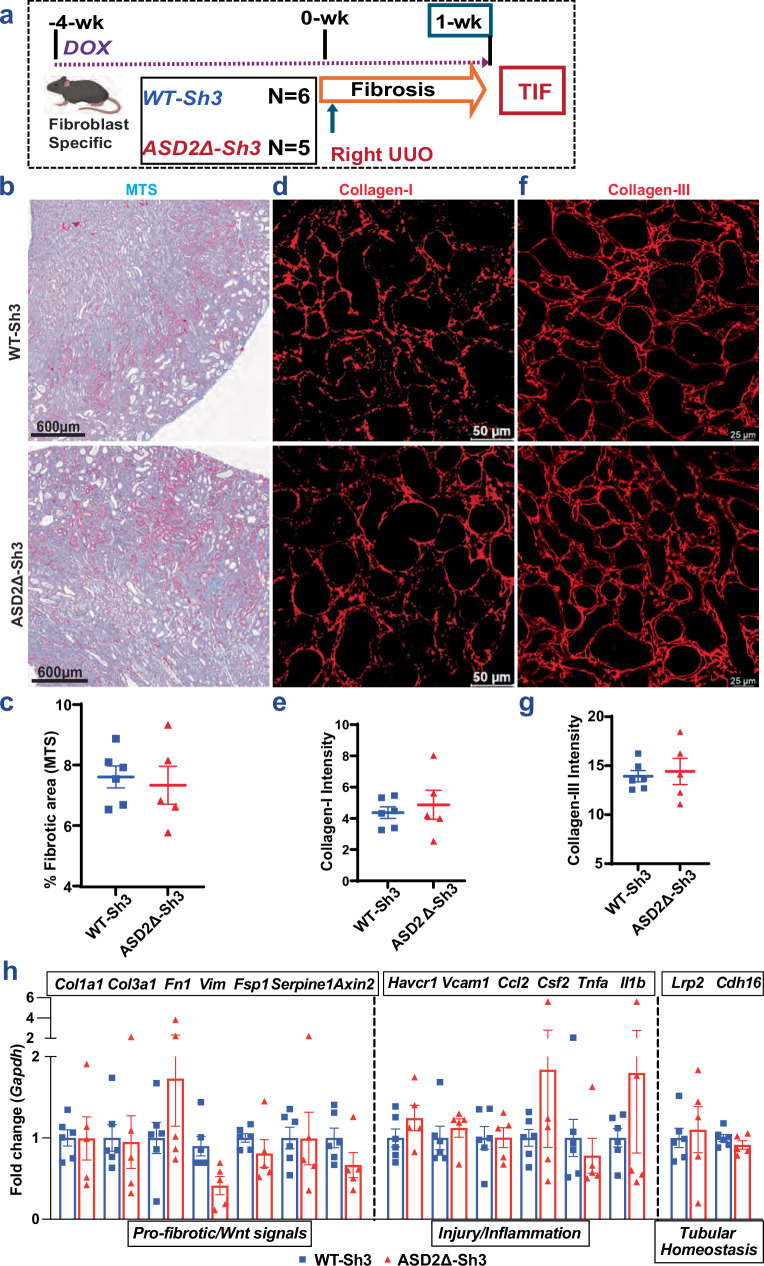 Figure 6
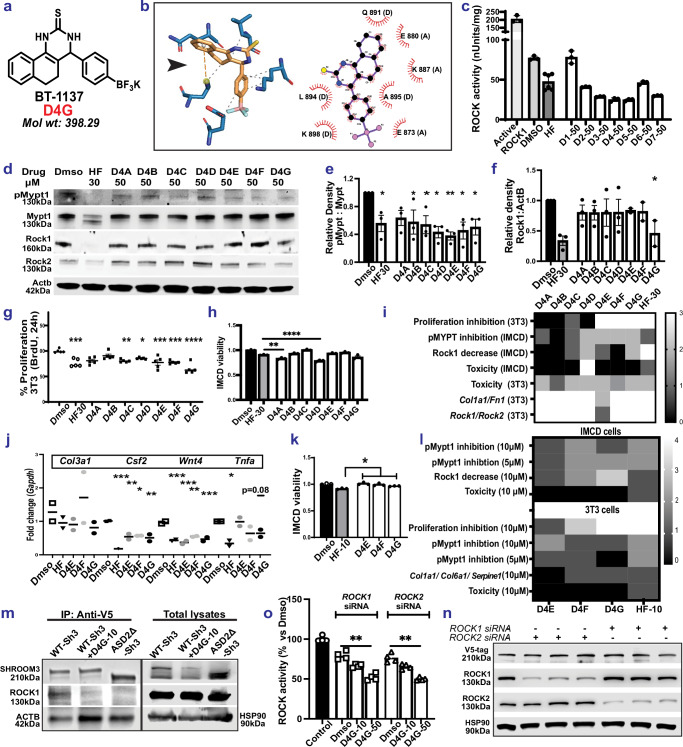 Figure 7
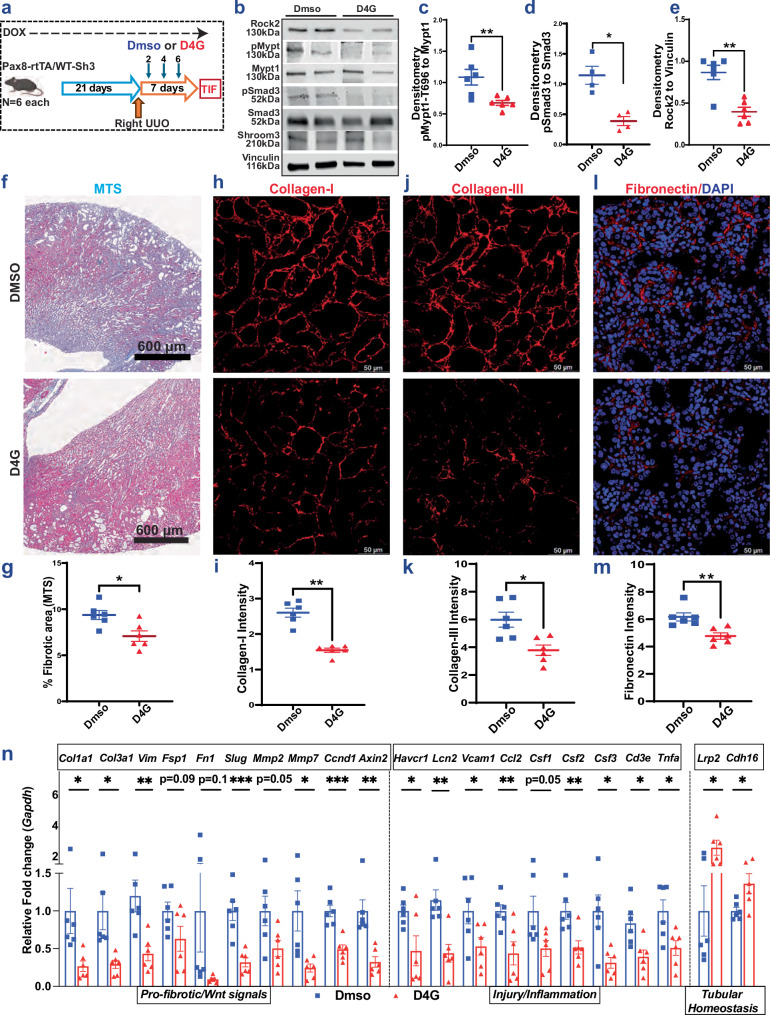 Figure 8
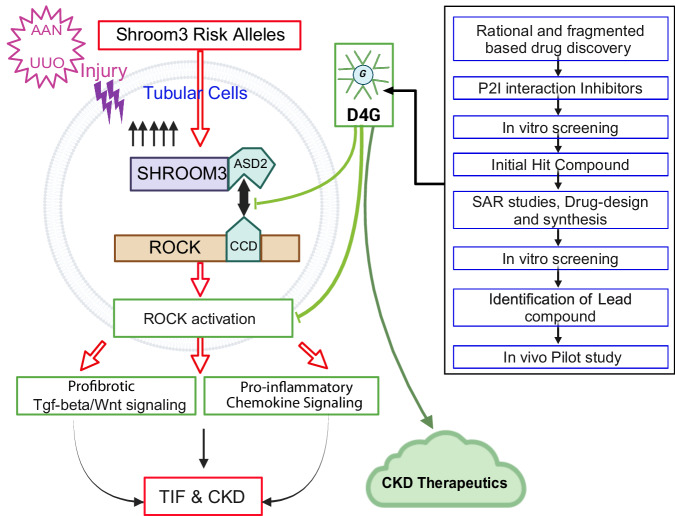 Figure 9
Peer Reviews
No public reviews on file for this paper yet. If you reviewed it on a platform where reviews are public (OpenReview, ICLR, NeurIPS, ICML), you can paste yours below so the community can read it here.
Videos
No videos yet. Explain this paper in a talk, walkthrough, or lecture? Add one.
Taxonomy
TopicsHippo pathway signaling and YAP/TAZ · Connective Tissue Growth Factor Research · Phosphodiesterase function and regulation