Prognostic impact of lymphocyte to monocyte ratio in patients with myelodysplastic neoplasms/syndromes
Wan-Hsuan Lee, Chien-Chin Lin, Xavier Cheng-Hong Tsai, Chia-Lang Hsu, Chi-Yuan Yao, Feng-Ming Tien, Min-Yen Lo, Yu-Sung Chang, Yuan-Yeh Kuo, Shan-Chi Yu, Ming-Chih Liu, Chang-Tsu Yuan, Mei-Hsuan Tseng, Yen-Ling Peng, Ming Yao, Bor-Sheng Ko, Hwei-Fang Tien, Hsin-An Hou

TL;DR
A high lymphocyte-to-monocyte ratio at diagnosis predicts worse survival in myelodysplastic syndromes and may guide treatment decisions.
Contribution
Identifies lymphocyte-to-monocyte ratio as an independent prognostic biomarker in MDS, with biological insights from transcriptomic analysis.
Findings
High L/M ratio is associated with worse leukemia-free and overall survival in MDS patients.
Transcriptomic analysis shows immune suppression and p53 pathway deregulation in high L/M ratio patients.
Allogeneic stem cell transplantation reduces the adverse effect of high L/M ratio.
Abstract
Myelodysplastic syndromes/neoplasms (MDS) represent a heterogeneous group of clonal hematopoietic disorders with variable prognosis. While several risk models exist, the prognostic role of immune-related biomarkers remains unclear. This study aimed to determine whether the lymphocyte-to-monocyte (L/M) ratio at diagnosis serves as an independent prognostic factor in MDS and to explore its biological correlates. A retrospective analysis of 554 patients with primary MDS diagnosed at the National Taiwan University Hospital was conducted. Patients were stratified by an L/M ratio cutoff of 1.5, determined by maximally selected rank statistics. Clinical, cytogenetic, and mutational profiles were assessed. Survival outcomes were analyzed using Kaplan–Meier methods and multivariable Cox regression incorporating IPSS-R, IPSS-M, and WHO-2022/ICC classifications. RNA sequencing was performed on…
Genes, proteins, chemicals, diseases, species, mutations and cell lines named across the full text — each resolved to its canonical identifier and authoritative record.
Click any figure to enlarge with its caption.
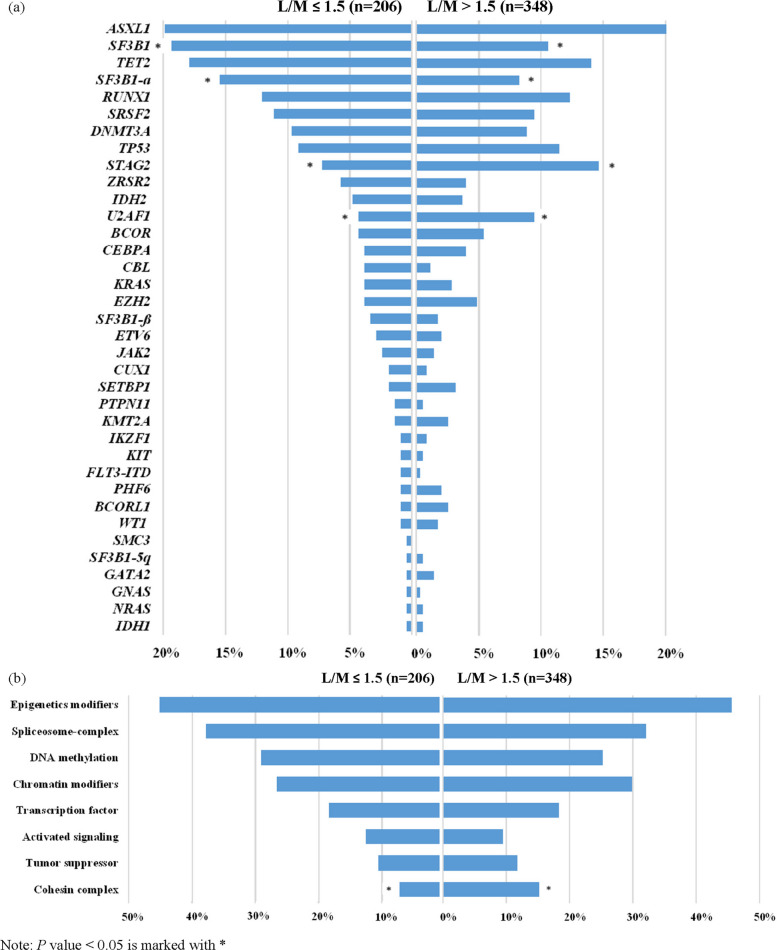 Figure 1
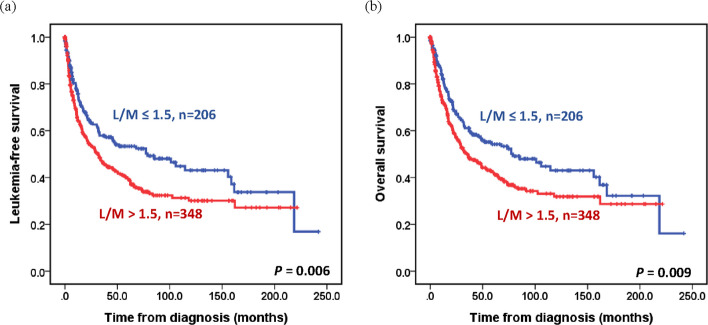 Figure 2
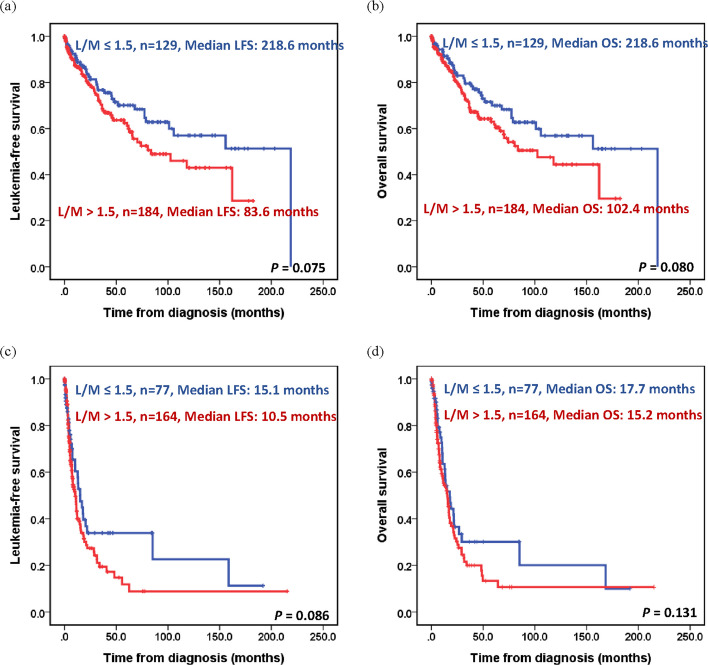 Figure 3
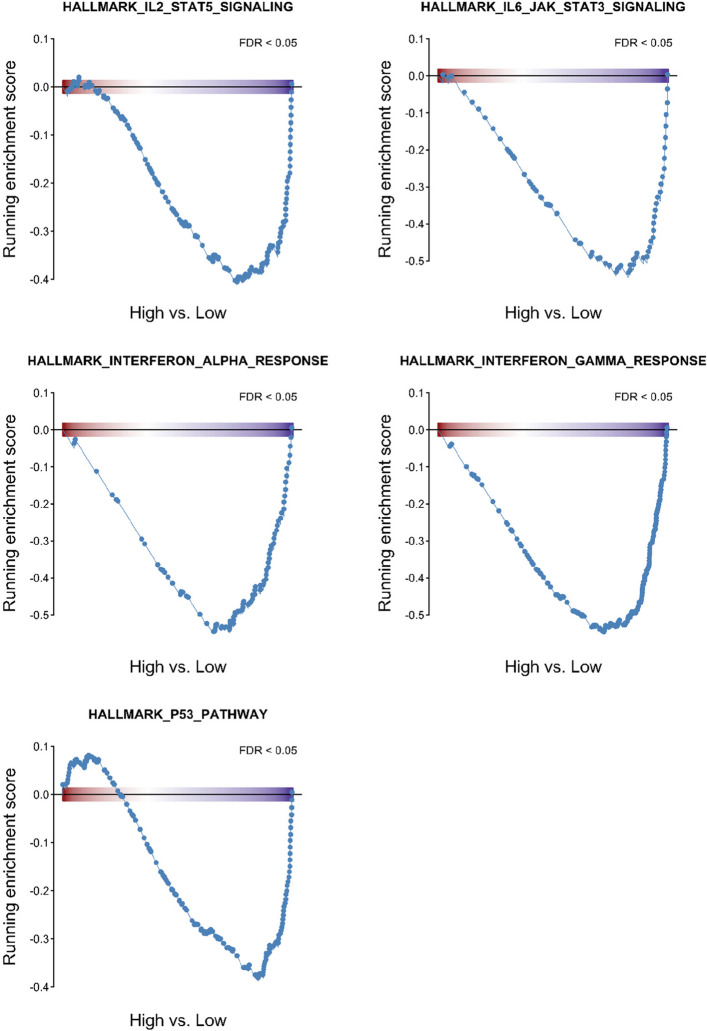 Figure 4
Peer Reviews
No public reviews on file for this paper yet. If you reviewed it on a platform where reviews are public (OpenReview, ICLR, NeurIPS, ICML), you can paste yours below so the community can read it here.
Videos
No videos yet. Explain this paper in a talk, walkthrough, or lecture? Add one.
Taxonomy
TopicsAcute Myeloid Leukemia Research · Myeloproliferative Neoplasms: Diagnosis and Treatment · Lymphoma Diagnosis and Treatment