The unseen symptom: A longitudinal qualitative interview study exploring mobility loss in people with advanced cancer
Carmine Petrasso, Lisa Jane Brighton, Matthew Maddocks, Joanne Bayly

TL;DR
This study explores how people with advanced cancer and their families experience and adapt to mobility loss over time, highlighting its impact on daily life and relationships.
Contribution
The study provides new qualitative insights into the longitudinal experience of mobility loss in advanced cancer, emphasizing its personal and relational dimensions.
Findings
Mobility loss disrupts identity, agency, and participation, leading to reconfigured family roles.
Coping with mobility change involves dynamic processes of reframing expectations and negotiating autonomy.
Participants often faced delayed or absent support, with unmet mobility needs overlooked by clinicians.
Abstract
Mobility loss is a common symptom in people with advanced cancer and is associated with reduced function and quality of life. While its physical consequences are well documented, less is known about how individuals and their families experience and adapt to these changes over time. To explore how individuals with advanced cancer and their caregivers experience and respond to mobility loss. A qualitative longitudinal study using Interpretative Phenomenological Analysis. Participants completed two semi-structured interviews, with follow-ups prompted by changes in mobility. Twelve participants (10 people with advanced cancer, 2 caregivers) were recruited from hospital services, hospices, and cancer charities across England. Interviews were conducted 6–24 weeks apart in person, online, or via telephone. Four interrelated themes were identified: (i) Fractured embodiment: Loss of the…
Genes, proteins, chemicals, diseases, species, mutations and cell lines named across the full text — each resolved to its canonical identifier and authoritative record.
Click any figure to enlarge with its caption.
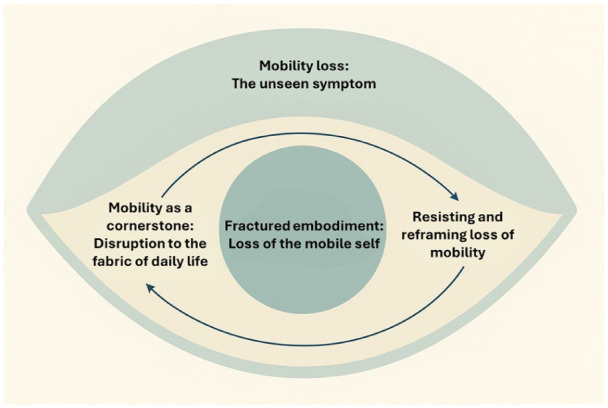 Figure 1
 Figure 2
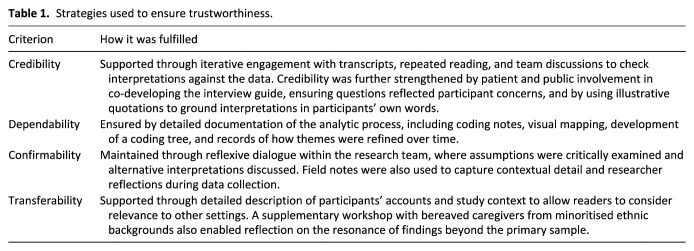 Figure 3
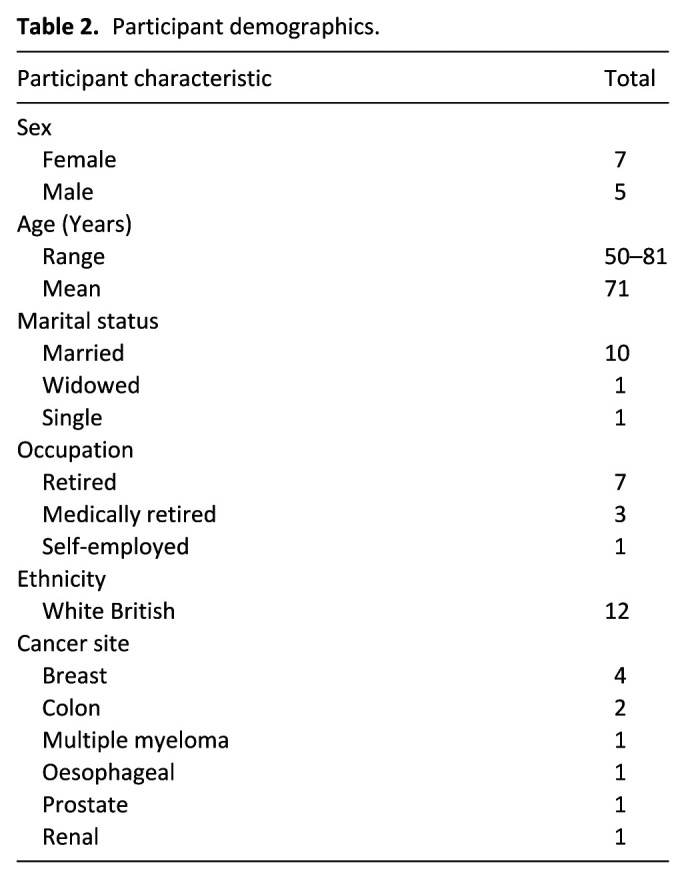 Figure 4
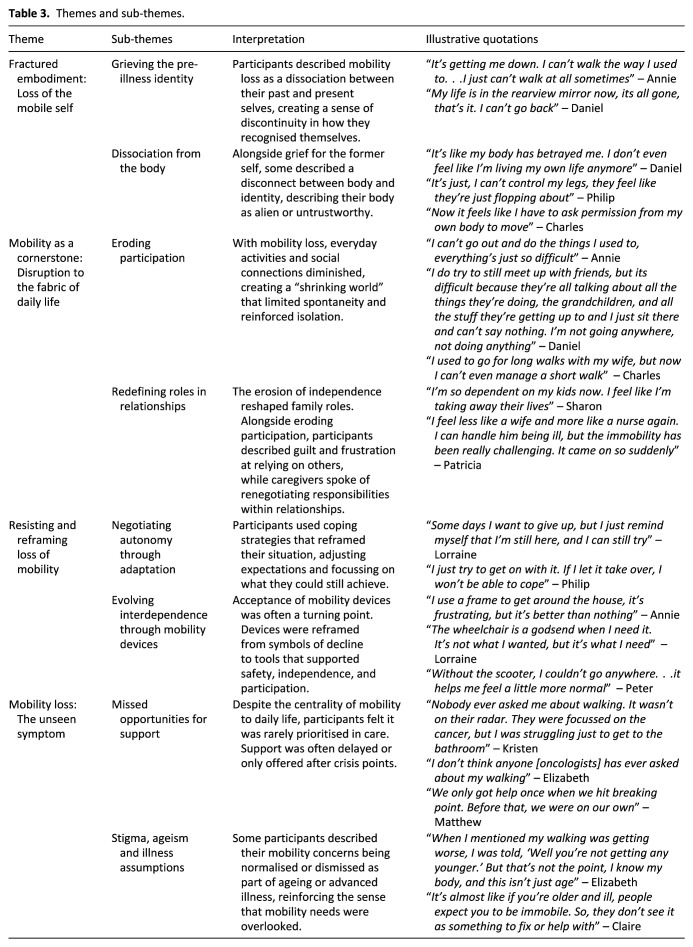 Figure 5
Peer Reviews
No public reviews on file for this paper yet. If you reviewed it on a platform where reviews are public (OpenReview, ICLR, NeurIPS, ICML), you can paste yours below so the community can read it here.
Videos
No videos yet. Explain this paper in a talk, walkthrough, or lecture? Add one.
Taxonomy
TopicsCancer survivorship and care · Palliative Care and End-of-Life Issues · Childhood Cancer Survivors' Quality of Life