The spectral model of personal wellbeing and the validity of the Personal Wellbeing Spectral Questionnaire
Attila Oláh, Bella Bagdi, András Vargha

TL;DR
This paper introduces a new model and questionnaire for measuring personal wellbeing, validated across diverse populations.
Contribution
The paper introduces a novel hierarchical model of personal wellbeing and validates a new questionnaire for its assessment.
Findings
The hierarchical model of personal wellbeing showed good fit across multiple samples.
The questionnaire demonstrated reliability and measurement invariance across sociodemographic groups.
The tool showed meaningful associations with factors like education and family characteristics.
Abstract
Personal wellbeing is a multidimensional construct encompassing emotional, psychological, social, and spiritual aspects. To capture this complexity, we introduce the Personal Wellbeing Spectrum Theory, which organizes these dimensions into two higher-order domains: internal wellbeing (emotional and psychological) and external wellbeing (social and spiritual). The paper aimed to conceptualize this theory and to develop and validate the Personal Wellbeing Spectrum Questionnaire (PWBSQ), a tool designed to operationalize the model. The structural validity of PWBSQ was examined in a large online sample (n = 11,686) using confirmatory factor analysis, and the hierarchical model was tested in three additional independent samples. Reliability and measurement invariance across sociodemographic groups were assessed. Substantive validity was evaluated through associations with established…
Click any figure to enlarge with its caption.
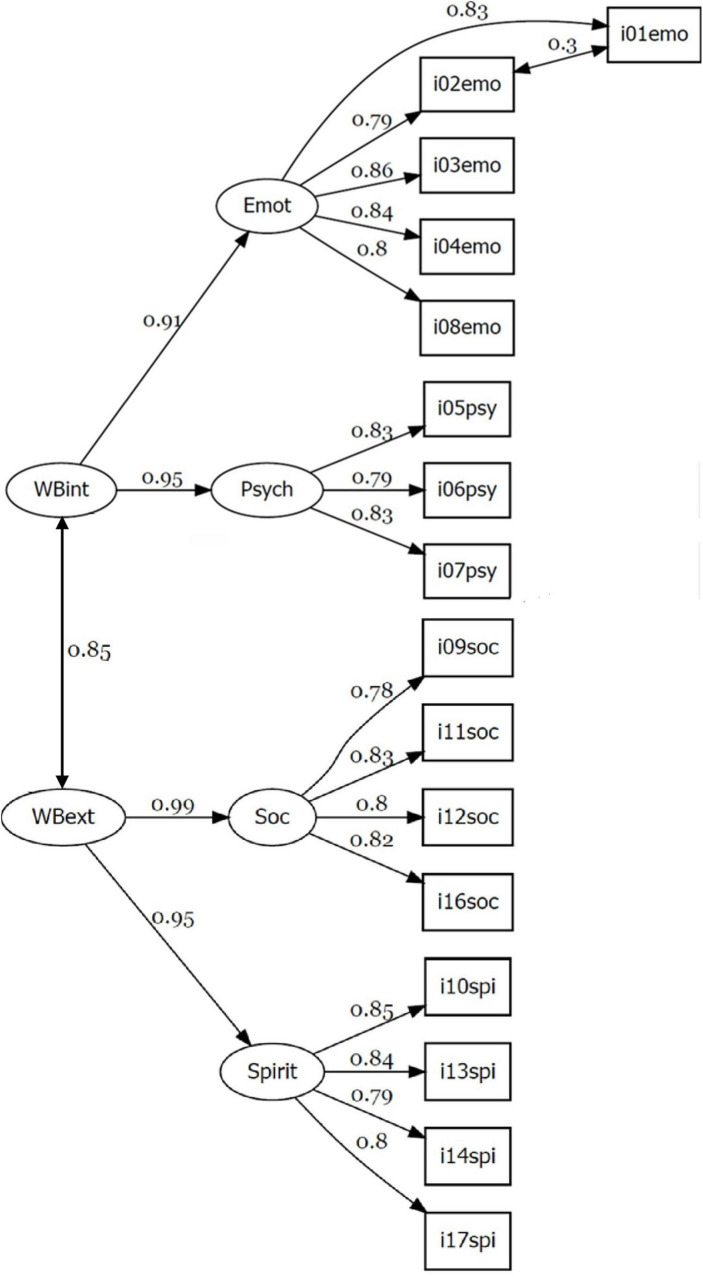 Figure 1
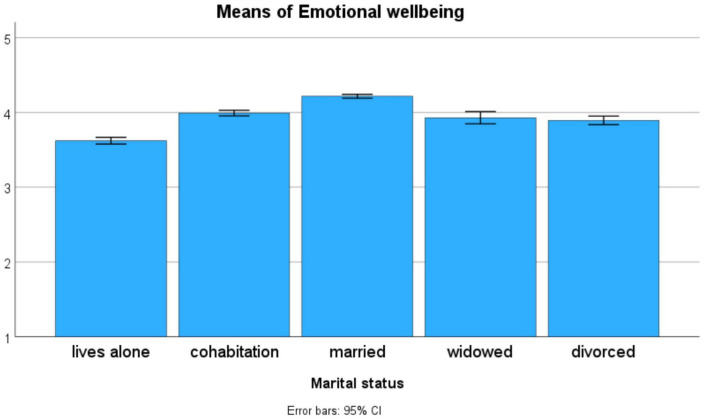 Figure 2
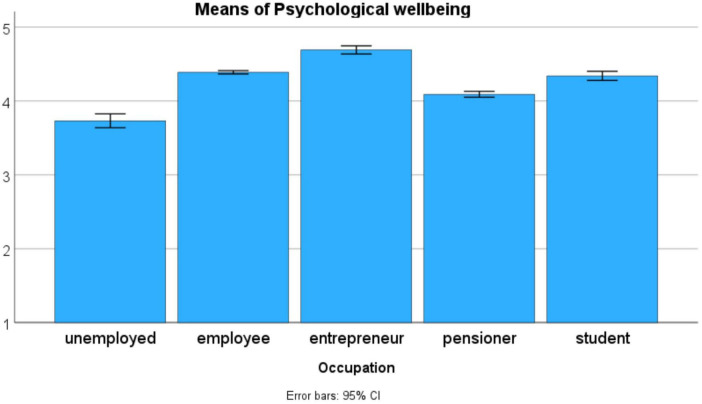 Figure 3
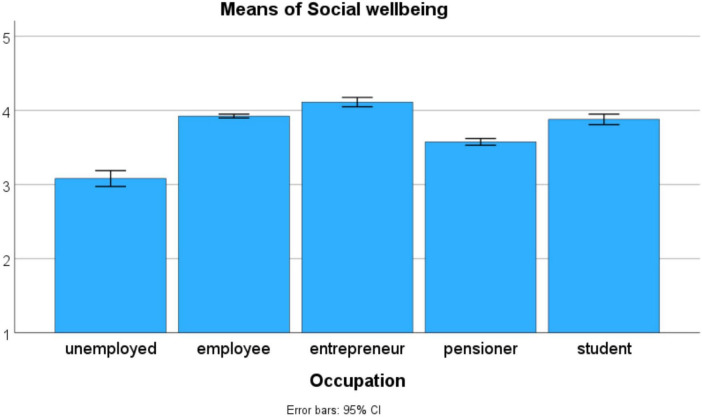 Figure 4
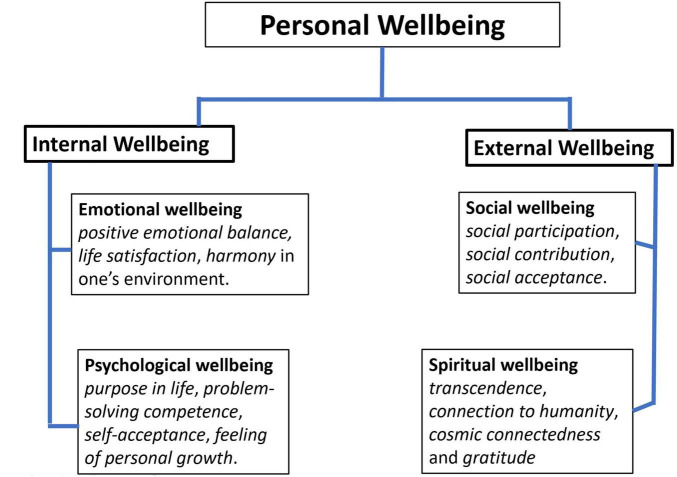 Figure 5
Peer Reviews
No public reviews on file for this paper yet. If you reviewed it on a platform where reviews are public (OpenReview, ICLR, NeurIPS, ICML), you can paste yours below so the community can read it here.
Videos
No videos yet. Explain this paper in a talk, walkthrough, or lecture? Add one.
Taxonomy
TopicsPsychological Well-being and Life Satisfaction · Mindfulness and Compassion Interventions · Religion, Spirituality, and Psychology