Elevated somatostatin interneuron long-term potentiation minimally regulates temporoammonic plasticity in a mouse model of Fragile X Syndrome
Max A. Wilson, Anna Sumera, Emre Berk, Sam A. Booker

TL;DR
This study explores how Fragile X Syndrome affects brain plasticity in mice, finding that while certain brain cells show impaired function, overall circuit plasticity remains intact.
Contribution
The study reveals that SST-INs show enhanced plasticity in Fragile X Syndrome, but this does not impair broader circuit-level plasticity.
Findings
Long-term potentiation in SST-INs is enhanced in Fmr1-/y mice.
Temporoammonic long-term potentiation is not impaired in Fmr1-/y mice.
Plasticity modifications are similarly affected by receptor pharmacology in both wild-type and Fmr1-/y mice.
Abstract
Fragile X Syndrome is a common, inherited single gene cause of intellectual disability, associated with autism, epilepsy, anxiety, and sensory disturbances. Many of these features have been attributed to cellular dysfunction leading to impaired synaptic plasticity, in particular through metabotropic glutamate and GABA receptor signalling. The function of these pathways in inhibitory interneurons has not been fully elucidated. In this study we test the hypothesis that somatostatin interneurons (SST-INs) display impaired synaptic plasticity, which leads to circuit-level plasticity deficits. We use a combination of whole-cell and extracellular recordings in acute hippocampal brain slices prepared from adult, male wild-type and Fmr1 -/y mice. We find that long-term potentiation in SST-INs is enhanced in Fmr1 -/y mice, and that this plasticity is susceptible to GABAB receptor activation.…
Genes, proteins, chemicals, diseases, species, mutations and cell lines named across the full text — each resolved to its canonical identifier and authoritative record.
Click any figure to enlarge with its caption.
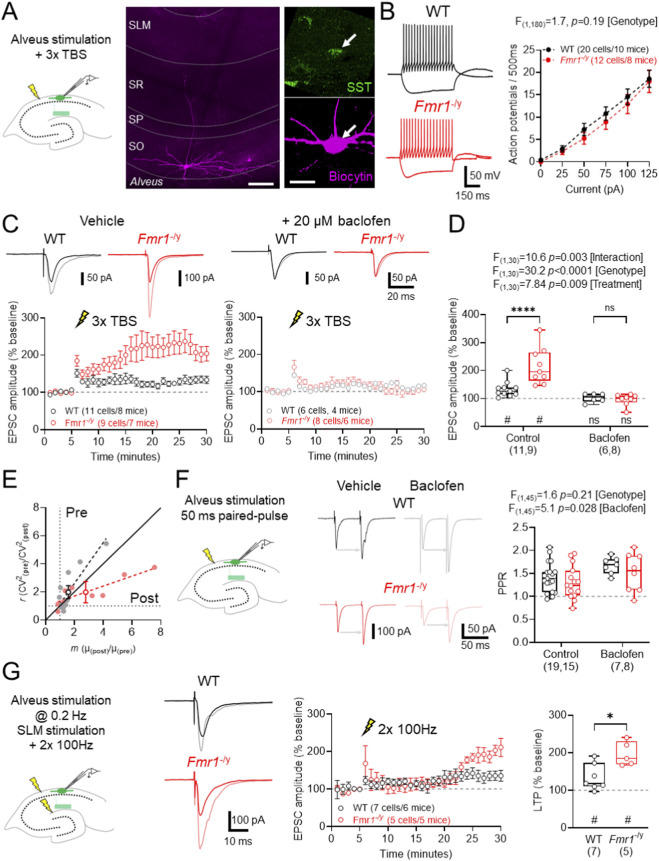 Figure 1
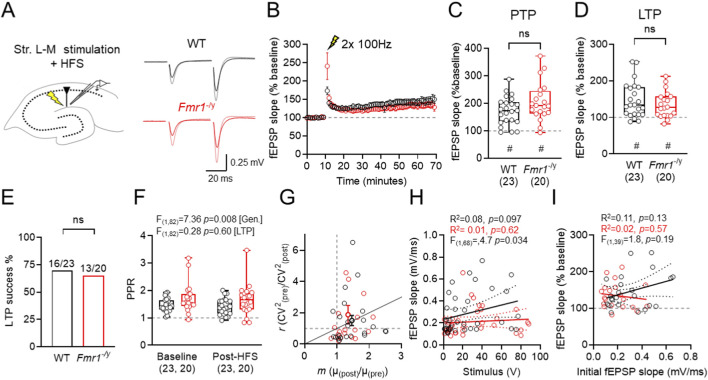 Figure 2
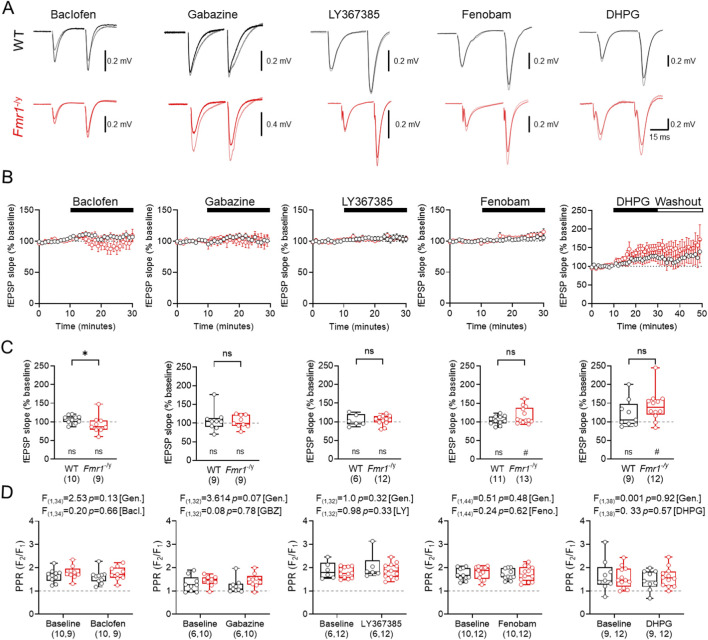 Figure 3
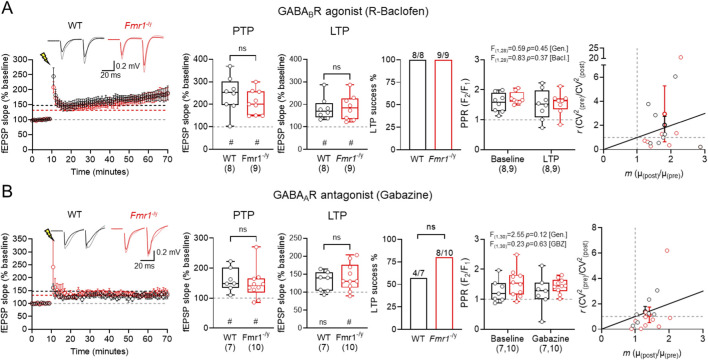 Figure 4
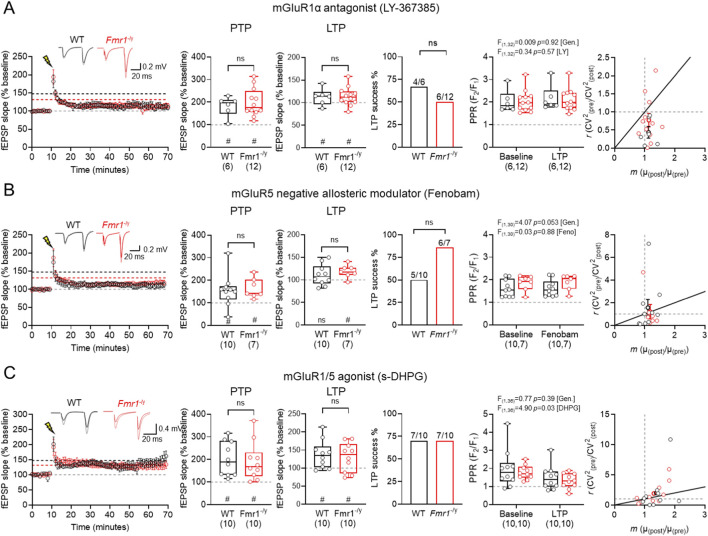 Figure 5
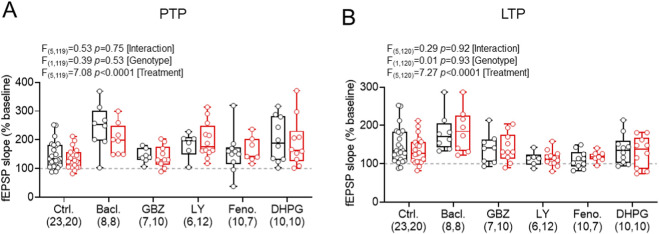 Figure 6
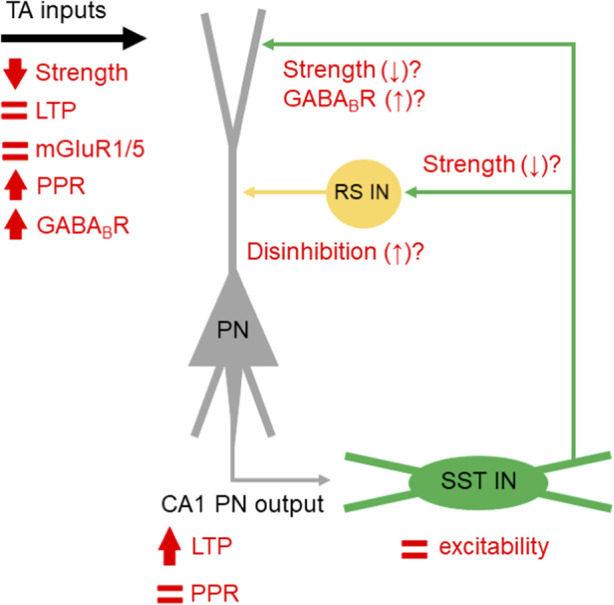 Figure 7
Peer Reviews
No public reviews on file for this paper yet. If you reviewed it on a platform where reviews are public (OpenReview, ICLR, NeurIPS, ICML), you can paste yours below so the community can read it here.
Videos
No videos yet. Explain this paper in a talk, walkthrough, or lecture? Add one.
Taxonomy
TopicsGenetics and Neurodevelopmental Disorders · Autism Spectrum Disorder Research · Attention Deficit Hyperactivity Disorder