Evaluating usability and acceptance of a socially assistive robot supported cognitive training for depression – results of the randomized controlled pilot study ‘AMIGA’
Alfred Haeussl, Ina Zwigl, Lena Stojec, Irina Smolak, Marko Stijic, Tatjana Stross, Melanie Lenger, Frederike T. Fellendorf, Suher Guggemos, Elena M. D. Schoenthaler, Martin Pszeida, Thomas Orgel, Sandra Draxler, Michael Schneeberger, Silvia Russegger, Julia Zuschnegg

TL;DR
This study tested a robot named Pepper to help with cognitive training for depression and found it was well accepted, especially in terms of usability.
Contribution
The study provides new evidence on the usability and acceptance of socially assistive robots in depression treatment.
Findings
The SAR group had higher usability scores compared to the tablet-only group.
Female participants showed higher scores in overall technology usage and scepticism.
The study highlights the potential of SARs to complement traditional depression therapies.
Abstract
The integration of socially assistive robots (SARs) in mental healthcare offers promising opportunities to enhance traditional treatments. The humanoid SAR “Pepper” has shown potential for supporting cognitive and emotional interventions for individuals. While SAR acceptance has been explored in general healthcare, limited evidence exists regarding its usability and acceptance among individuals with affective disorders. This study aimed to assess the usability and acceptance of “Pepper” as an adjunct motivational technology in combination with tablet-based cognitive training, compared to tablet training alone, among inpatients with depression, focusing on sex-specific differences. A randomized controlled trial was conducted between June and October 2024 with 32 inpatients diagnosed with depression. Participants were randomly assigned to one of two groups: the SAR group, which used…
Genes, proteins, chemicals, diseases, species, mutations and cell lines named across the full text — each resolved to its canonical identifier and authoritative record.
Click any figure to enlarge with its caption.
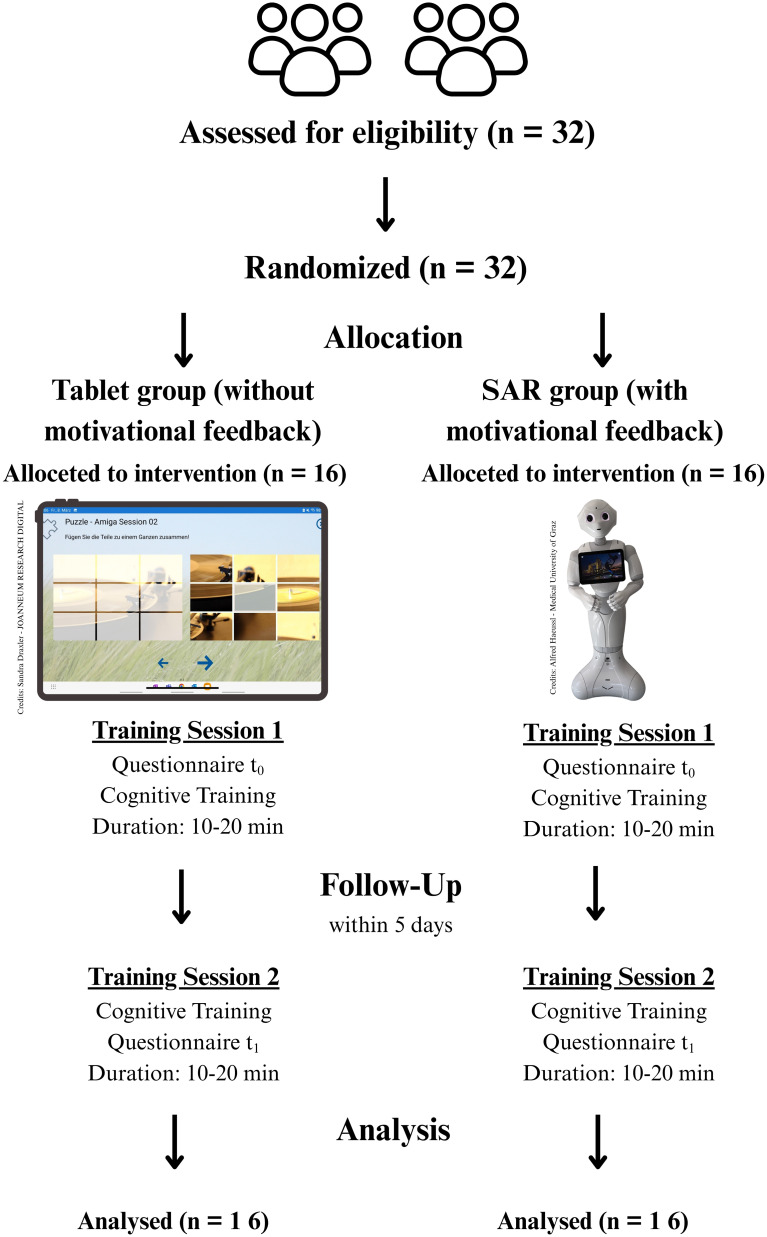 Figure 1
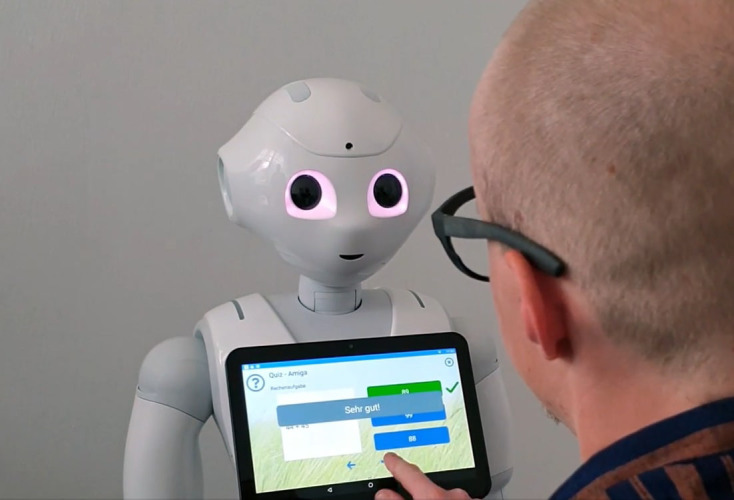 Figure 2
Peer Reviews
No public reviews on file for this paper yet. If you reviewed it on a platform where reviews are public (OpenReview, ICLR, NeurIPS, ICML), you can paste yours below so the community can read it here.
Videos
No videos yet. Explain this paper in a talk, walkthrough, or lecture? Add one.
Taxonomy
TopicsSocial Robot Interaction and HRI · Digital Mental Health Interventions · Stroke Rehabilitation and Recovery