Estimating V̇O2 max in healthy subjects without maximal effort: a novel protocol using ballistocardiography
Amin Hossein, Jérémy Rabineau, Philippe Questel, Adam Kobbai, Pierre-François Migeotte, Cyril Tordeur, Paniz Balali, Elza Abdessater, Alexis Gillet, Benoit Haut, Philippe van de Borne, Vitalie Faoro

TL;DR
This study shows that ballistocardiography can estimate maximal oxygen uptake without requiring maximal effort, offering a simpler and safer alternative to traditional testing.
Contribution
A novel protocol using ballistocardiography during submaximal cycling to estimate V̇O2 max without maximal effort.
Findings
BCG-based V̇O2 max estimates achieved accuracy comparable to maximal tests with a 12.05% coefficient of variation.
Modified protocols with short breaks provided reliable V̇O2 max and workload values similar to standard tests.
The method requires only 10 minutes of exercise and avoids maximal effort.
Abstract
Low maximal oxygen uptake (V̇O2 max) is a strong predictor of cardiovascular morbidity and mortality, yet its gold-standard assessment through cardiopulmonary exercise testing (CPET) requires maximal effort and specialized equipment. This study evaluates whether ballistocardiography (BCG), recorded during brief stabilization breaks embedded in a submaximal cycling protocol, can provide reliable estimates of V̇O2 max. BCG provides unique insights into stroke volume and blood displacement, offering a robust physiological basis for V̇O2 max estimation. Sixteen healthy young adults completed three randomized exercise protocols on a cycle ergometer with simultaneous gas-exchange analysis: a standard incremental step CPET until exhaustion (S) and two modified protocols including short breaks (B1 and B2) designed to facilitate high-quality BCG acquisition. BCG-derived kinetic output (KVO2) was…
Genes, proteins, chemicals, diseases, species, mutations and cell lines named across the full text — each resolved to its canonical identifier and authoritative record.
Click any figure to enlarge with its caption.
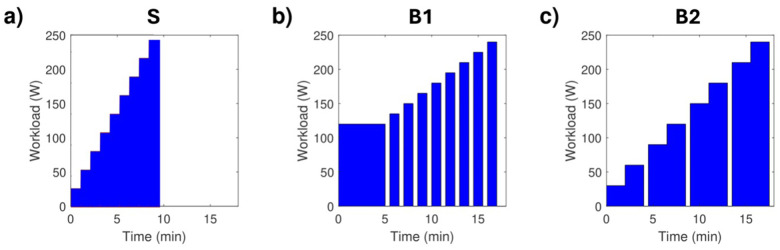 Figure 1
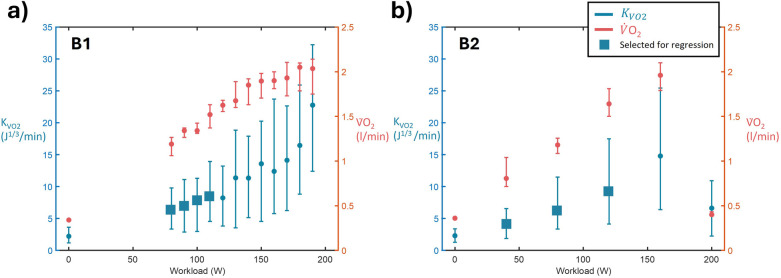 Figure 2
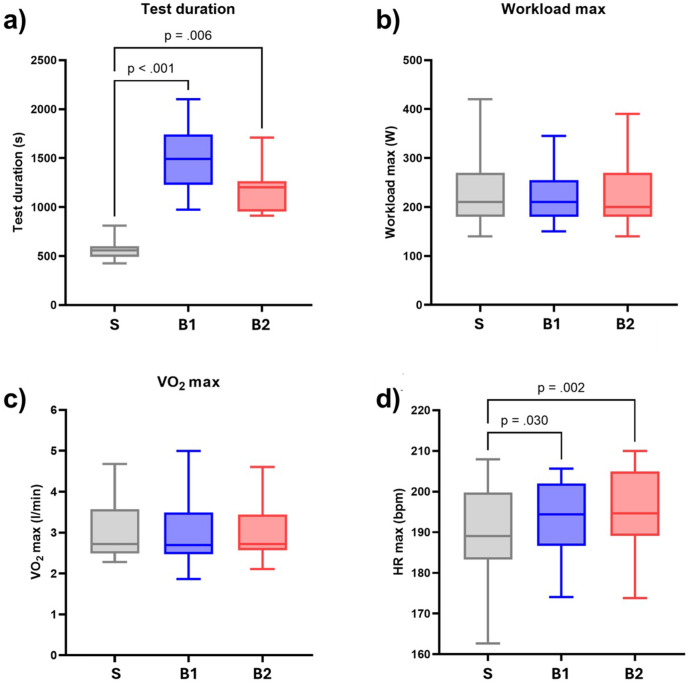 Figure 3
Peer Reviews
No public reviews on file for this paper yet. If you reviewed it on a platform where reviews are public (OpenReview, ICLR, NeurIPS, ICML), you can paste yours below so the community can read it here.
Videos
No videos yet. Explain this paper in a talk, walkthrough, or lecture? Add one.
Taxonomy
TopicsCardiovascular and exercise physiology · Non-Invasive Vital Sign Monitoring · Heart Rate Variability and Autonomic Control