Research on middle school teachers’ technostress empowered by artificial intelligence
Chenguang Wu, Wenlan Zhang, Liangliang Hu, Ming Li

TL;DR
This study explores how technostress affects middle school teachers when adopting AI in education and identifies ways to reduce it.
Contribution
The study introduces a framework linking personal competence, role conflict, and organizational support to technostress in AI adoption by teachers.
Findings
Technostress levels are generally low, but stress sources vary among teacher groups.
Digital awareness and suitable technology features reduce technostress, while role conflict increases it.
Organizational support is mediated by these factors in influencing technostress.
Abstract
Technostress is an essential factor in predicting middle school teachers’ willingness to adopt artificial intelligence (AI) in future educational practices and their actual use of such technologies. This study examines technostress among middle school teachers in the context of AI integration and explores how personal competence (including digital awareness, digital technology knowledge and skills, and digital application competence), role conflict, organizational support, and technological features influence technostress. The Technology Acceptance Model (TAM) is employed as the theoretical underpinning for the present research, using survey data from 301 middle school teachers, a path model was constructed to analyze these relationships. The results indicate that the overall level of technostress is relatively low; however, different teacher groups experience distinct sources of…
Click any figure to enlarge with its caption.
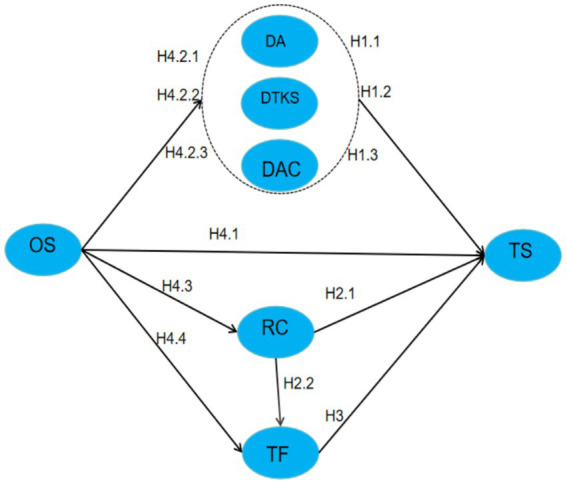 Figure 1
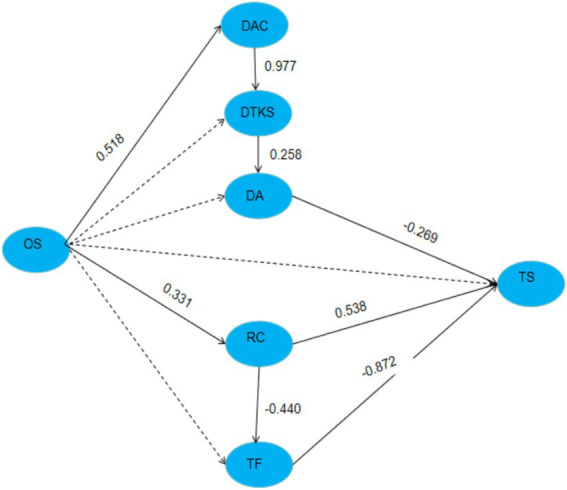 Figure 2
Peer Reviews
No public reviews on file for this paper yet. If you reviewed it on a platform where reviews are public (OpenReview, ICLR, NeurIPS, ICML), you can paste yours below so the community can read it here.
Videos
No videos yet. Explain this paper in a talk, walkthrough, or lecture? Add one.
Taxonomy
TopicsTechnostress in Professional Settings · Digital literacy in education · Gender and Technology in Education