Different transcriptional regulatory activities of Mycobacterium bovis and Mycobacterium tuberculosis PhoPR systems
Jose Maria Urtasun-Elizari, Ruoyao Ma, Hayleah Pickford, Damien Farrell, Viktor Perets, Jesus Urtasun-Elizari, Gabriel Gonzalez, Chie Nakajima, Yasuhiko Suzuki, Apoorva Bhatt, David E. MacHugh, Stephen V. Gordon

TL;DR
This study compares the PhoPR system in two TB-causing bacteria, showing it functions in both human and animal strains but with distinct gene regulation patterns.
Contribution
Demonstrates functional differences in PhoPR systems between M. tuberculosis and M. bovis despite a key substitution.
Findings
PhoPR system is functional in M. bovis despite the G71I substitution.
Common and distinct gene expression patterns were observed, including rubredoxin and lipid biosynthesis genes.
PhoPR controls differential transcriptional programs important for host adaptation.
Abstract
Tuberculosis (TB) is an infectious disease that affects humans and animals. The pathogens that cause TB belong to the Mycobacterium tuberculosis complex (MTBC), with M. tuberculosis and Mycobacterium bovis as the main representatives of human- and animal-adapted strains, respectively. One key genetic regulator of the MTBC members is the PhoPR system, which controls many processes, including the stress response, lipid metabolism and pathogenesis, among others. Previous studies identified a key G71I substitution in the M. bovis PhoR orthologue relative to M. tuberculosis PhoR and suggested that PhoPR might be non-functional in animal-adapted strains, but recent work has highlighted the functionality of PhoPR in M. bovis despite the G71I substitution. Here, we compare the transcriptional effects of the PhoPR system of M. tuberculosis H37Rv and M. bovis AF2122/97 on an M. bovis AF2122/97…
Genes, proteins, chemicals, diseases, species, mutations and cell lines named across the full text — each resolved to its canonical identifier and authoritative record.
Click any figure to enlarge with its caption.
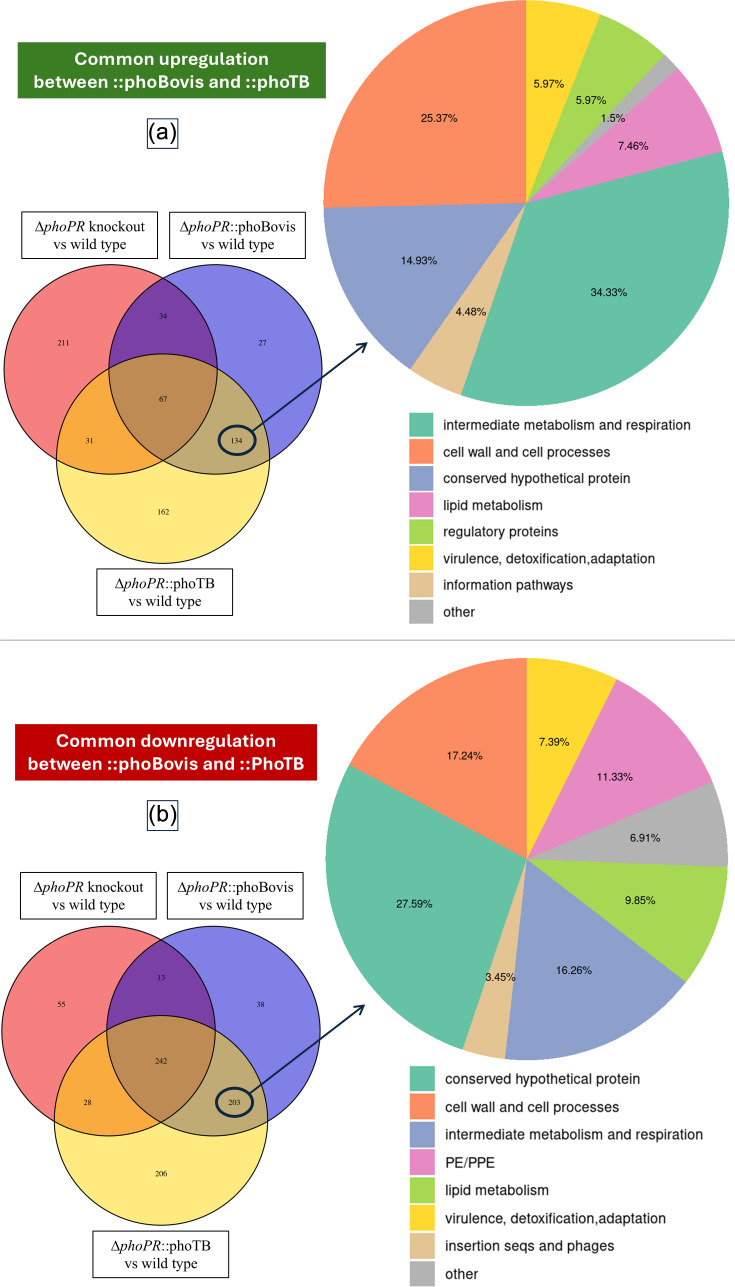 Figure 1
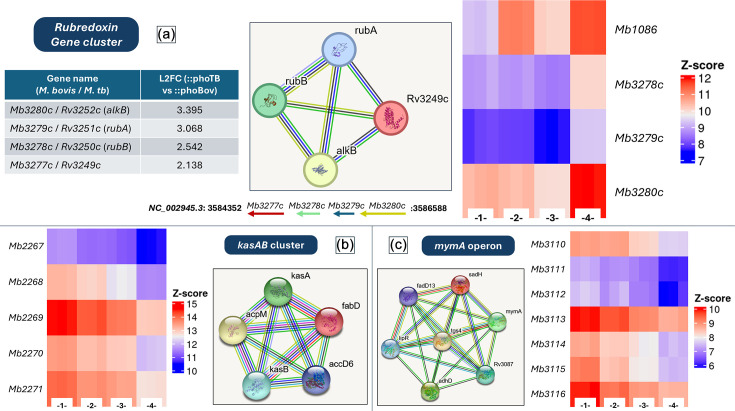 Figure 2
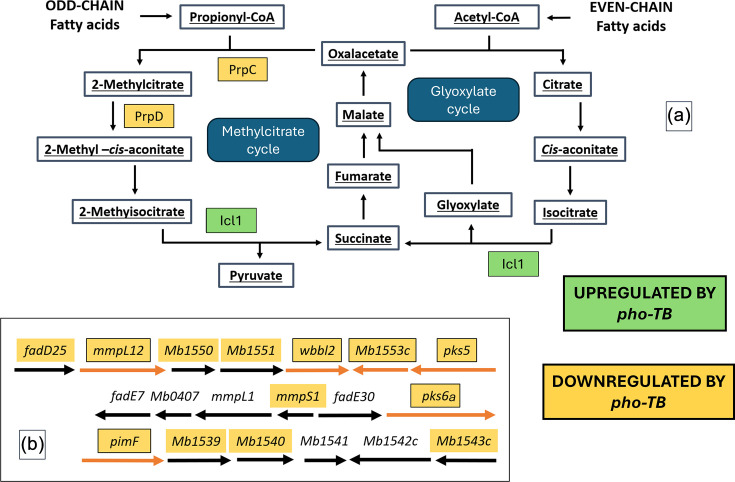 Figure 3
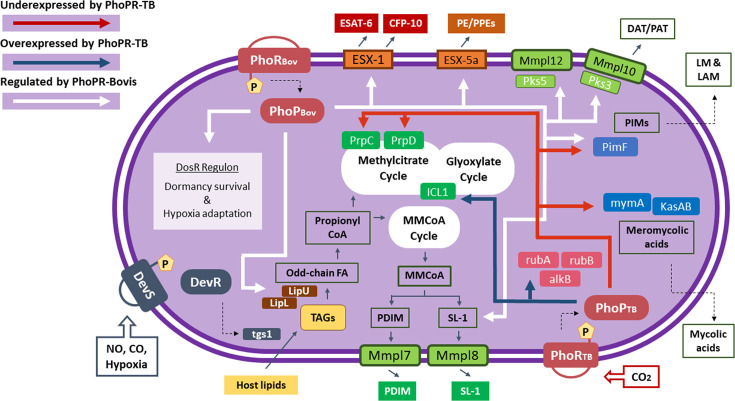 Figure 4
Peer Reviews
No public reviews on file for this paper yet. If you reviewed it on a platform where reviews are public (OpenReview, ICLR, NeurIPS, ICML), you can paste yours below so the community can read it here.
Videos
No videos yet. Explain this paper in a talk, walkthrough, or lecture? Add one.
Taxonomy
TopicsTuberculosis Research and Epidemiology · RNA and protein synthesis mechanisms · interferon and immune responses