Levels of shared autonomy in brain-robot interfaces: enabling multi-robot multi-human collaboration for activities of daily living
Hannah Douglas, Marina Di Vincenzo, Rousslan Fernand Julien Dossa, Luca Nunziante, Shivakanth Sujit, Kai Arulkumaran

TL;DR
This paper introduces a brain-robot interface system with adjustable autonomy levels to help people with motor impairments perform daily tasks more independently.
Contribution
The novel contribution is a multi-modal BRI system with three autonomy levels for multi-robot, multi-human collaboration in daily living tasks.
Findings
Full Automation was preferred for lower workload and higher usability.
Shared Autonomy improved reliability and preserved user agency in noisy EEG conditions.
Customizing pipelines per user showed potential to enhance performance despite individual variability.
Abstract
Individuals with ALS and other severe motor impairments often rely on caregivers for daily tasks, which limits their independence and sense of control. Brain-robot interfaces (BRIs) have the potential to restore autonomy, but many existing systems are task-specific and highly automated, which reduces the users' sense of empowerment and limits opportunities to exercise autonomy. In particular, shared autonomy approaches hold promise for overcoming current BRI limitations, by balancing user control with increased robot capabilities. In this work, we introduce a collaborative BRI that integrates non-invasive EEG, EMG, and eye tracking to enable multi-user, multi-robot interaction in a shared kitchen environment with mobile manipulators. Our system modulates assistance through three levels of autonomy—Assisted Teleoperation, Shared Autonomy, and Full Automation—allowing users to retain…
Genes, proteins, chemicals, diseases, species, mutations and cell lines named across the full text — each resolved to its canonical identifier and authoritative record.
Click any figure to enlarge with its caption.
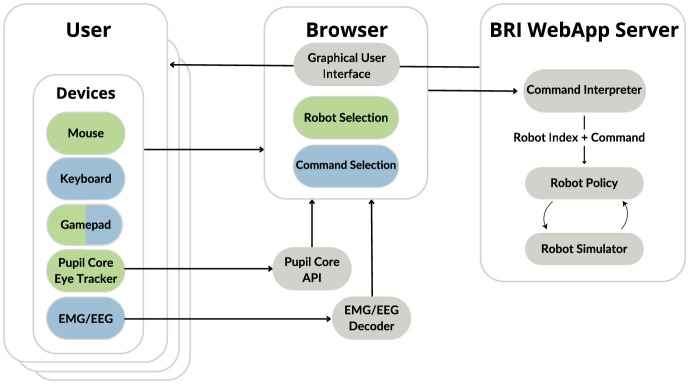 Figure 1
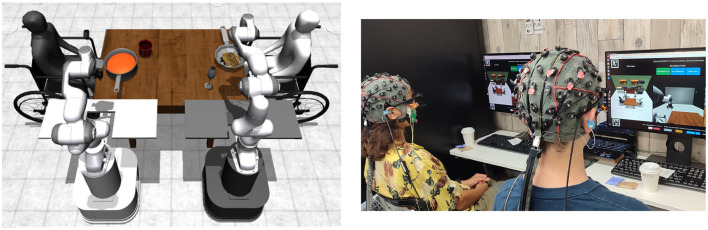 Figure 2
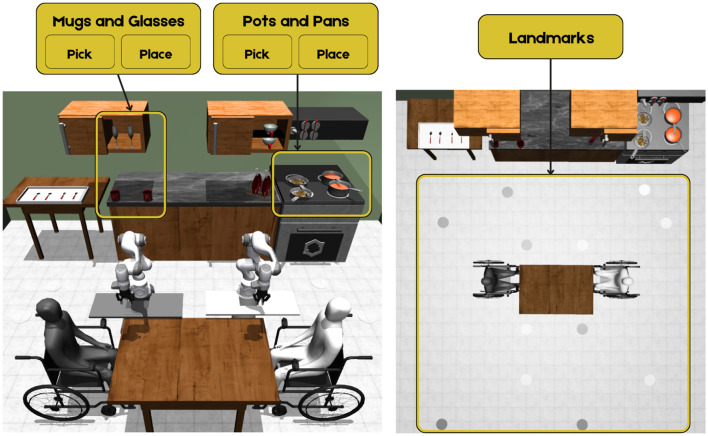 Figure 3
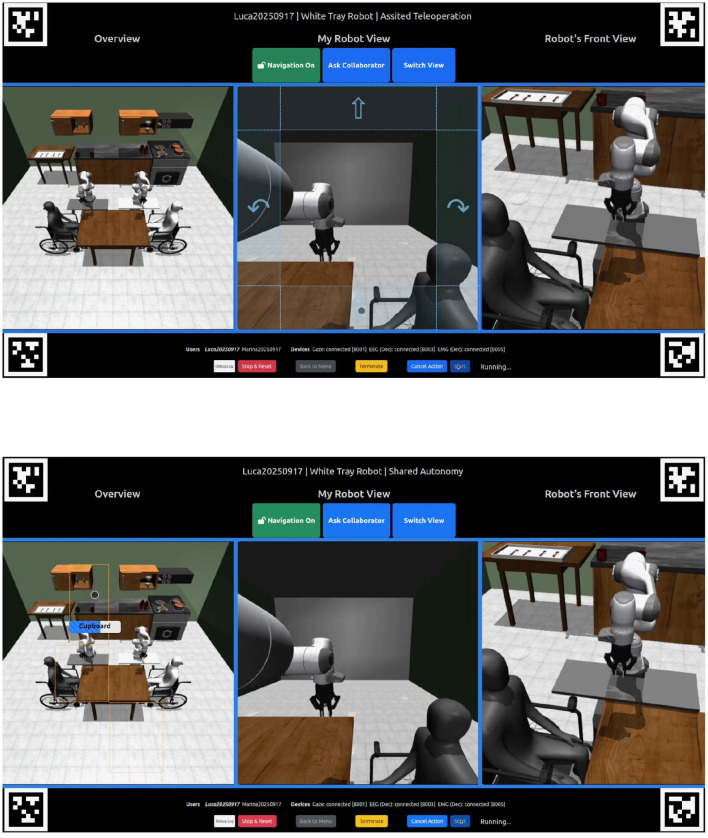 Figure 4
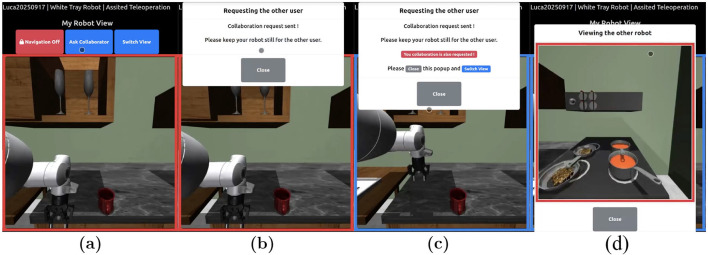 Figure 5
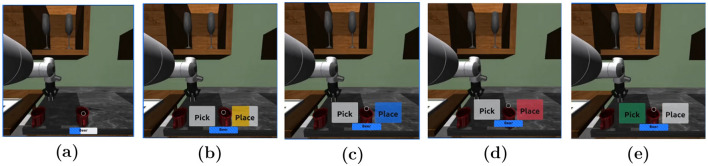 Figure 6
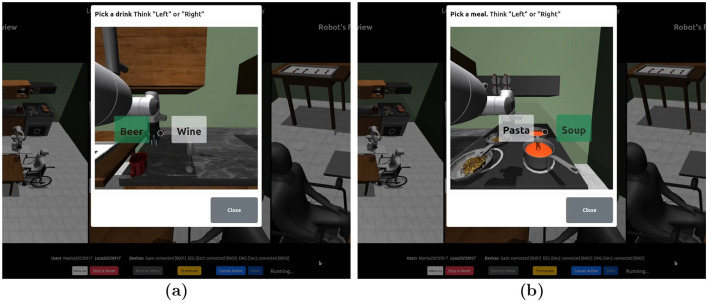 Figure 7
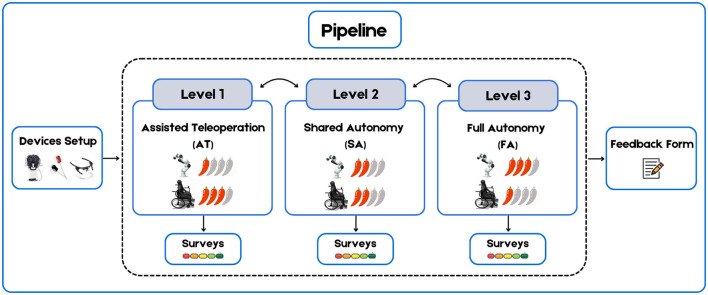 Figure 8
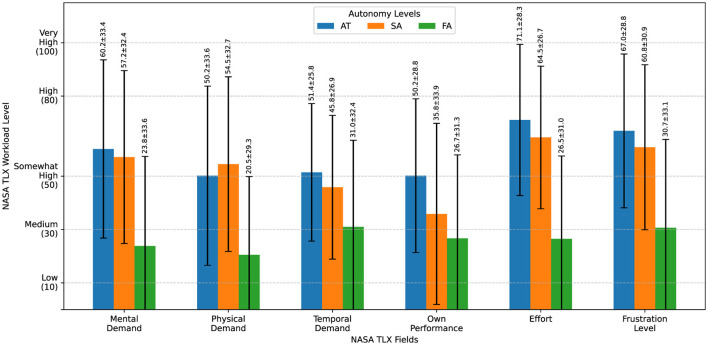 Figure 9
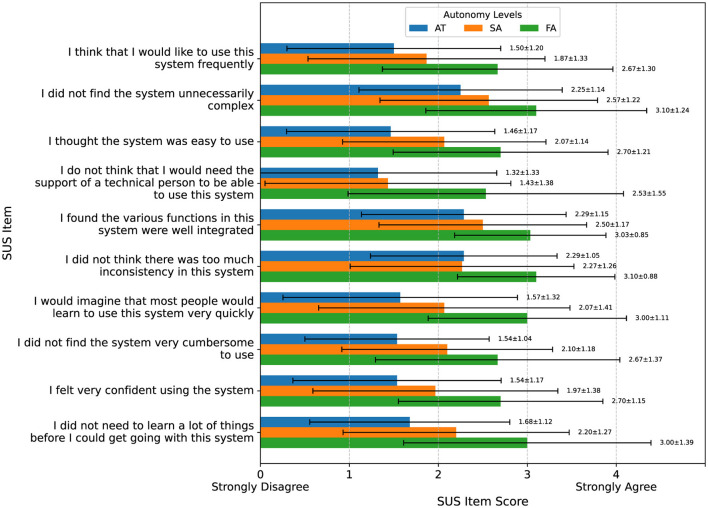 Figure 10
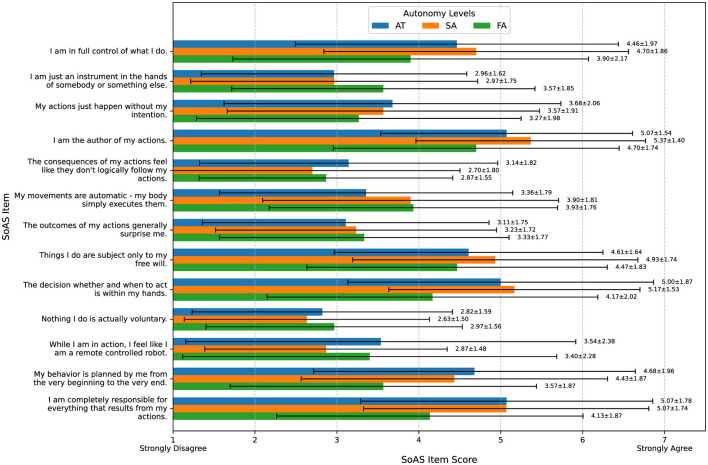 Figure 11
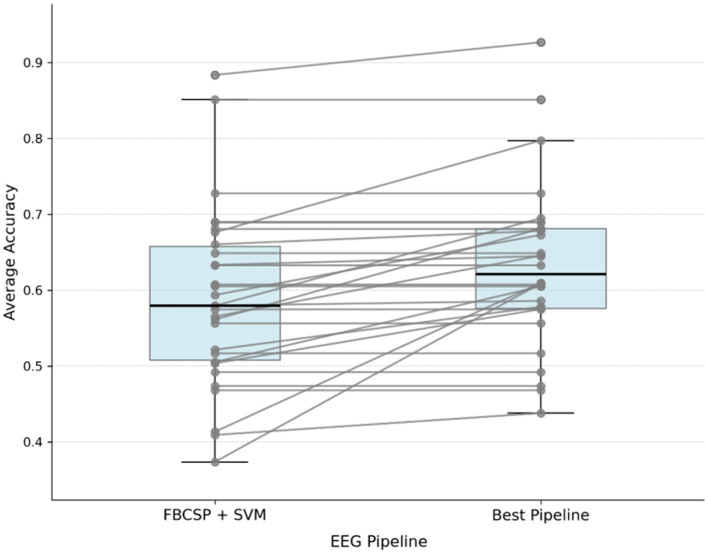 Figure 12
Peer Reviews
No public reviews on file for this paper yet. If you reviewed it on a platform where reviews are public (OpenReview, ICLR, NeurIPS, ICML), you can paste yours below so the community can read it here.
Videos
No videos yet. Explain this paper in a talk, walkthrough, or lecture? Add one.
Taxonomy
TopicsEEG and Brain-Computer Interfaces · Gaze Tracking and Assistive Technology · Social Robot Interaction and HRI