Risk factors for early mortality and severe intraventricular hemorrhage in extremely preterm infants with gestational age <28 weeks: a retrospective case-control study
Ziqi Wu, Yimeng Zhao, Ruifeng Tian, Sicong Peng, Qin Liu, Shiwen Xia, Yi Zhang

TL;DR
This study identifies risk factors for early death and brain bleeding in extremely premature infants, showing that high vasoactive scores, cerebral artery resistance, vaginal delivery, and low gestational age predict worse outcomes.
Contribution
The study identifies and validates a combination of clinical and physiological factors as strong predictors of adverse outcomes in extremely preterm infants.
Findings
Max VIS > 9.5, MCA-RI > 0.81, vaginal delivery, and small gestational age are independent risk factors for adverse outcomes.
Combining these four factors achieves an AUC of 0.833, with 72.7% sensitivity and 81.4% specificity.
Each individual factor has moderate predictive value, but their combination provides the highest accuracy.
Abstract
Extremely premature infants (EPIs) are at significant risk for early mortality and severe intraventricular hemorrhage. This study aimed to investigate the risk factors associated with early mortality and severe intraventricular hemorrhage in EPIs with a gestational age of less than 28 weeks and to evaluate the predictive value of these risk factors in determining adverse outcomes. A retrospective analysis was conducted on clinical data from EPIs admitted to the Neonatal Intensive Care Unit at Maternal and Child Health Hospital of Hubei Province between January 2019 and December 2024. Infants were categorized into two groups based on their early outcomes: an adverse outcome group (n = 110) and a favorable outcome group (n = 183). Binary logistic regression analysis was used to identify high-risk factors for adverse outcomes in EPIs, and receiver operating characteristic (ROC) curve…
Genes, proteins, chemicals, diseases, species, mutations and cell lines named across the full text — each resolved to its canonical identifier and authoritative record.
Click any figure to enlarge with its caption.
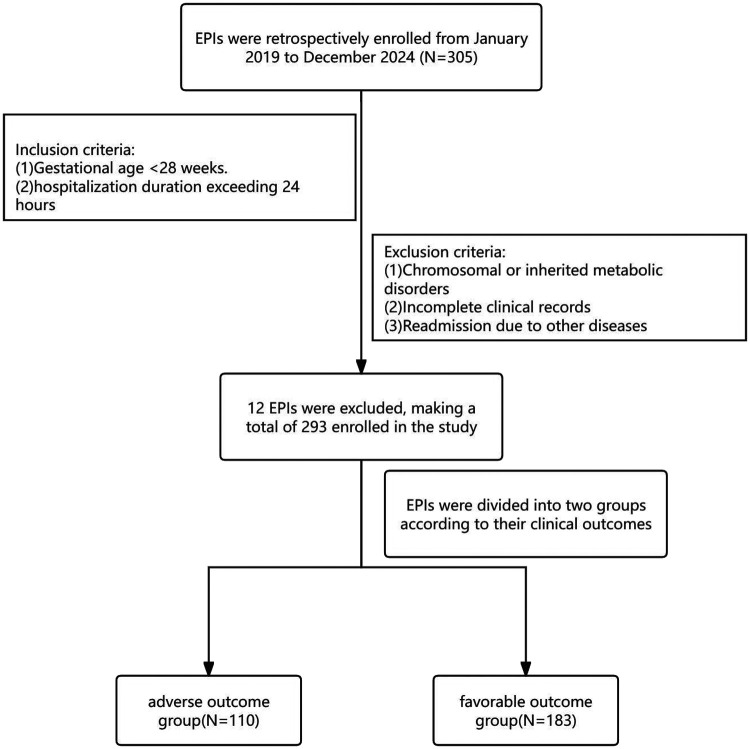 Figure 1
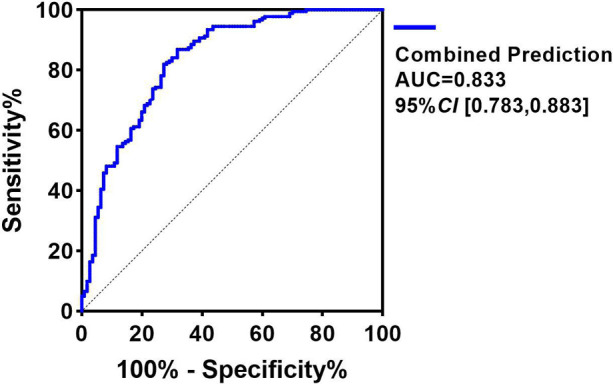 Figure 2
Peer Reviews
No public reviews on file for this paper yet. If you reviewed it on a platform where reviews are public (OpenReview, ICLR, NeurIPS, ICML), you can paste yours below so the community can read it here.
Videos
No videos yet. Explain this paper in a talk, walkthrough, or lecture? Add one.
Taxonomy
TopicsNeonatal and fetal brain pathology · Neonatal Respiratory Health Research · Child Abuse and Related Trauma