Alterations in pelvic kinematics with speed, incline, and fatigue in female runners
Jaka Kovše, Irinej Papuga, Miha Drobnič, Ahsen Buyukaslan, Vojko Strojnik, Matej Supej

TL;DR
This study examines how speed, incline, and fatigue affect pelvic movement in female runners, finding that these factors significantly alter motion patterns, potentially increasing injury risk.
Contribution
The study provides novel insights into sex-specific pelvic kinematic responses to speed, incline, and fatigue in female runners.
Findings
Higher running speeds increase peak pelvic rotation, tilt, and obliquity, as well as their ranges of motion.
A 10% incline increases peak pelvic obliquity and rotation and expands motion ranges, unlike a 5% incline.
Fatigue increases peak pelvic rotation and motion ranges for rotation and tilt, with altered incline effects under fatigue.
Abstract
In running, female runners show higher overuse-injury rates, partly due to sex-specific anatomy and biomechanics. Pelvic motion is central to lower-limb kinematics, however, female-specific responses are underexamined. This study tested how running speed, incline, and fatigue influence pelvic rotation, tilt, and obliquity in recreational female runners. Twenty-two females completed treadmill trials at 10, 12, and 14 km/h on level ground and at 10 km/h with 5% and 10% inclines, before and after a 30-minute run at 80% heart-rate reserve to induce moderate fatigue. A 3D motion-capture system recorded pelvic rotation, tilt, and obliquity at heel-strike, toe-off, peak values, and ranges of motion. Linear mixed-effects models assessed main and interaction effects; asymmetry was quantified via symmetry index between left and right gait cycles. Higher speeds increased peak pelvic rotation,…
Genes, proteins, chemicals, diseases, species, mutations and cell lines named across the full text — each resolved to its canonical identifier and authoritative record.
Click any figure to enlarge with its caption.
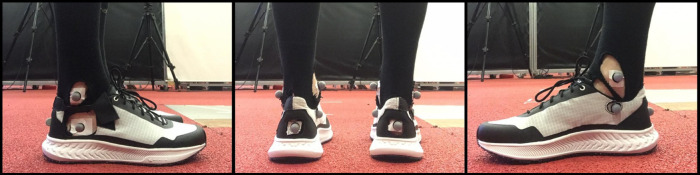 Figure 1
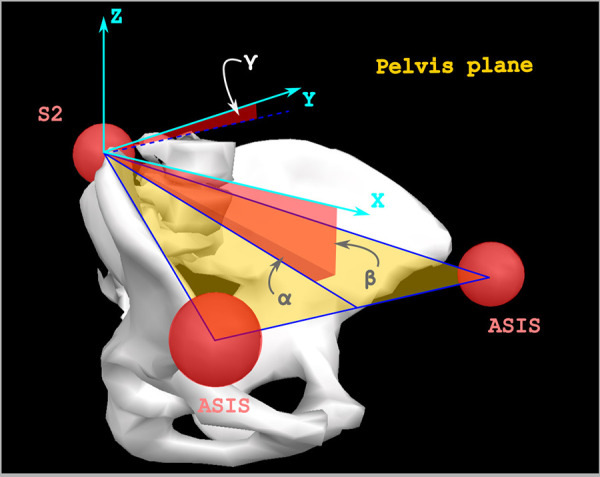 Figure 2
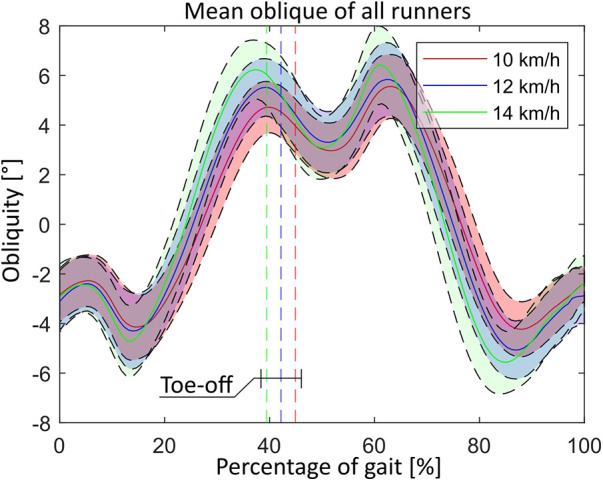 Figure 3
Peer Reviews
No public reviews on file for this paper yet. If you reviewed it on a platform where reviews are public (OpenReview, ICLR, NeurIPS, ICML), you can paste yours below so the community can read it here.
Videos
No videos yet. Explain this paper in a talk, walkthrough, or lecture? Add one.
Taxonomy
TopicsLower Extremity Biomechanics and Pathologies · Sports Performance and Training · Occupational Health and Performance