Evaluating the nutrient and fatty acid profiles of black soldier fly larvae (Hermetia illucens) raised on various diets in Thailand
Sarayut Pittarate, Chaiwat Arjin, Perumal Vivekanandhan, Kannan Swathy, Chun-I Chiu, Supamit Mekchay, Patipan Hnokaew, Apinya Sartsook, Thanandon Siripan, Korawan Sringarm, Patcharin Krutmuang

TL;DR
This study shows that black soldier fly larvae raised on different organic waste materials in Thailand have varying nutritional values, making them a promising sustainable feed source.
Contribution
The study evaluates the impact of various Thai organic substrates on the nutritional and fatty acid profiles of black soldier fly larvae.
Findings
Larvae reared on chicken feed, pig feed, soy milk residue, and perilla cake had high crude protein content.
Soy milk residue-fed larvae had the highest levels of oleic and linoleic acids.
Coconut press cake-fed larvae had the highest saturated fatty acid content.
Abstract
Black soldier fly larvae (BSFL) have gained increasing attention as a sustainable alternative protein source for animal feed, particularly when reared on organic by-products. This study evaluated the nutritional composition of BSFL reared on different organic substrates to support sustainable feed production. BSFL were reared on five organic substrates: chicken feed, pig feed, soy milk residue, coconut press cake, and perilla cake. Larvae were cultivated in metal trays (23 × 15 cm) for 2–4 weeks under controlled conditions (28 ± 2 °C; 65 ± 5% relative humidity). At the prepupal stage, larvae were harvested and analyzed for dry matter, crude protein, crude fiber, ether extract, ash, growth performance, and fatty acid profiles. Significant differences in nutritional composition were observed among substrates. Crude protein content was high in larvae fed chicken feed (50.55 ± 0.07%), pig…
Genes, proteins, chemicals, diseases, species, mutations and cell lines named across the full text — each resolved to its canonical identifier and authoritative record.
Click any figure to enlarge with its caption.
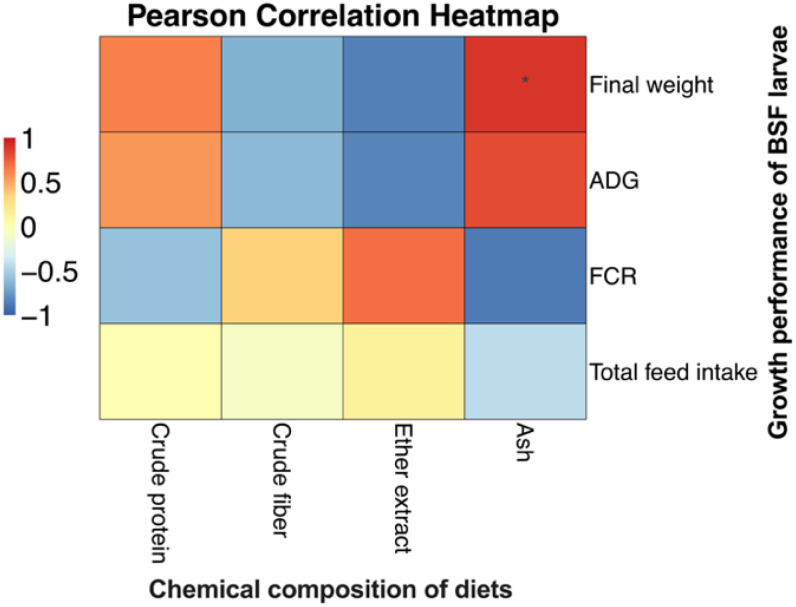 Figure 1
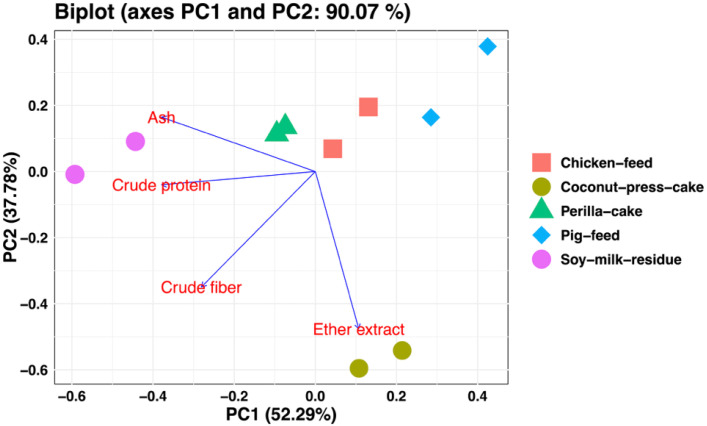 Figure 2
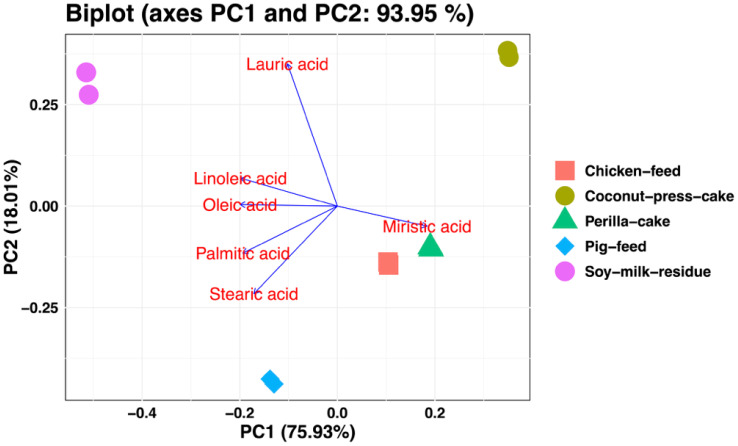 Figure 3
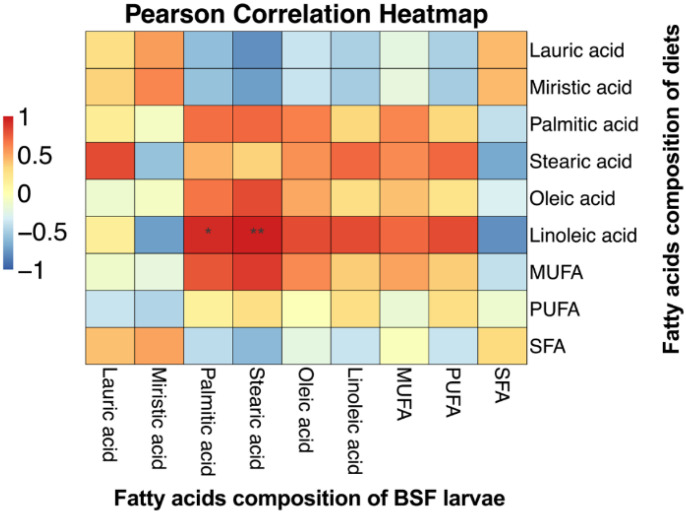 Figure 4
Peer Reviews
No public reviews on file for this paper yet. If you reviewed it on a platform where reviews are public (OpenReview, ICLR, NeurIPS, ICML), you can paste yours below so the community can read it here.
Videos
No videos yet. Explain this paper in a talk, walkthrough, or lecture? Add one.
Taxonomy
TopicsInsect Utilization and Effects · Aquaculture Nutrition and Growth · Dyeing and Modifying Textile Fibers