Long-term Subclinical Cardiotoxicity of Modern Cardiotoxic Treatment Protocols in Childhood Cancer Survivors Assessed by Cardiovascular Magnetic Resonance T1 Mapping and Circulatory Biomarkers
Roman Panovský, Marie Tomandlová, Mary Luz Mojica-Pisciotti, Tomáš Kepák, Jan Máchal, Věra Feitová, Jan Frič, Marcela Hortová-Kohoutková, Tomáš Holeček, Josef Tomandl, Lukáš Opatřil, Vladimír Kincl

TL;DR
This study finds that childhood cancer survivors show early heart damage from past treatments, using advanced imaging and blood tests.
Contribution
The study introduces a multimodal approach combining CMR T1 mapping and biomarkers to detect subclinical cardiotoxicity in childhood cancer survivors.
Findings
CCS had reduced left ventricular ejection fraction and MAPSE compared to controls.
Biomarkers like myeloperoxidase and ischemia-modified albumin were elevated in CCS.
NT-proBNP levels correlated with CMR parameters but remained within normal limits.
Abstract
Childhood cancer survivors (CCS) are at increased risk of developing heart disease due to the cardiotoxic effects of oncological treatment. This study aimed to investigate the long-term cardiotoxic effects of cancer therapy in CCS using a multimodal approach combining cardiac magnetic resonance (CMR) imaging and circulating blood biomarkers. A total of 117 CCS (mean age 24.7 ± 5.2 years), at least five years post-treatment and in complete remission, were prospectively enrolled. All participants underwent CMR, including T1 mapping, and blood analysis for biomarkers of endothelial damage and oxidative stress. Parameters were compared with sex- and age-matched healthy control groups. Anthracycline treatment was administered in 82.9% of CCS (mean cumulative doxorubicin equivalent dose 231.7 ± 92.0 mg/m²). Left ventricular ejection fraction and mitral annular plane systolic excursion were…
Genes, proteins, chemicals, diseases, species, mutations and cell lines named across the full text — each resolved to its canonical identifier and authoritative record.
Click any figure to enlarge with its caption.
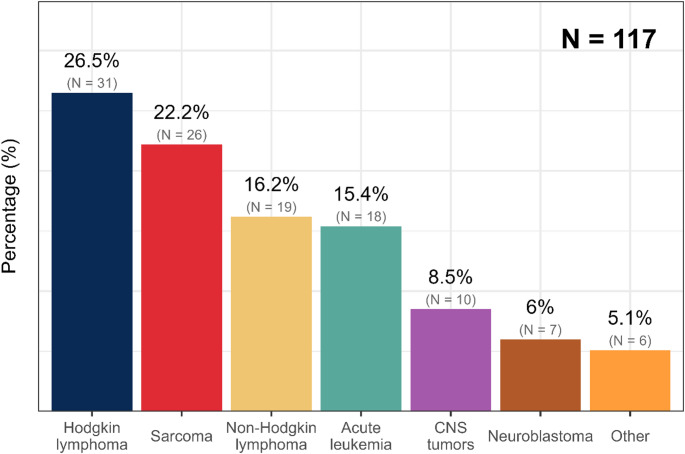 Figure 1
Peer Reviews
No public reviews on file for this paper yet. If you reviewed it on a platform where reviews are public (OpenReview, ICLR, NeurIPS, ICML), you can paste yours below so the community can read it here.
Videos
No videos yet. Explain this paper in a talk, walkthrough, or lecture? Add one.
Taxonomy
TopicsChemotherapy-induced cardiotoxicity and mitigation · Lung Cancer Research Studies · Chemotherapy-induced organ toxicity mitigation