Critical views for safe surgical phase progression in endoscopic endonasal transsphenoidal pituitary adenoma resection: modified Delphi consensus
Tjasa Zaletel, Danyal Z. Khan, Anjana Wijekoon, Zhehua Mao, Joao Paulo Almeida, Anouk Borg, Jonathan Chainey, Michael D. Cusimano, Daniel A. Donoho, Neil Dorward, Juan Carlos Fernandez-Miranda, Giorgio Fiore, Theofanis Giannis, Alfonso Lagares Gomez-Abascal, Lauren Harris

TL;DR
Experts developed a framework called CVPPs to guide safe steps during pituitary tumor surgery, which could also help train surgeons and support AI tools.
Contribution
The paper introduces the first international consensus on Critical Views for Phase Progression (CVPPs) in pituitary surgery, standardizing visual benchmarks for safe surgical steps.
Findings
Consensus identified essential and desirable CVPPs for three surgical phases in both micro- and macroadenoma surgeries.
Validation showed high agreement between expert ratings and the CVPP framework, with discrepancies only in intentionally incomplete views.
CVPPs can improve training and serve as a foundation for AI-driven surgical guidance systems.
Abstract
Endonasal transsphenoidal surgery is the gold-standard for pituitary adenoma resection, yet no intraoperative framework exists to confirm safe phase progression. Inspired by the Critical View of Safety in laparoscopic cholecystectomy and engineering “phase-gate” process, we propose the Critical Views for Phase Progression (CVPPs) – a set of visual cues confirming phase objectives and safe phase progression. Designed to be clinically relevant and machine-readable, CVPPs aim to support training and future AI-driven guidance systems. A three-round modified Delphi process was conducted involving 15 pituitary surgery experts from 13 centres across Europe and North America. CVPPs for the naso-sphenoid, sellar, and closure phases were classified as “Essential”, “Desirable” or “Not Necessary”. Consensus required ≥ 70% agreement. A local validation study was subsequently performed involving six…
Genes, proteins, chemicals, diseases, species, mutations and cell lines named across the full text — each resolved to its canonical identifier and authoritative record.
Click any figure to enlarge with its caption.
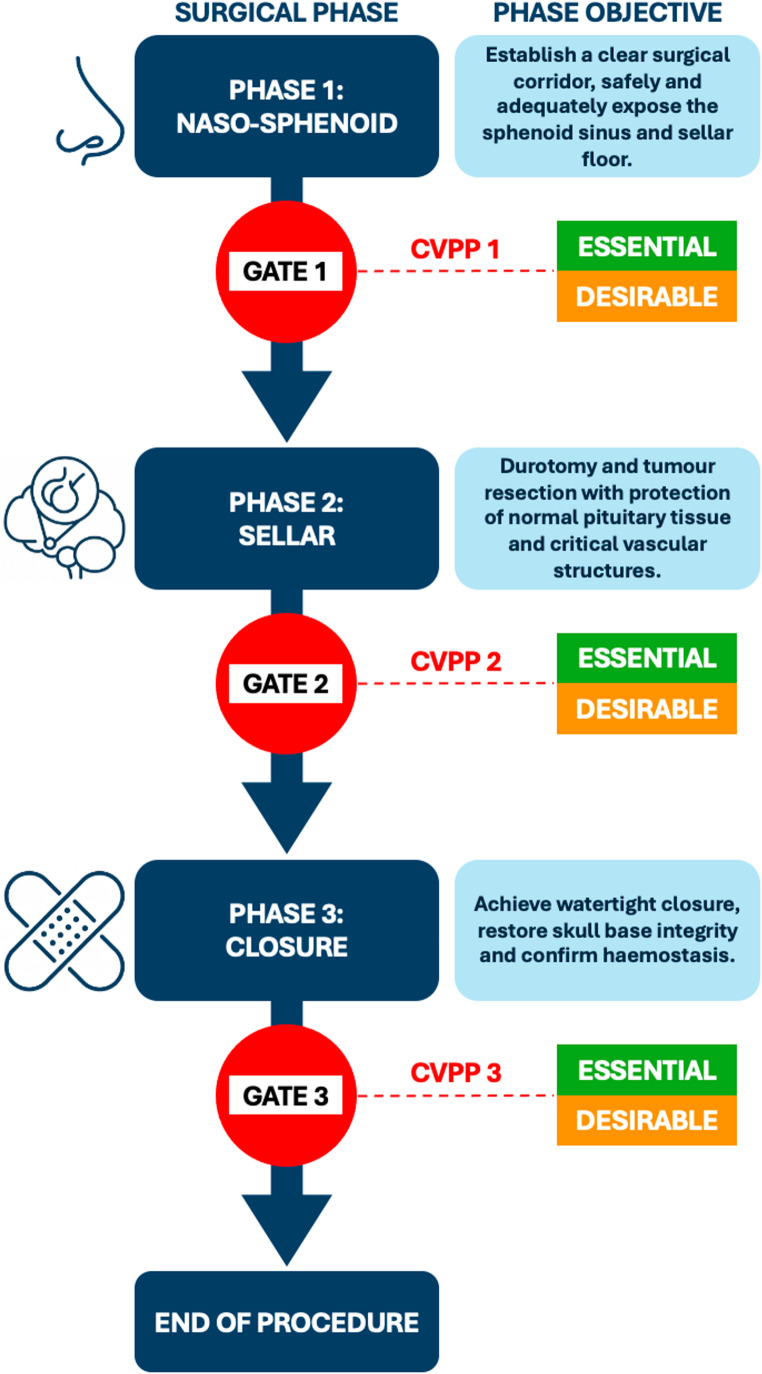 Figure 1
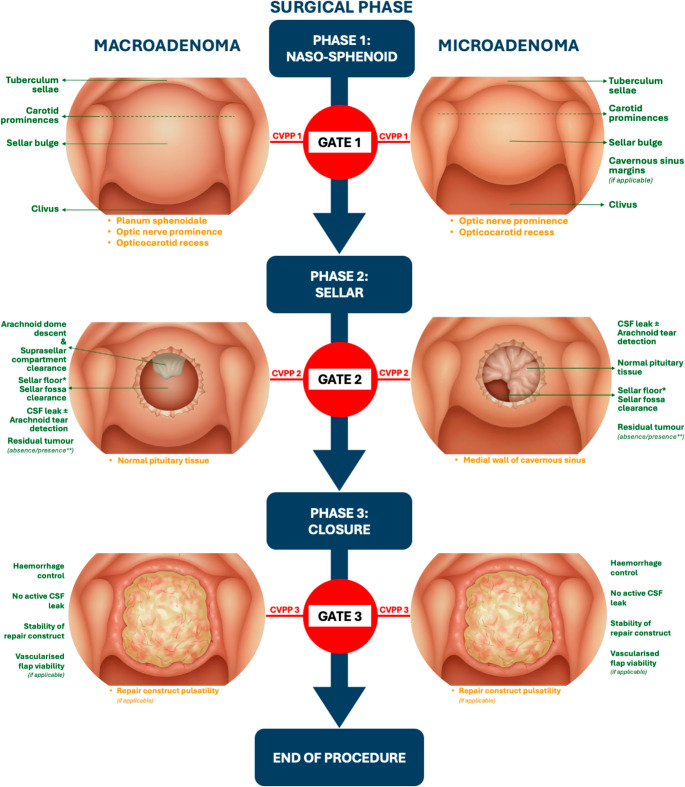 Figure 2
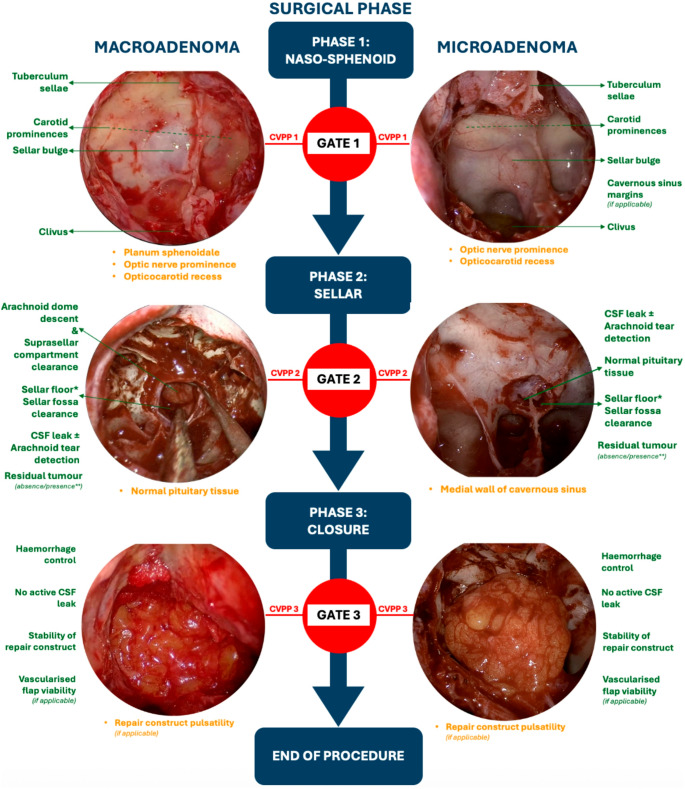 Figure 2
 Figure 4
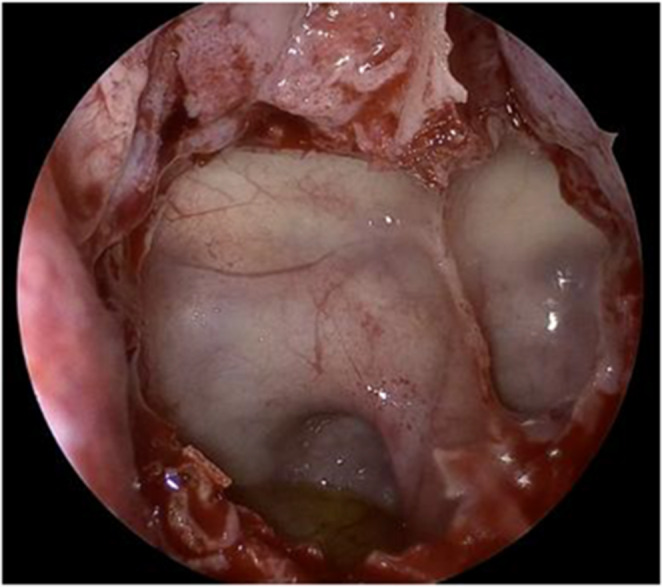 Figure 5
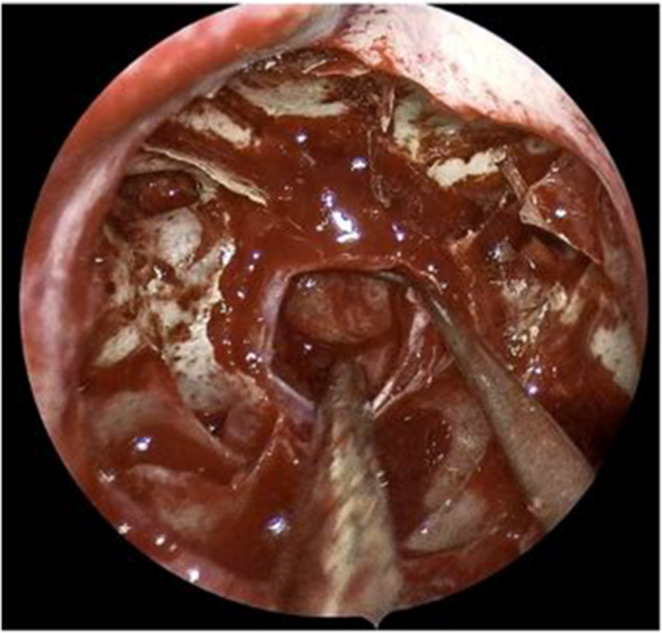 Figure 6
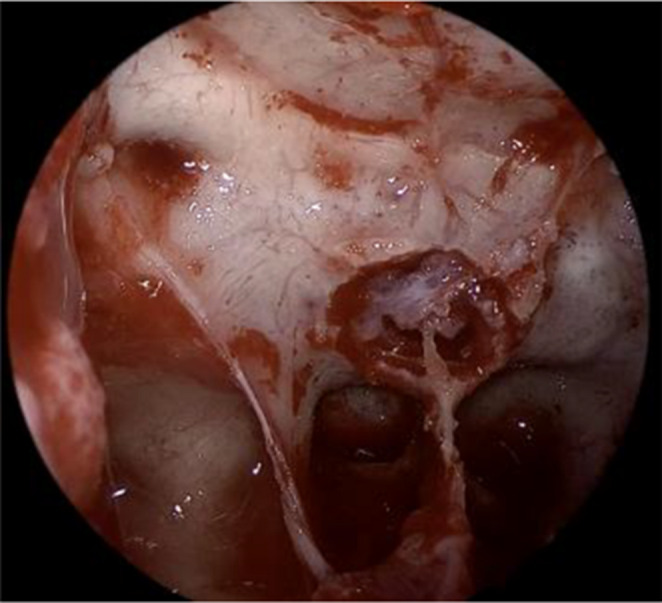 Figure 7
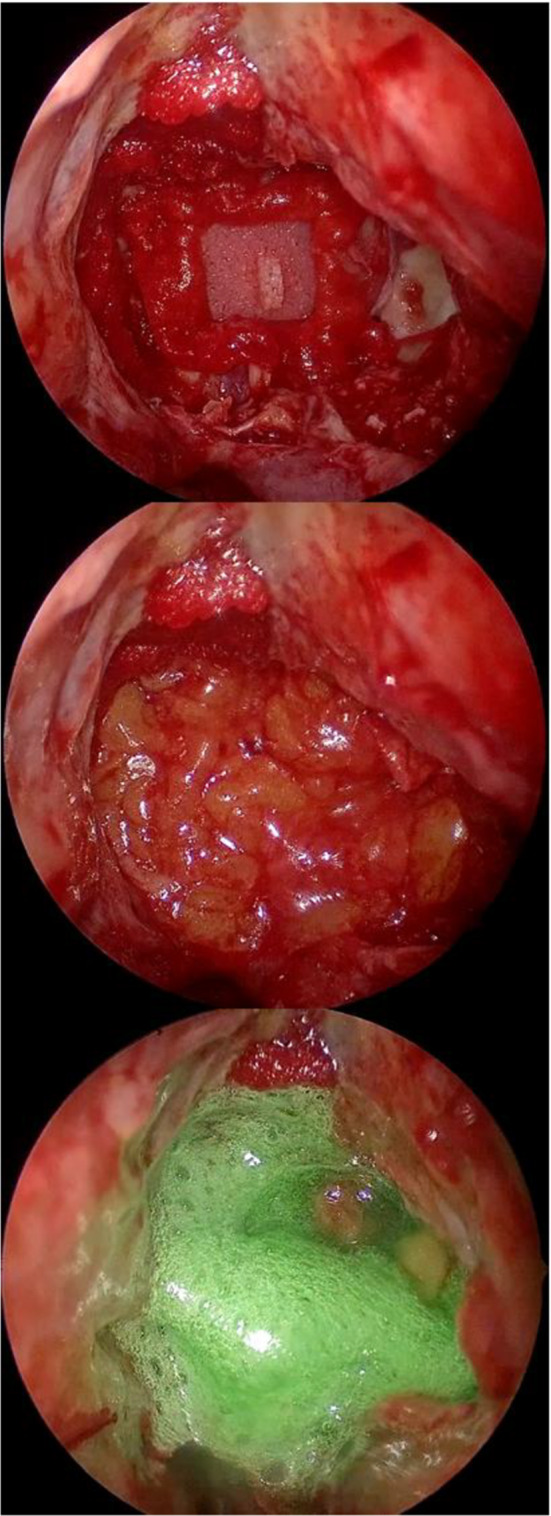 Figure 8
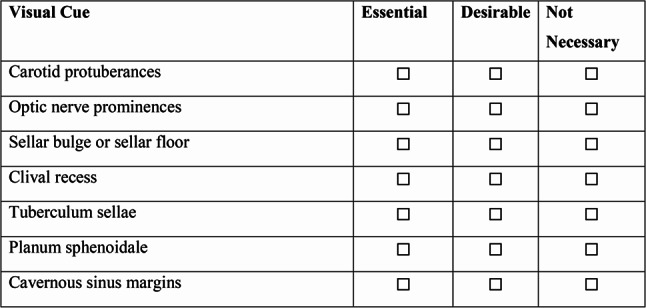 Figure 9
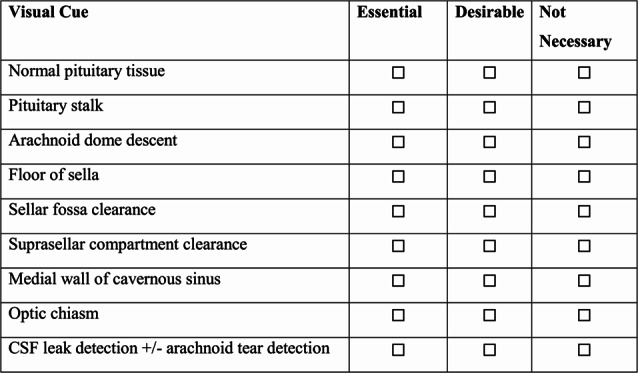 Figure 10
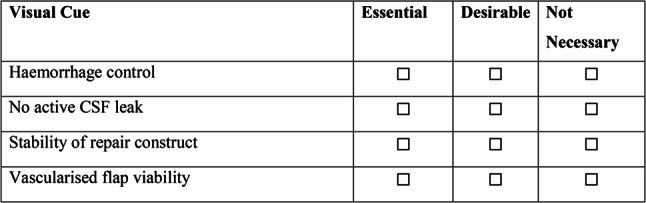 Figure 11
Peer Reviews
No public reviews on file for this paper yet. If you reviewed it on a platform where reviews are public (OpenReview, ICLR, NeurIPS, ICML), you can paste yours below so the community can read it here.
Videos
No videos yet. Explain this paper in a talk, walkthrough, or lecture? Add one.
Taxonomy
TopicsPituitary Gland Disorders and Treatments · Surgical Simulation and Training · Thyroid and Parathyroid Surgery