Individual differences in motives for costly punishment
Scott Claessens, Quentin D. Atkinson, Nichola J. Raihani

TL;DR
This study explores why people choose to punish others in cooperative situations, finding that motives vary and are linked to personality and beliefs.
Contribution
The study identifies distinct punishment strategies and links them to personality, political ideology, and religiosity using economic games.
Findings
The most common strategy was to never punish in cooperative scenarios.
Punishment motives were more aligned with egalitarian goals than changing behavior.
Punishment strategies correlated with personality traits, social preferences, and religiosity.
Abstract
Costly punishment is thought to be a key mechanism sustaining human cooperation. However, the motives for punitive behaviour remain unclear. Although often assumed to be motivated by a desire to convert cheats into cooperators, punishment is also consistent with other functions, such as levelling payoffs or improving one’s relative position. We used six economic games to tease apart different motives for punishment and to explore whether different punishment strategies were associated with personality variables, political ideology, and religiosity. We used representative samples from the United Kingdom and the United States (N = 2010) to estimate the frequency of different punishment strategies in the population. The most common strategy was to never punish. For people who did punish, strategy use was more consistent with egalitarian motives than behaviour-change motives. Nevertheless,…
Genes, proteins, chemicals, diseases, species, mutations and cell lines named across the full text — each resolved to its canonical identifier and authoritative record.
Click any figure to enlarge with its caption.
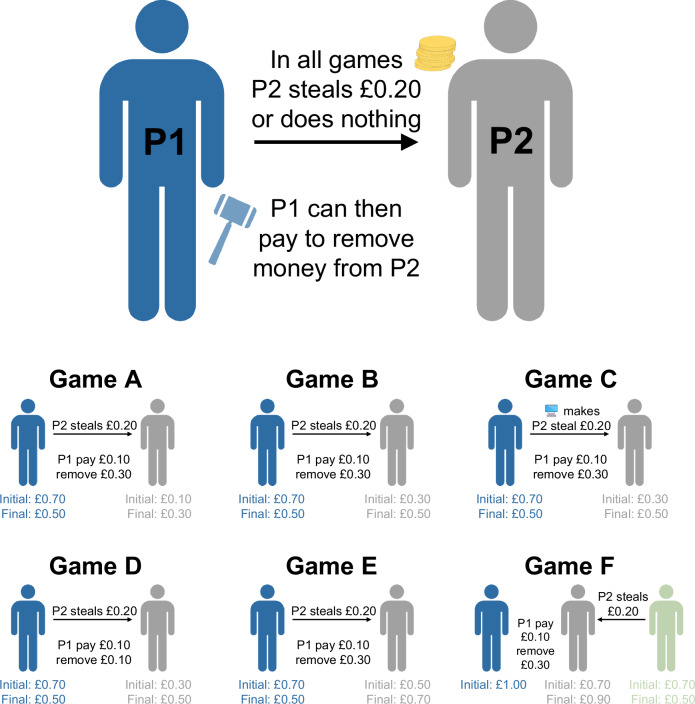 Figure 1
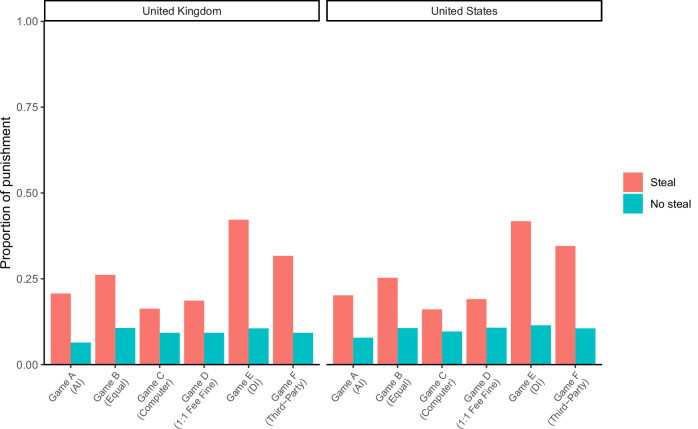 Figure 2
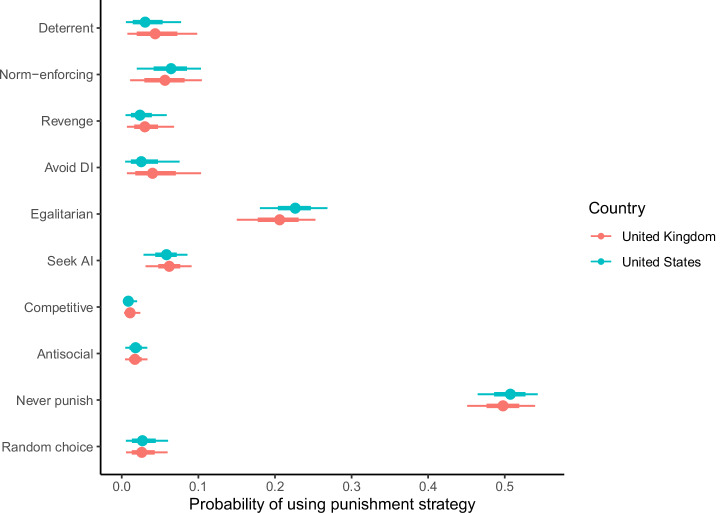 Figure 3
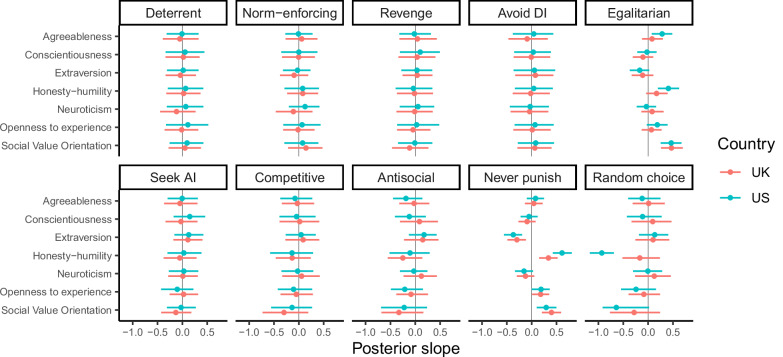 Figure 4
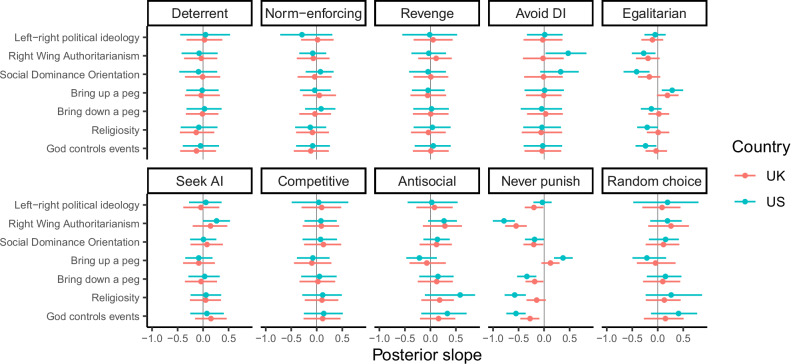 Figure 5
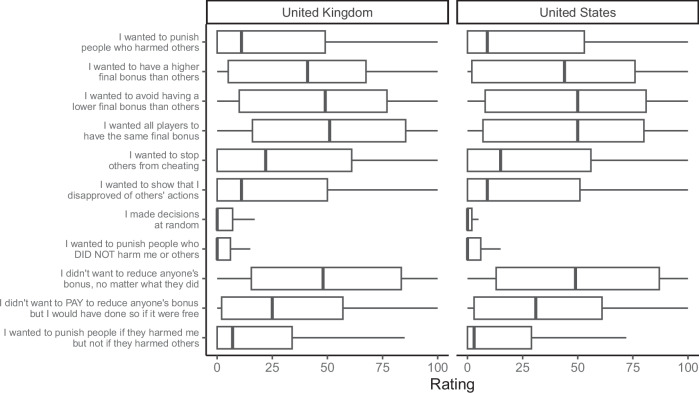 Figure 6
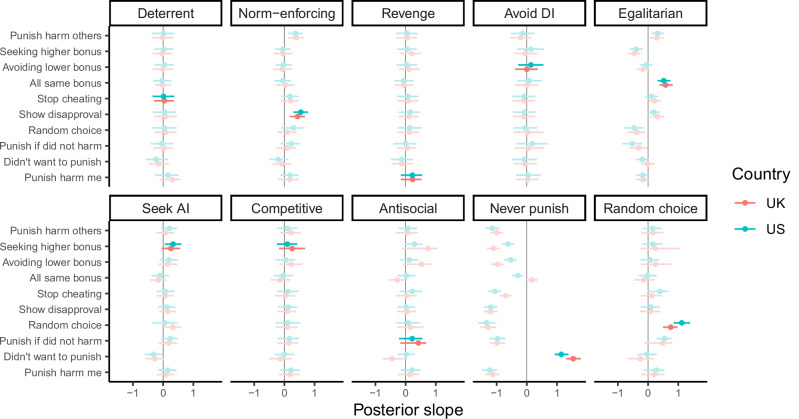 Figure 7
Peer Reviews
No public reviews on file for this paper yet. If you reviewed it on a platform where reviews are public (OpenReview, ICLR, NeurIPS, ICML), you can paste yours below so the community can read it here.
Videos
No videos yet. Explain this paper in a talk, walkthrough, or lecture? Add one.
Taxonomy
TopicsEvolutionary Game Theory and Cooperation · Experimental Behavioral Economics Studies · Evolutionary Psychology and Human Behavior