The impact of DeepSeek’s perceived interactivity on medical students’ self-directed learning ability
Yubin Ju, Jingwei Li, Xiaopeng Zhang, Meijie Wu, Xinyu Pang, Zhengyu Li, Junyang Wang, Jiaxin Li, Yuanyuan Zhang, Xin Dai

TL;DR
This study examines how DeepSeek's perceived interactivity affects medical students' self-directed learning ability and willingness to use AI tools.
Contribution
The study constructs a novel framework integrating UTAUT, SCT, and TTF to explore how perceived interactivity influences learning ability through self-efficacy and social influence.
Findings
Perceived interactivity indirectly promotes willingness to use via performance and effort expectancy.
Social influence has the strongest direct effect on willingness to use (β = 0.925).
Self-efficacy mediates the relationship between use intention and self-directed learning ability.
Abstract
With the rapid advancement of artificial intelligence technology, DeepSeek, as a new-generation generative AI model, has demonstrated significant advantages in the field of medical education. Its robust interactive capabilities and localized deployment features make it particularly well-suited for medical education scenarios. This study aims to explore the mechanism and underlying pathways through which perceived interactivity influences medical students’ self-directed learning ability. It also examines whether social influence indirectly affects self-directed learning ability via the mediating role of self-efficacy, and investigates whether trust moderates the relationship between social influence and behavioral intention. These findings reveal theoretical and practical implications for medical education contexts. This study employed SPSS 27.0 software for statistical data description,…
Genes, proteins, chemicals, diseases, species, mutations and cell lines named across the full text — each resolved to its canonical identifier and authoritative record.
Click any figure to enlarge with its caption.
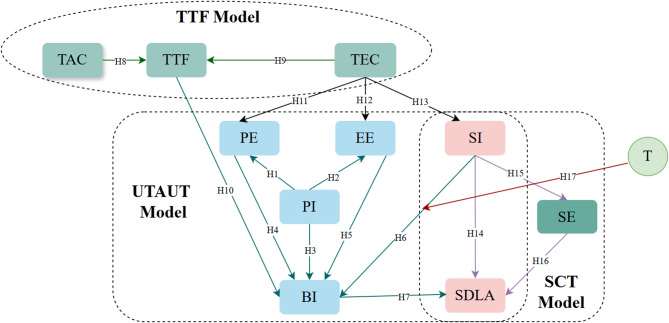 Figure 1
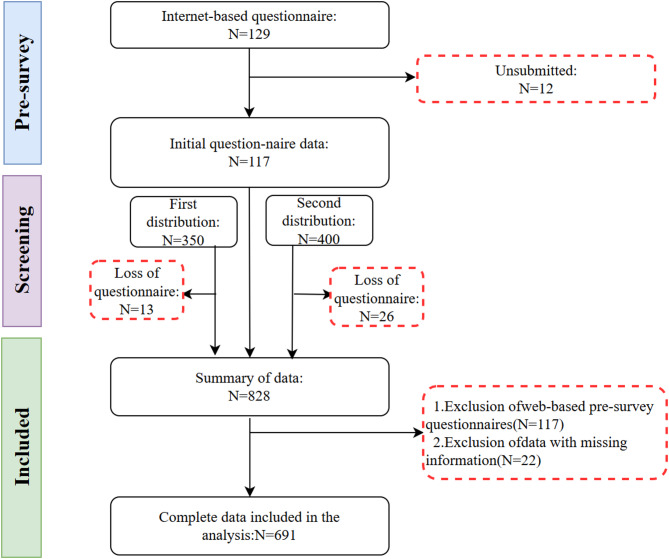 Figure 2
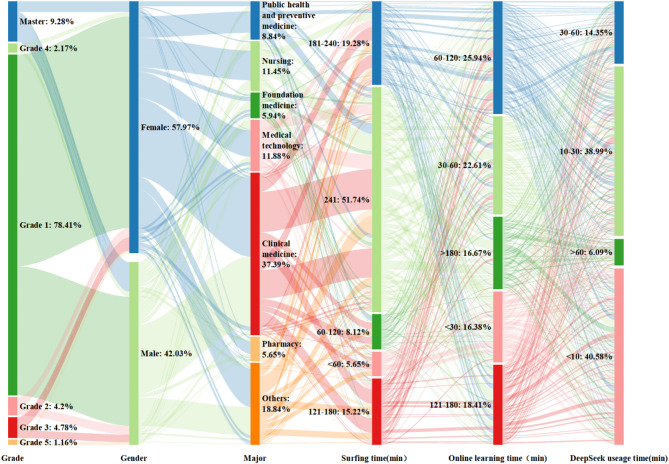 Figure 3
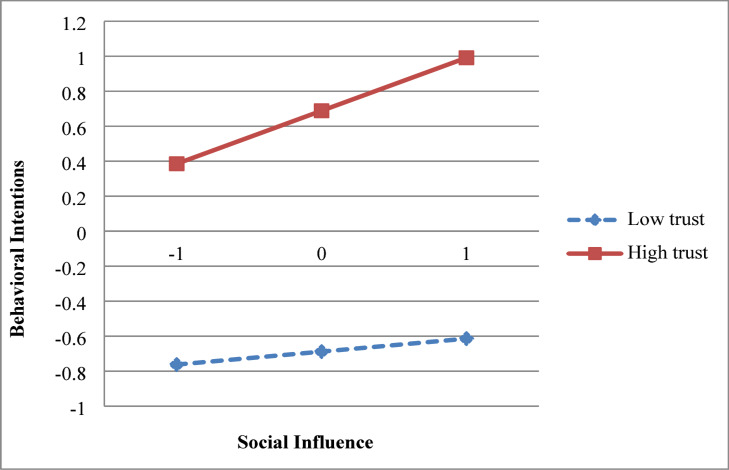 Figure 4
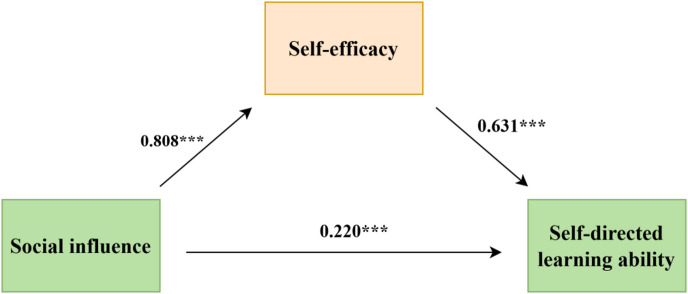 Figure 5
 Figure 6
Peer Reviews
No public reviews on file for this paper yet. If you reviewed it on a platform where reviews are public (OpenReview, ICLR, NeurIPS, ICML), you can paste yours below so the community can read it here.
Videos
No videos yet. Explain this paper in a talk, walkthrough, or lecture? Add one.
Taxonomy
TopicsTechnology Adoption and User Behaviour · Impact of Technology on Adolescents · AI in Service Interactions