The Clinical Impact of Sarcopenia and Delirium in Hospitalized Elderly Patients: An Analysis Using Muscle Ultrasound
Thomas Fraccalini, Laura Santos Ribeiro, Andrea Trogolo, Beatrice Tarozzo, Valerio Piras, Julia Michelin Vecchini, Rouslan Senkeev, Oksana Sukhova, Luciano Cardinale, Giuseppe Maina, Salvatore Di Gioia, Davide Minniti, Truce Massimiliano, Binello Elisa, Finiguerra Ivana

TL;DR
This study shows that muscle ultrasound can accurately link sarcopenia and delirium in elderly hospitalized patients, improving diagnosis and care.
Contribution
The study introduces muscle ultrasound as a reliable tool for diagnosing sarcopenia and its association with delirium in elderly patients.
Findings
USSI correlated strongly with cognitive and frailty measures like MMSE, 4AT, and ADL/IADL.
Women had higher USSI and worse cognitive/frailty scores, consistent across sexes.
USSI showed strong associations with BMI, grip strength, and muscle thickness.
Abstract
Sarcopenia and delirium are two highly prevalent clinical syndromes among hospitalized elderly patients, both independently associated with adverse outcomes such as increased risk of falls, disability and mortality. Although a correlation between sarcopenia and delirium has been previously reported, past studies have often relied on less reliable surrogate markers for sarcopenia, leading to potential inaccuracies in diagnosis and assessment. This study aims to address these limitations by utilizing a more precise and reliable diagnostic tool for sarcopenia, specifically, muscle ultrasound (US) to measure the quadriceps femoris muscle and its pennation angle, to accurately evaluate the correlation between sarcopenia and delirium in acutely admitted geriatric patients. We used muscle US to measure sarcopenia with reliable markers, specifically the Ultrasound Sarcopenia Index (USSI). This…
Genes, proteins, chemicals, diseases, species, mutations and cell lines named across the full text — each resolved to its canonical identifier and authoritative record.
Click any figure to enlarge with its caption.
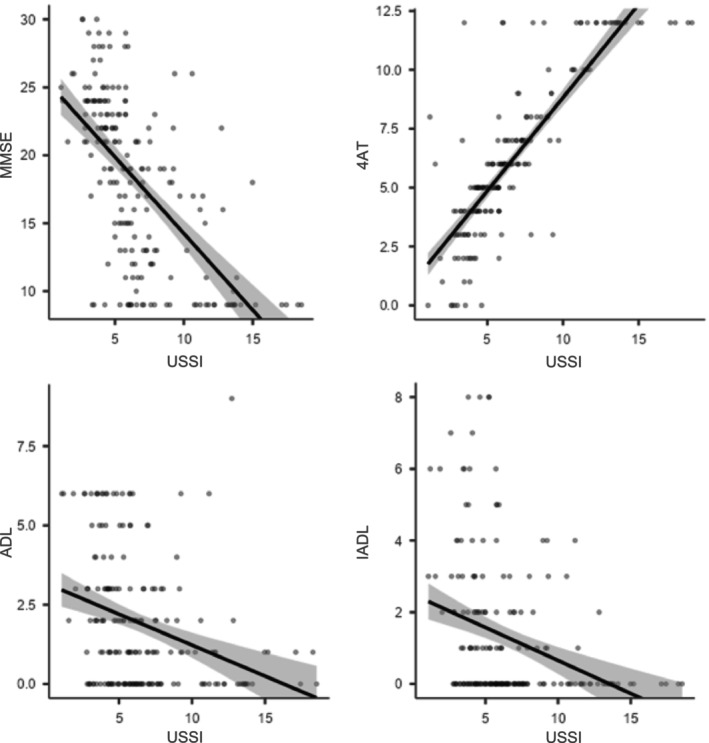 Figure 1
 Figure 2
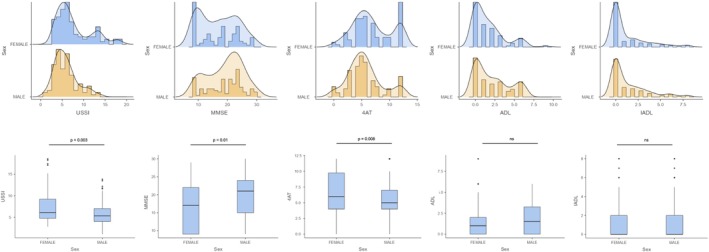 Figure 3
Peer Reviews
No public reviews on file for this paper yet. If you reviewed it on a platform where reviews are public (OpenReview, ICLR, NeurIPS, ICML), you can paste yours below so the community can read it here.
Videos
No videos yet. Explain this paper in a talk, walkthrough, or lecture? Add one.
Taxonomy
TopicsIntensive Care Unit Cognitive Disorders · Nutrition and Health in Aging · Clinical Nutrition and Gastroenterology