Effect of SGLT2 inhibitors versus DPP4 inhibitors on major adverse kidney events in diabetic people with varied kidney function decline
Yu-Wen Cheng, Yi-Wei Kao, Shao-Wei Chen, Yi-Hsin Chan, Tze-Fan Chao

TL;DR
SGLT2 inhibitors are more effective than DPP4 inhibitors in slowing kidney function decline in people with type 2 diabetes, regardless of their prior kidney function decline rate.
Contribution
This study demonstrates that SGLT2 inhibitors provide better kidney protection than DPP4 inhibitors across varying levels of prior kidney function decline in diabetic patients.
Findings
SGLT2i therapy was associated with slower eGFR decline and lower risk of major adverse kidney events compared to DPP4i.
Treatment benefits of SGLT2i were consistent across different past eGFR decline categories.
No difference in urinary albumin-to-creatinine ratio deterioration was observed between the two drug groups.
Abstract
The comparative kidney-protective effects of sodium-glucose cotransporter 2 inhibitors (SGLT2is) versus dipeptidyl peptidase-4 inhibitors (DPP4is) in people with type 2 diabetes (T2D) with varying past estimated glomerular filtration rate (eGFR) decline rates remain unclear. This retrospective study analyzed 4,011 propensity score-matched T2D people from a multi-center database, each with at least 2 years of eGFR data before therapy and 1 year of follow-up. The patients received either SGLT2i or DPP4i between June 2016 and December 2021. Among paired patients, 23.7% (SGLT2i) and 25.4% (DPP4i) were rapid decliners (≥5 mL/min/1.73 m²/year). SGLT2i treatment was consistently associated with a slower eGFR decline than DPP4i, regardless of past eGFR slope. Post-treatment rapid eGFR decline decreased in both groups but remained higher in DPP4i users (20.5% vs. 15.4%). Those patients with…
Genes, proteins, chemicals, diseases, species, mutations and cell lines named across the full text — each resolved to its canonical identifier and authoritative record.
Click any figure to enlarge with its caption.
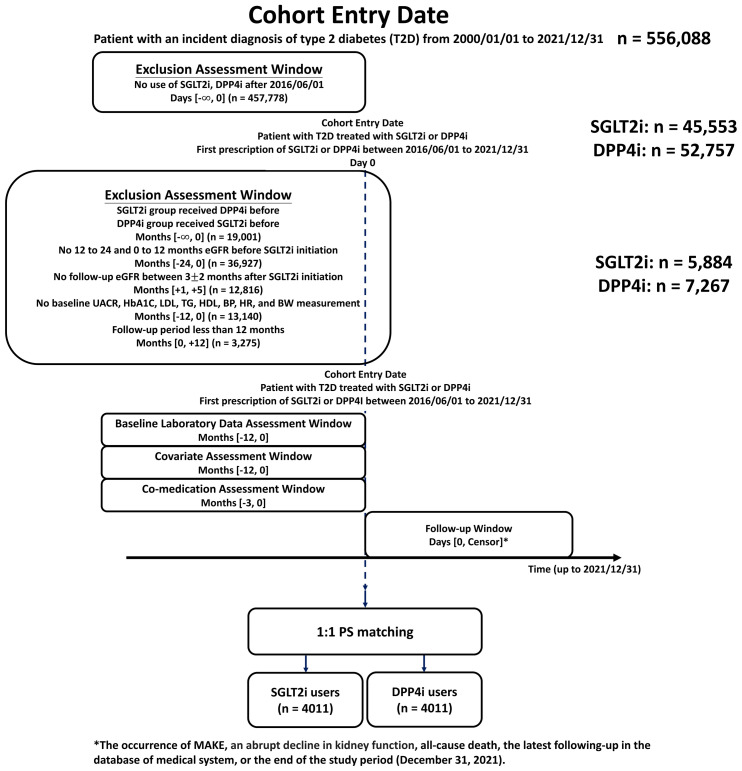 Figure 1
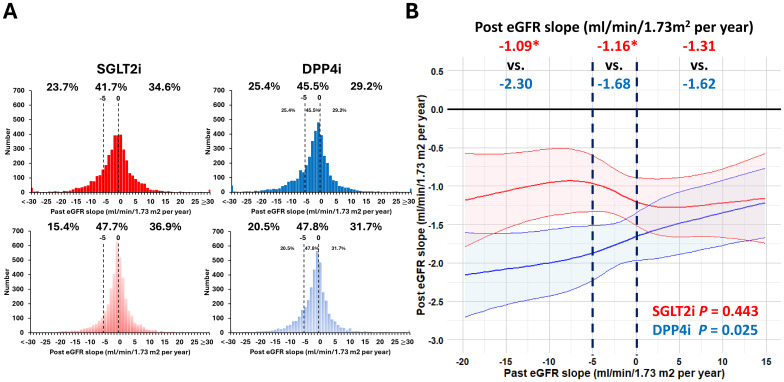 Figure 2
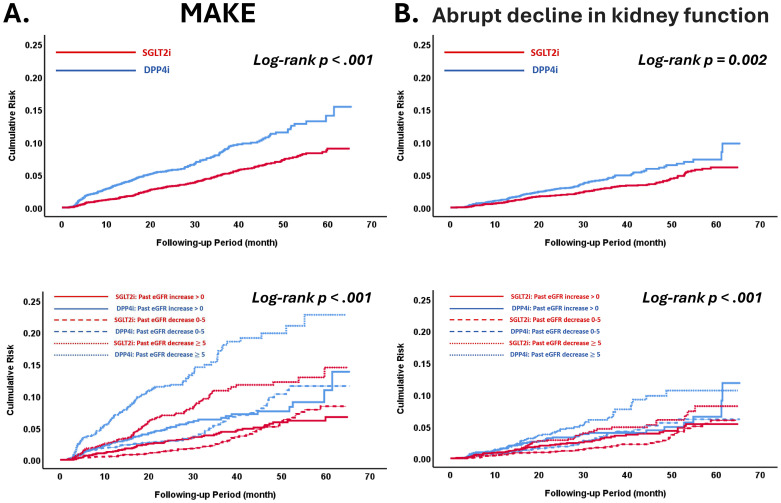 Figure 3
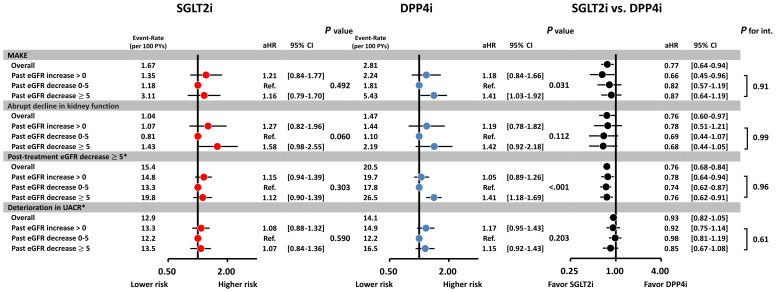 Figure 4
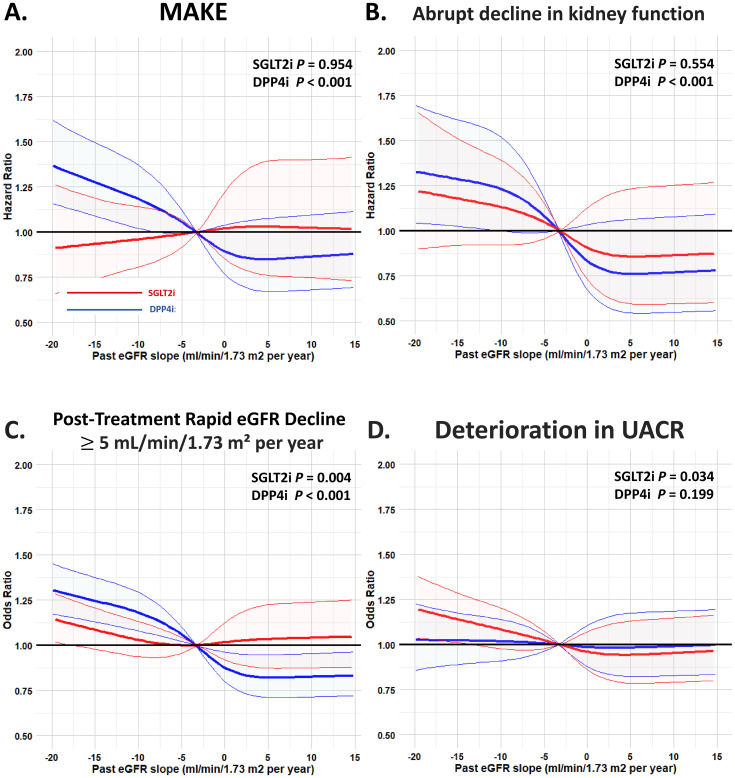 Figure 5
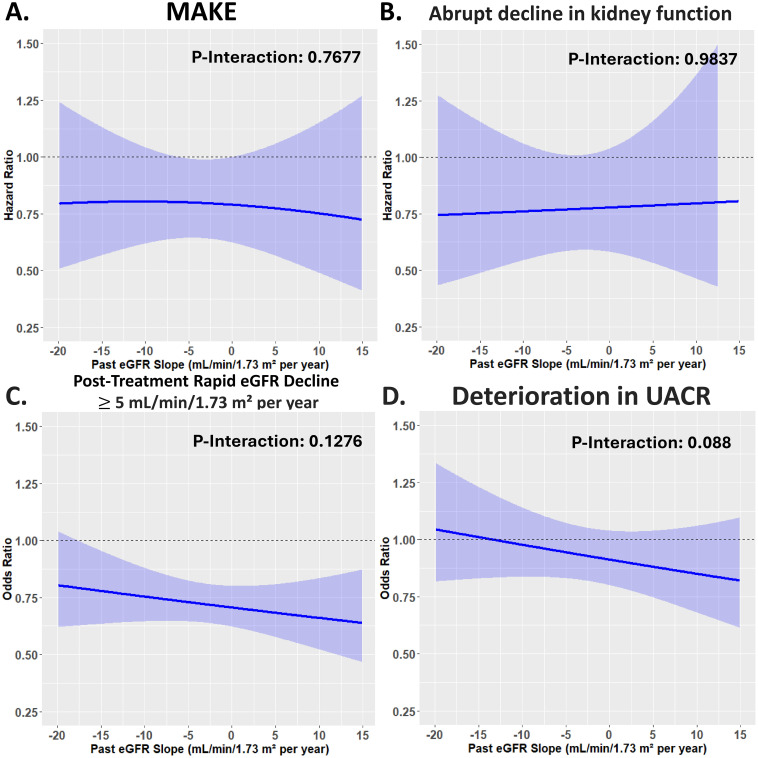 Figure 6
Peer Reviews
No public reviews on file for this paper yet. If you reviewed it on a platform where reviews are public (OpenReview, ICLR, NeurIPS, ICML), you can paste yours below so the community can read it here.
Videos
No videos yet. Explain this paper in a talk, walkthrough, or lecture? Add one.
Taxonomy
TopicsDiabetes Treatment and Management · Chronic Kidney Disease and Diabetes · Renal Transplantation Outcomes and Treatments