Prediction of neoadjuvant therapy efficacy in gastric cancer: the interplay between biomarkers and radiomics and its potential for clinical translation
Zhou Yufeng, Xu Le, Chen Gong, Lin Dandan

TL;DR
This review explores how biomarkers and radiomics can predict the effectiveness of neoadjuvant therapy in gastric cancer, aiming to improve personalized treatment strategies.
Contribution
The paper systematically reviews recent advancements in biomarkers and radiomics for predicting neoadjuvant therapy efficacy in gastric cancer.
Findings
Systemic immune-inflammation index (SII) is a low-cost, non-invasive marker that predicts treatment response and survival in gastric cancer patients.
Radiomics and deep learning models offer non-invasive methods to predict tumor response and survival risk by integrating clinical and radiological data.
Combining immune checkpoint inhibitors with therapies targeting Claudin 18.2 expands personalized treatment options for specific gastric cancer subtypes.
Abstract
Neoadjuvant therapy (NACT) for locally advanced gastric cancer (LAGC) plays a crucial role in improving surgical resection rates and patient prognosis. However, there is significant heterogeneity in patient responses to treatment, necessitating effective predictive tools for personalized therapy. This review systematically summarizes the latest research advancements in biomarkers and imaging models for predicting the efficacy of neoadjuvant treatment in gastric cancer. In the field of biomarkers, systemic immune-inflammation index (SII), microRNAs (miRNAs), and aspartate β-hydroxylase (ASPH) are molecular markers that influence chemotherapy sensitivity by modulating the tumor microenvironment or signaling pathways. Among them, SII, a low-cost and non-invasive inflammatory marker, has been shown to predict patient survival and treatment response. Differential expression of miRNAs (e.g.,…
Genes, proteins, chemicals, diseases, species, mutations and cell lines named across the full text — each resolved to its canonical identifier and authoritative record.
Click any figure to enlarge with its caption.
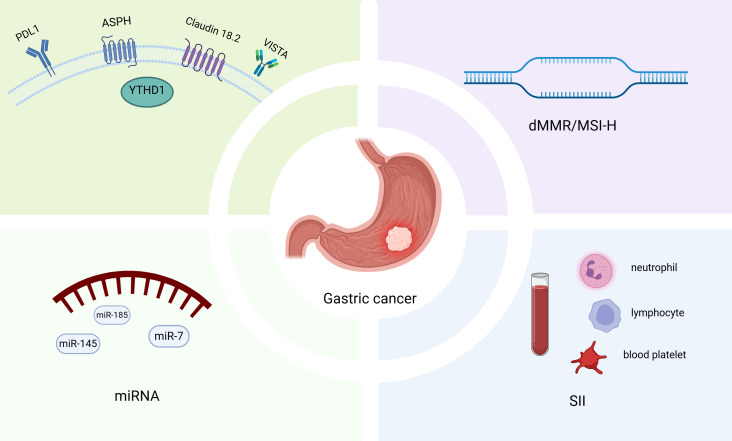 Figure 1
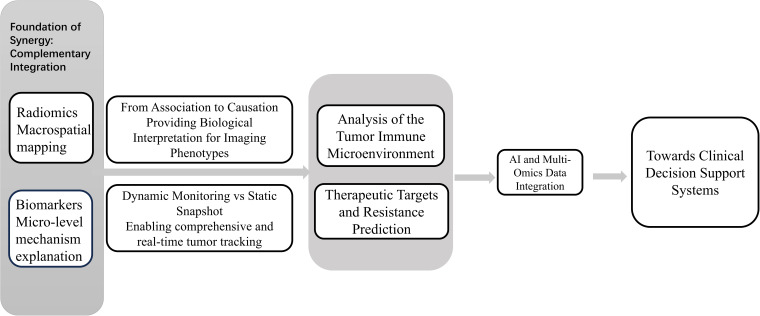 Figure 2
Peer Reviews
No public reviews on file for this paper yet. If you reviewed it on a platform where reviews are public (OpenReview, ICLR, NeurIPS, ICML), you can paste yours below so the community can read it here.
Videos
No videos yet. Explain this paper in a talk, walkthrough, or lecture? Add one.
Taxonomy
TopicsGastric Cancer Management and Outcomes · Radiomics and Machine Learning in Medical Imaging · Ferroptosis and cancer prognosis