Recent therapeutic advances in gynecologic oncology: evolving roles of immunotherapy, antibody–drug conjugates, and clinical trial innovations
Gaukhar Koshkimbayeva, Akerke Amirkhanova, Aiken Orazymbetova, Alma Nurakhova, Akmaral Maimakova, Altyn Duisenbayeva, Nurgulim Akhmad, Altyn Abilova, Arailym Abilbayeva, Sholpan Akhelova, Dana Akhmentayeva, Aida Seitaliyeva, Zaure Dushimova, Zhanserik Shynykul

TL;DR
New treatments like immunotherapy and antibody-drug conjugates are improving outcomes for gynecologic cancers by overcoming drug resistance and enabling personalized care.
Contribution
This review highlights recent clinical advances in immunotherapy and ADCs, emphasizing their integration into treatment and the role of genomic profiling and AI.
Findings
Checkpoint inhibitors and ADCs show clinical benefits in advanced endometrial and cervical cancers.
Combination therapies with ICIs, PARP inhibitors, and antiangiogenic agents are effective in first-line and maintenance settings.
Molecular profiling and AI are improving treatment precision in gynecologic oncology.
Abstract
Gynecologic cancers, including cervical, endometrial, and ovarian malignancies, remain among the leading causes of cancer-related illness and death in women worldwide. Despite progress in surgery and chemotherapy, resistance to conventional cytotoxic drugs continues to limit durable outcomes. The introduction of immune checkpoint inhibitors (ICIs) and antibody–drug conjugates (ADCs) has created new therapeutic opportunities by improving survival and overcoming resistance mechanisms. This review summarizes the latest clinical evidence on immunotherapy and ADC-based regimens, emphasizing their integration into current treatment strategies and the expanding roles of genomic profiling and artificial intelligence (AI) in personalized therapy. Recent findings from major clinical trials such as RUBY, NRG-GY018, DUO-O, SORAYA, and DESTINY-PanTumor02 were evaluated along with updated FDA and…
Genes, proteins, chemicals, diseases, species, mutations and cell lines named across the full text — each resolved to its canonical identifier and authoritative record.
Click any figure to enlarge with its caption.
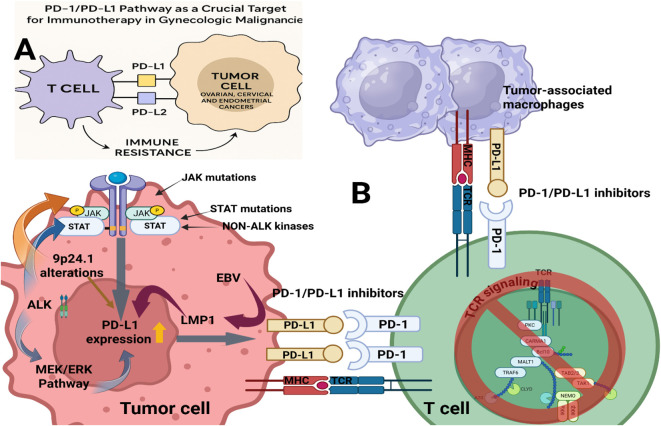 Figure 1
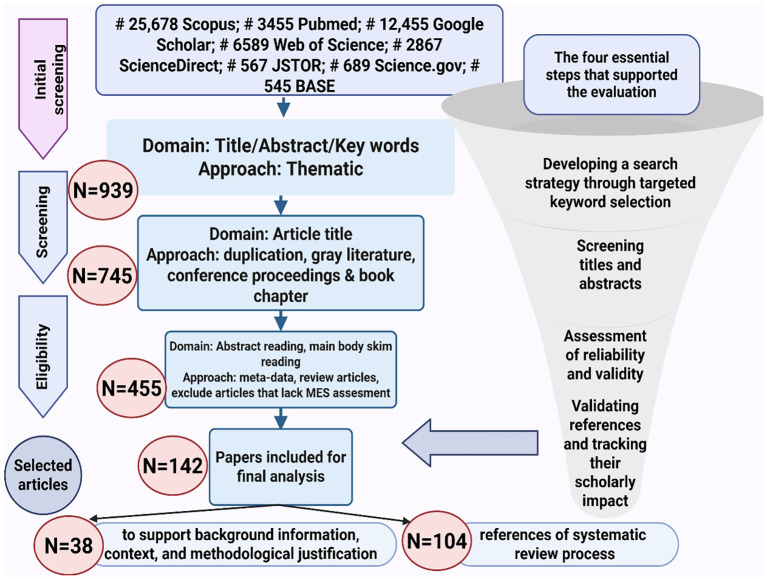 Figure 2
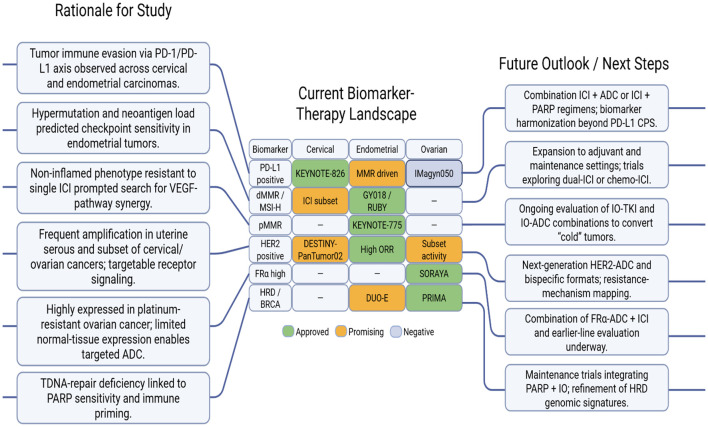 Figure 3
Peer Reviews
No public reviews on file for this paper yet. If you reviewed it on a platform where reviews are public (OpenReview, ICLR, NeurIPS, ICML), you can paste yours below so the community can read it here.
Videos
No videos yet. Explain this paper in a talk, walkthrough, or lecture? Add one.
Taxonomy
TopicsEndometrial and Cervical Cancer Treatments · PARP inhibition in cancer therapy · Ovarian cancer diagnosis and treatment