Optimal exercise modalities and dose for enhancing intelligence in children and adolescents: a Bayesian network meta-analysis
Yan Wang, Junyu Wang, Lin Zhang, Chengji Wang, Guotuan Wang, Changdong Li, Yuan Yuan, Bopeng Qiu, Yong Yang

TL;DR
This study finds that dual-task balance training is the most effective exercise for improving children's and adolescents' intelligence, with specific optimal duration and frequency.
Contribution
The study identifies dual-task balance training as the most effective exercise modality and determines an optimal exercise dose for enhancing intelligence in youth.
Findings
Exercise improves general, fluid, and crystallized intelligence in children and adolescents.
Dual-task balance training provides the most consistent benefits across all intelligence domains.
Optimal exercise involves sessions of ≥117.7 minutes, three times weekly for at least 11.12 weeks.
Abstract
To compare the effects of various exercise modalities on intelligence and determine the optimal exercise dose for children and adolescents. A systematic review and Bayesian network meta-analysis following PRISMA guidelines was conducted. Four databases were searched up to 1 April 2025. Eligible RCTs involved participants aged 5–18 years and assessed exercise interventions with intelligence outcomes (general, fluid, or crystallized). Standardized mean differences (SMDs) with corresponding 95% confidence interval or credible intervals were calculated. Dose-response relationships were analyzed using model-based network meta-analysis. Fifteen RCTs with 3,400 participants were included. Exercise was linked to small-to-moderate improvements in general (SMD = 0.59), fluid (SMD = 0.43), and crystallized intelligence (SMD = 0.64). Dual-task balance training (DTBT) produced the most consistent…
Genes, proteins, chemicals, diseases, species, mutations and cell lines named across the full text — each resolved to its canonical identifier and authoritative record.
Click any figure to enlarge with its caption.
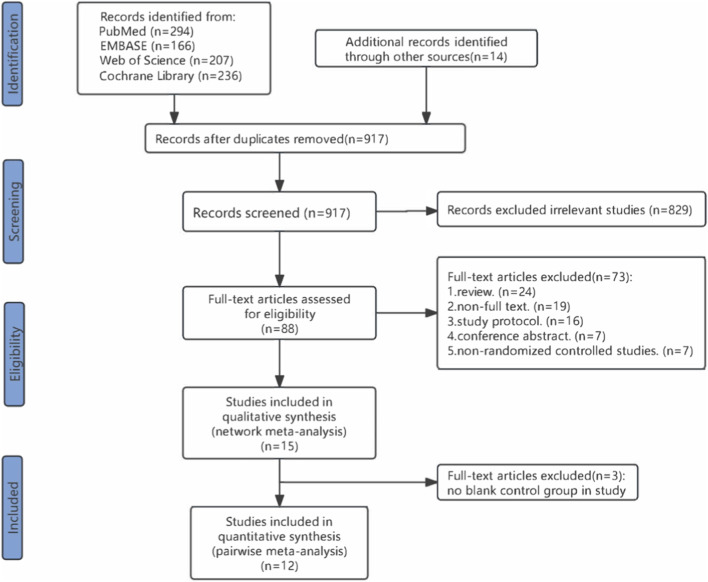 Figure 1
 Figure 2
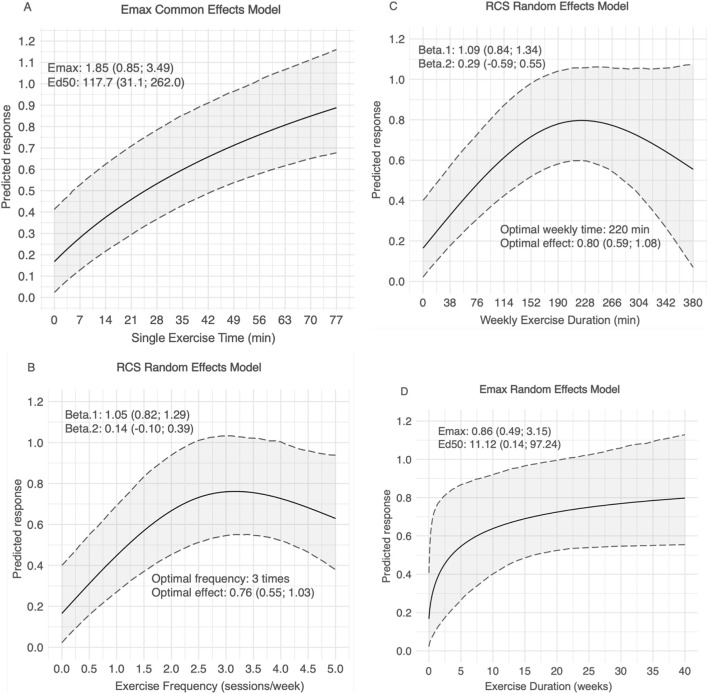 Figure 3
Peer Reviews
No public reviews on file for this paper yet. If you reviewed it on a platform where reviews are public (OpenReview, ICLR, NeurIPS, ICML), you can paste yours below so the community can read it here.
Videos
No videos yet. Explain this paper in a talk, walkthrough, or lecture? Add one.
Taxonomy
TopicsChildren's Physical and Motor Development · Cognitive Abilities and Testing · Sport Psychology and Performance