Persistent bothersome urinary frequency following stereotactic body radiation therapy for clinically localized prostate cancer: rationale for prophylactic β3-agonist in men with elevated baseline international prostate symptom scores
Jennifer Zack, Min Ji Koh, Emily Lindbloom, Timothy O’Connor, Kelly Gaudian, Alan Zwart, Malika Danner, Deepak Kumar, Simeng Suy, Ryan Hankins, Sean Collins

TL;DR
Men with high baseline urinary symptoms may benefit from beta-3 agonists to reduce urinary frequency after prostate cancer SBRT.
Contribution
The paper proposes prophylactic beta-3 agonists for men with elevated baseline IPSS to manage post-SBRT urinary frequency.
Findings
Bothersome urinary frequency persists one month after SBRT.
Baseline LUTS severity predicts post-treatment urinary frequency.
Alpha-adrenergic antagonists do not prevent irritative symptoms after SBRT.
Abstract
Stereotactic body radiation therapy (SBRT) for clinically localized prostate cancer has been associated with prolonged acute obstructive and irritative lower urinary tract symptoms (LUTS). Prophylactic alpha-adrenergic antagonists have been used therapeutically to prevent obstructive symptoms in patients undergoing prostate SBRT, however irritative symptoms may be better addressed with beta 3-adrenergic receptor agonists, which are shown to be safe and effective in men with overactive bladder (OAB). This study retrospectively examines the pattern of bothersome urinary frequency associated with SBRT to determine which patients would have potentially benefitted from prophylactic beta 3-adrenergic receptor agonist. Patients with clinically localized prostate cancer who underwent prostate SBRT (n=1676) were followed for 3 months post-treatment to evaluate for bothersome urinary frequency,…
Genes, proteins, chemicals, diseases, species, mutations and cell lines named across the full text — each resolved to its canonical identifier and authoritative record.
Click any figure to enlarge with its caption.
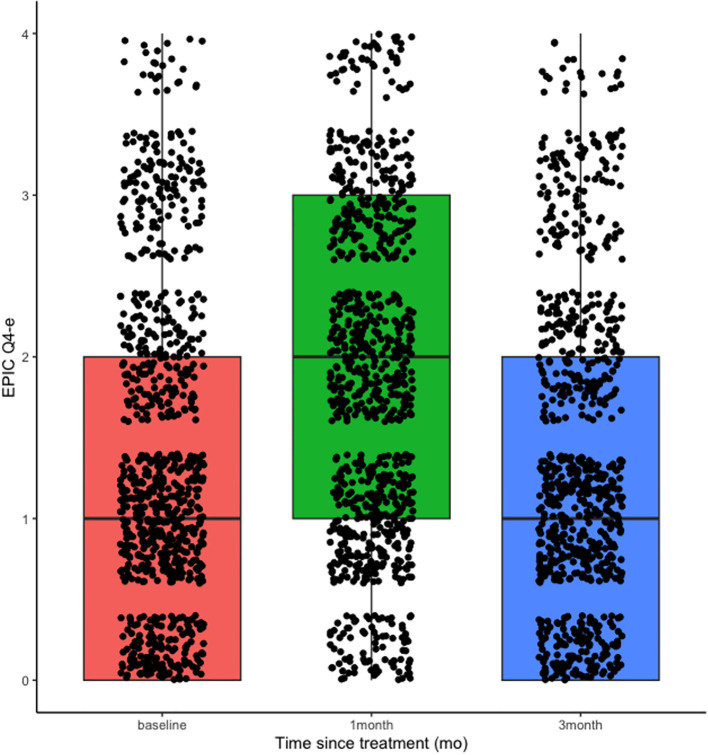 Figure 1
Peer Reviews
No public reviews on file for this paper yet. If you reviewed it on a platform where reviews are public (OpenReview, ICLR, NeurIPS, ICML), you can paste yours below so the community can read it here.
Videos
No videos yet. Explain this paper in a talk, walkthrough, or lecture? Add one.
Taxonomy
TopicsProstate Cancer Diagnosis and Treatment · Urinary Bladder and Prostate Research · Prostate Cancer Treatment and Research