Public Health Implications of Latent Toxoplasmosis and Its Association With Type 2 Diabetes: A Case–Control Study in Qazvin, North‐Western Iran
Leila Modarresnia, Meysam Olfatifar, Sayed Hussain Mosawi, Abouzar Babaei, Seyyed Hamidreza Ghafelehbashi, Ioannis Adamopoulos, Mohammad Ali Mohaghegh, Mehdi Bakht, Fariba Najar Hoseini, Ali Asghari, Aida Vafae Eslahi, Milad Badri

TL;DR
This study found that people with type 2 diabetes in Iran are more likely to have a latent Toxoplasma gondii infection compared to non-diabetic individuals.
Contribution
The study provides new evidence of an epidemiological association between latent toxoplasmosis and type 2 diabetes in north-western Iran.
Findings
Diabetic patients had a significantly higher seroprevalence of T. gondii infection (27.7%) compared to non-diabetic controls (14.6%).
Older age and rural residence were significant correlates of T. gondii seropositivity.
Diabetes status was independently associated with T. gondii seropositivity after adjusting for age and residence.
Abstract
Toxoplasma gondii is a worldwide‐distributed zoonotic parasite, causing latent infections in humans. Increasing evidence has suggested a possible link between toxoplasmosis and diabetes mellitus (DM), though data from Iran are limited. This study was conducted to determine the seroprevalence of latent T. gondii infection and its association with diabetes in Qazvin province, north‐western Iran. In this case‐control study, 350 patients with type 2 diabetes mellitus and 350 non‐diabetic controls were recruited from clinical laboratories in Qazvin province. Anti‐T. gondii IgG antibodies were detected by enzyme‐linked immunosorbent assay (ELISA). Data on sociodemographic variables and exposures were obtained by structured questionnaires. Statistical analyses, such as χ 2, t‐test, and logistic regression, were performed using the STATA software version 17. Overall, 21.1% (148/700) of the…
Genes, proteins, chemicals, diseases, species, mutations and cell lines named across the full text — each resolved to its canonical identifier and authoritative record.
Click any figure to enlarge with its caption.
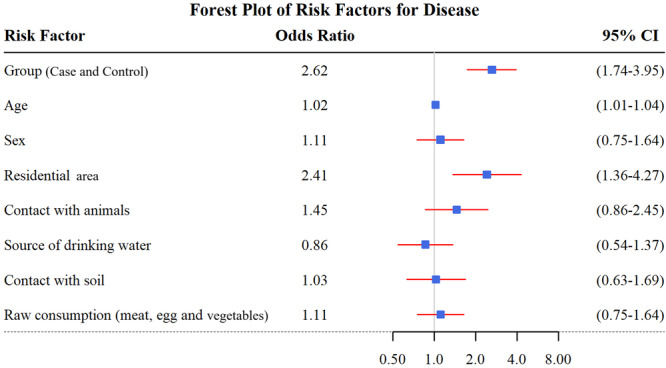 Figure 1
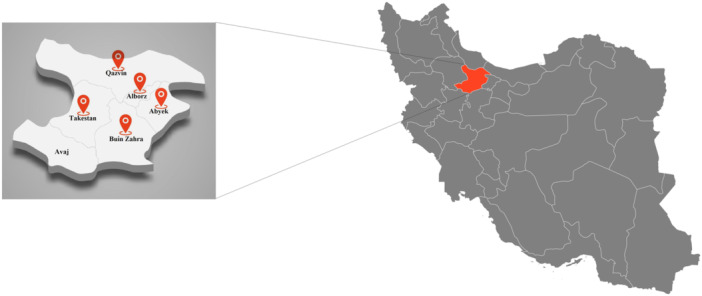 Figure 2
Peer Reviews
No public reviews on file for this paper yet. If you reviewed it on a platform where reviews are public (OpenReview, ICLR, NeurIPS, ICML), you can paste yours below so the community can read it here.
Videos
No videos yet. Explain this paper in a talk, walkthrough, or lecture? Add one.
Taxonomy
TopicsToxoplasma gondii Research Studies · Parasitic Infections and Diagnostics · Leptospirosis research and findings