Mitochondrial bioenergetics and intracellular calcium concentration in primary myotubes from mouse models of malignant hyperthermia
Vikas Kaura, Leon Chang, Philip Morgan Hopkins, Marie-Anne Shaw

TL;DR
This study investigates how mitochondrial function and calcium levels are linked in mouse models of malignant hyperthermia, using a high-throughput assay to compare different genotypes.
Contribution
The study validates a cell-based assay for mitochondrial function in malignant hyperthermia models and reveals genotype-specific bioenergetic differences.
Findings
Ryr1 p.G2435R homozygous myotubes showed the highest basal oxygen consumption rate.
These myotubes required more respiration to produce ATP and had higher proton leak and non-mitochondrial OCR.
The assay was more sensitive to genotypic effects than traditional methods and showed no direct link between calcium and mitochondrial function in young mice.
Abstract
Malignant hyperthermia (MH) is a potentially fatal hypermetabolic reaction to general anaesthesia arising from skeletal muscle calcium dysregulation. Previous studies of resting cells support an association between MH susceptibility, mitochondrial dysfunction, and defects in fatty acid metabolism, which are understood to be downstream consequences of calcium dysregulation. We hypothesised that in mouse models of MH susceptibility, genotypes associated with higher cytoplasmic calcium concentrations would have a proportionally higher mitochondrial oxygen consumption rate (OCR). We aimed to test this and validate a cell-based assay system. A high-throughput mitochondrial assay was used to compare OCR between myotubes derived from control and three different genotypes of mice containing ryanodine receptor 1 variants (p.G2435R heterozygous and homozygous, p.T4826I heterozygous) that confer…
Genes, proteins, chemicals, diseases, species, mutations and cell lines named across the full text — each resolved to its canonical identifier and authoritative record.
Click any figure to enlarge with its caption.
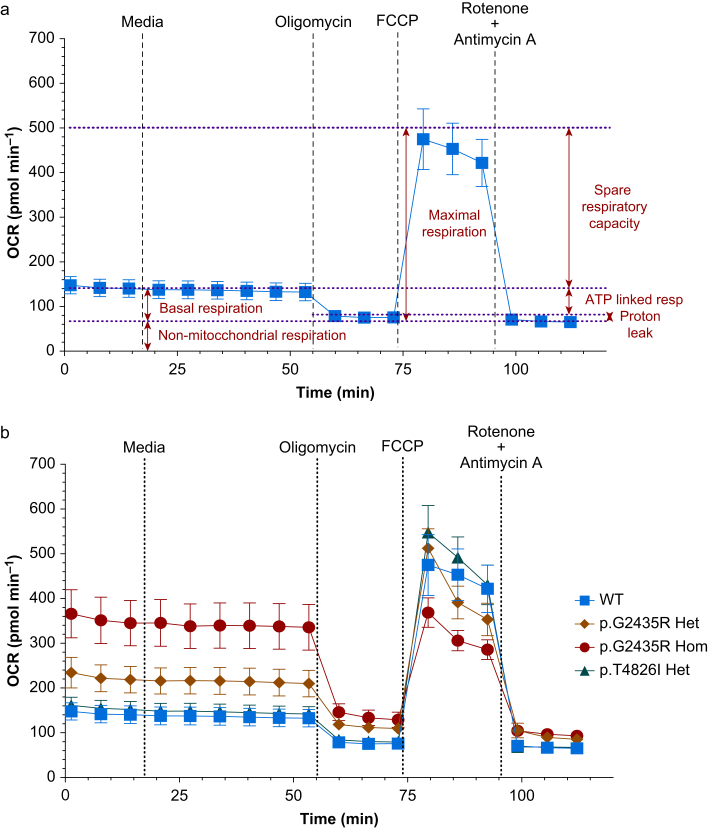 Figure 1
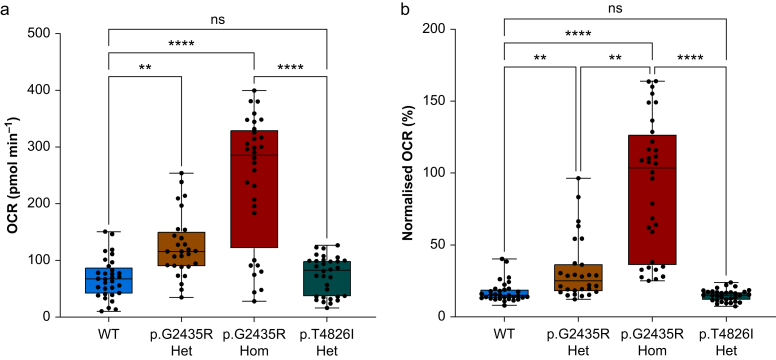 Figure 2
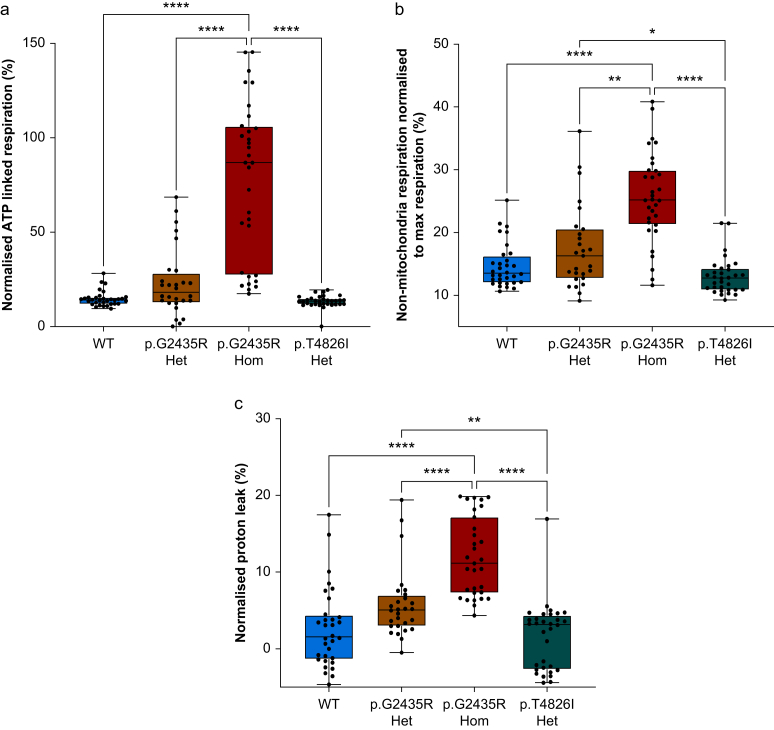 Figure 3
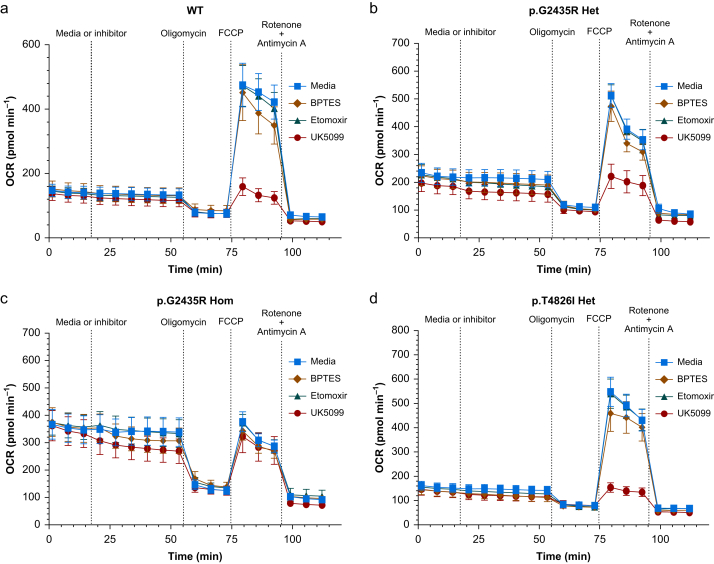 Figure 4
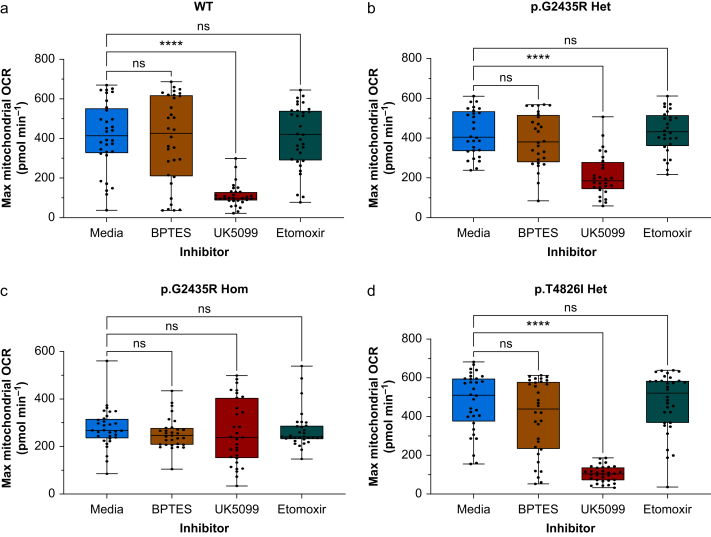 Figure 5
Peer Reviews
No public reviews on file for this paper yet. If you reviewed it on a platform where reviews are public (OpenReview, ICLR, NeurIPS, ICML), you can paste yours below so the community can read it here.
Videos
No videos yet. Explain this paper in a talk, walkthrough, or lecture? Add one.
Taxonomy
TopicsAdipose Tissue and Metabolism · Ion channel regulation and function · Muscle Physiology and Disorders