Performance of AI Approaches for COVID-19 Diagnosis Using Chest CT Scans: The Impact of Architecture and Dataset
Astha Jaiswal, Philipp Fervers, Fanyang Meng, Huimao Zhang, Dorottya Móré, Athanasios Giannakis, Jasmin Wailzer, Andreas Michael Bucher, David Maintz, Jonathan Kottlors, Rahil Shahzad, Thorsten Persigehl

TL;DR
This study compares different AI models for diagnosing COVID-19 using chest CT scans and finds that the training data has a bigger impact on performance than the model architecture.
Contribution
The study evaluates three AI architectures on a diverse, multicenter dataset to determine the impact of data and model design on diagnostic accuracy.
Findings
AI models showed high specificity but moderate sensitivity in diagnosing COVID-19 from CT scans.
The training data had a greater impact on model performance than the model architecture.
AI models should be used as a tool to assist radiologists, not as standalone diagnostic tools.
Abstract
AI is emerging as a promising tool for diagnosing COVID-19 based on chest CT scans. The aim of this study was the comparison of AI models for COVID-19 diagnosis. Therefore, we: (1) trained three distinct AI models for classifying COVID-19 and non-COVID-19 pneumonia (nCP) using a large, clinically relevant CT dataset, (2) evaluated the models’ performance using an independent test set, and (3) compared the models both algorithmically and experimentally. In this multicenter multi-vendor study, we collected n=1591 chest CT scans of COVID-19 (n=762) and nCP (n=829) patients from China and Germany. In Germany, the data was collected from three RACOON sites. We trained and validated three COVID-19 AI models with different architectures: COVNet based on 2D-CNN, DeCoVnet based on 3D-CNN, and AD3D-MIL based on 3D-CNN with attention module. 991 CT scans were used for training the AI models using…
Genes, proteins, chemicals, diseases, species, mutations and cell lines named across the full text — each resolved to its canonical identifier and authoritative record.
Click any figure to enlarge with its caption.
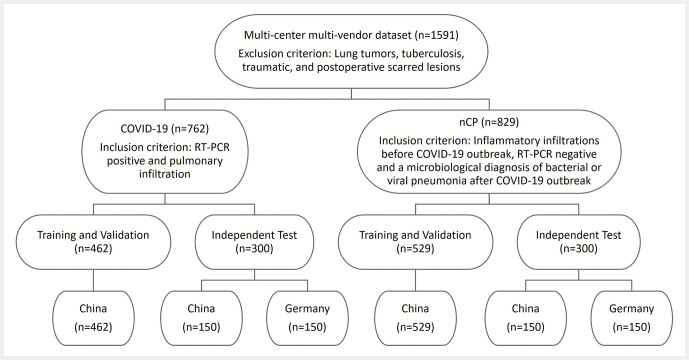 Figure 1
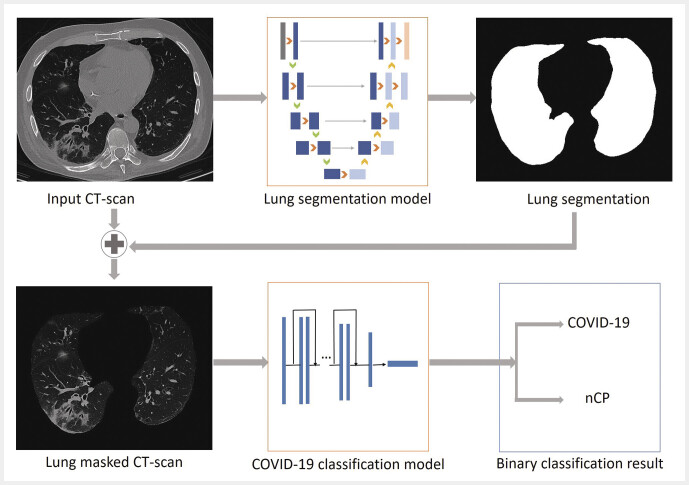 Figure 2
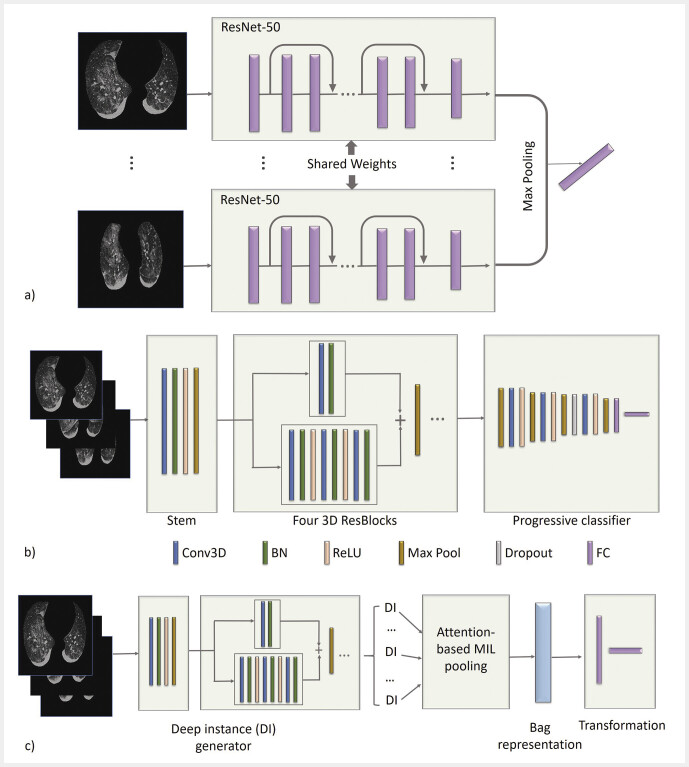 Figure 3
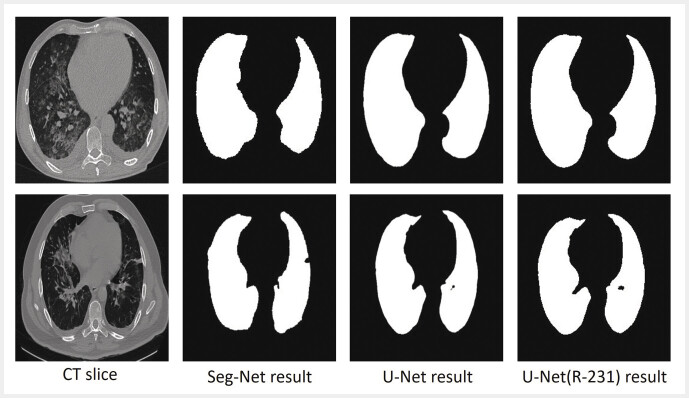 Figure 4
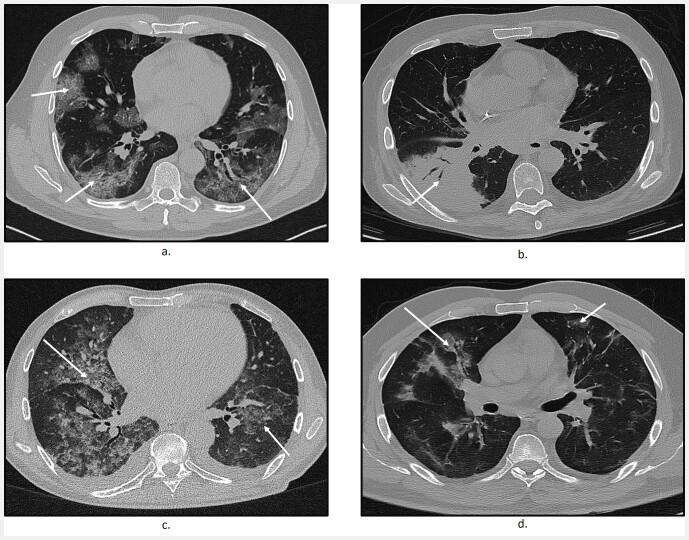 Figure 5
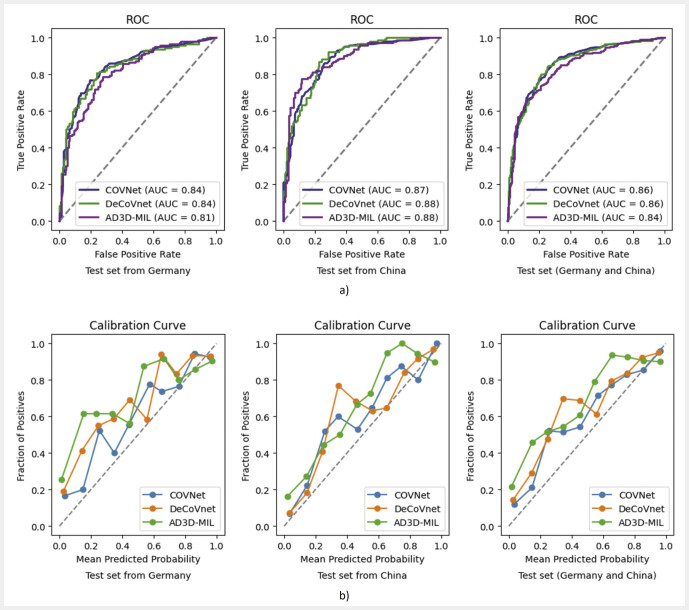 Figure 6
Peer Reviews
No public reviews on file for this paper yet. If you reviewed it on a platform where reviews are public (OpenReview, ICLR, NeurIPS, ICML), you can paste yours below so the community can read it here.
Videos
No videos yet. Explain this paper in a talk, walkthrough, or lecture? Add one.
Taxonomy
TopicsCOVID-19 diagnosis using AI · Artificial Intelligence in Healthcare and Education · COVID-19 Clinical Research Studies