Extensive hidden prophage diversity in Enterobacter species reveals host specificity and local distribution
Danna Paola Bours-Lugo, Juan Manuel Hurtado-Ramírez, Armando Hernández-Mendoza, Ramón A. González, Adrian Ochoa-Leyva, Gamaliel López-Leal

TL;DR
This study explores the hidden diversity of prophages in Enterobacter species, revealing their host specificity and geographic patterns.
Contribution
The study identifies extensive prophage diversity in Enterobacter and highlights their ecological and clinical significance.
Findings
Enterobacter species host 1,617 phage genera and 2,423 phage species, with 80% being singletons.
Prophages show strong host specificity and limited cross-species transmission.
Prophage diversity is highest in Enterobacter kobei and environmental isolates.
Abstract
Bacteriophages are key drivers of bacterial evolution, particularly through their integration as prophages within host genomes. However, the diversity and host specificity of prophages in relevant pathogens such as Enterobacter species remain poorly characterized. In this study, we revealed the diversity of prophages, mapped their distribution and explored their relationships with their bacterial hosts. We analysed 3,661 prophage sequences identified from the genomes of 20 different Enterobacter species. This analysis uncovered an extensive hidden diversity, comprising 1,617 phage genera and 2,423 phage species – nearly 80% of which were singletons – highlighting an exceptionally rich prophage landscape. We found substantial variation in prophage species richness across host species and isolation sources, with Enterobacter kobei and environmental isolates exhibiting the highest…
Genes, proteins, chemicals, diseases, species, mutations and cell lines named across the full text — each resolved to its canonical identifier and authoritative record.
Click any figure to enlarge with its caption.
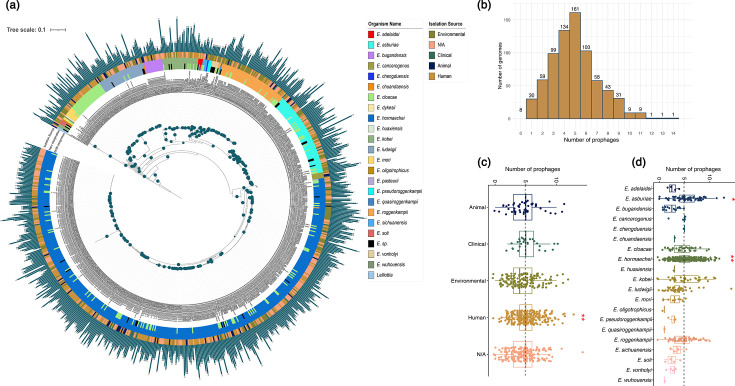 Figure 1
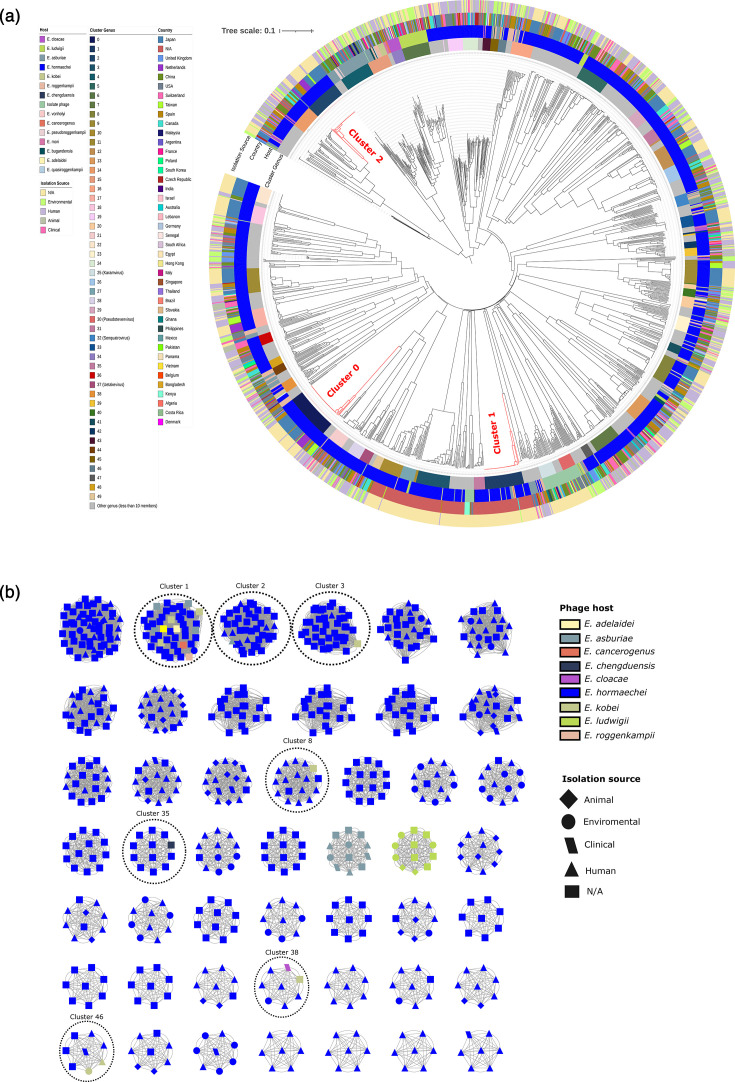 Figure 2
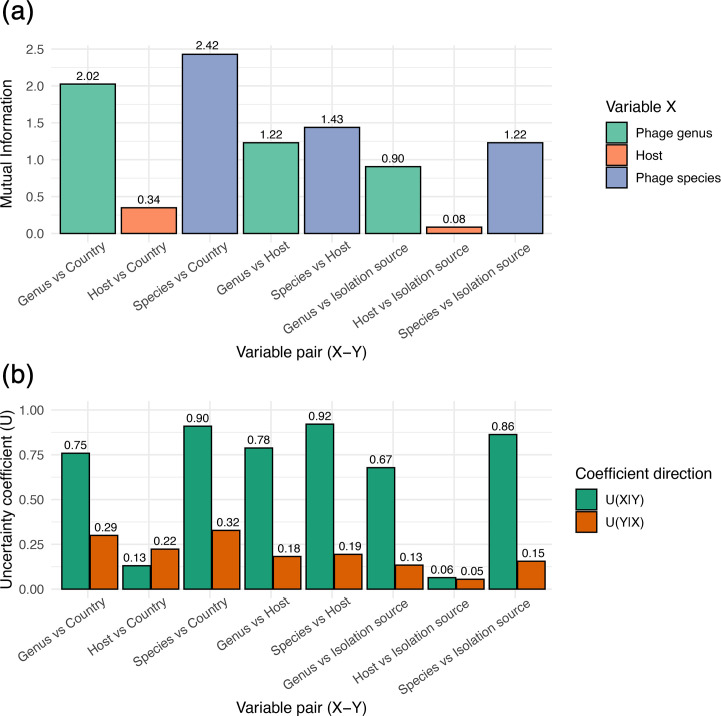 Figure 3
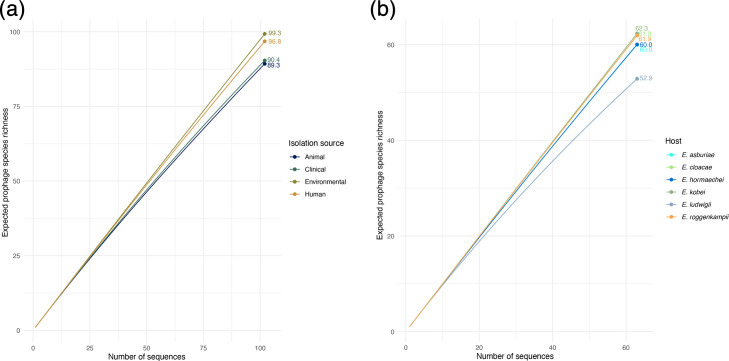 Figure 4
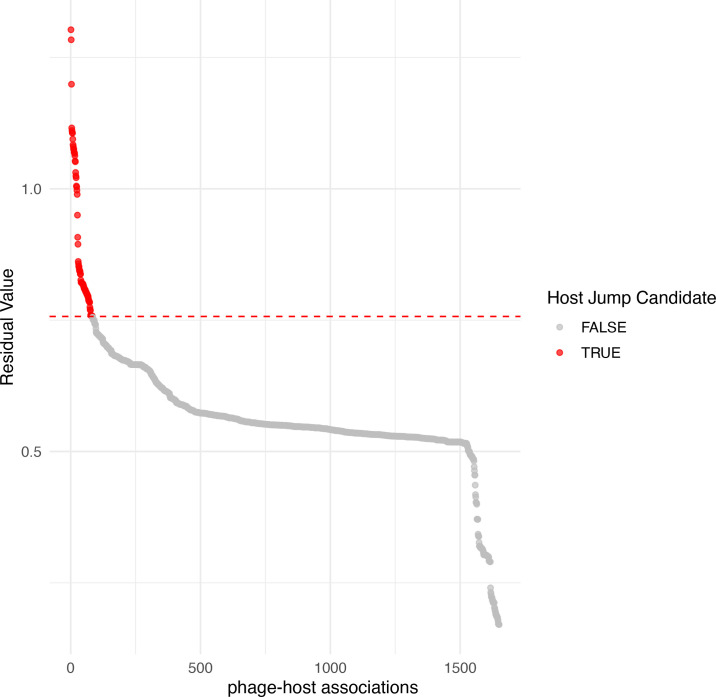 Figure 5
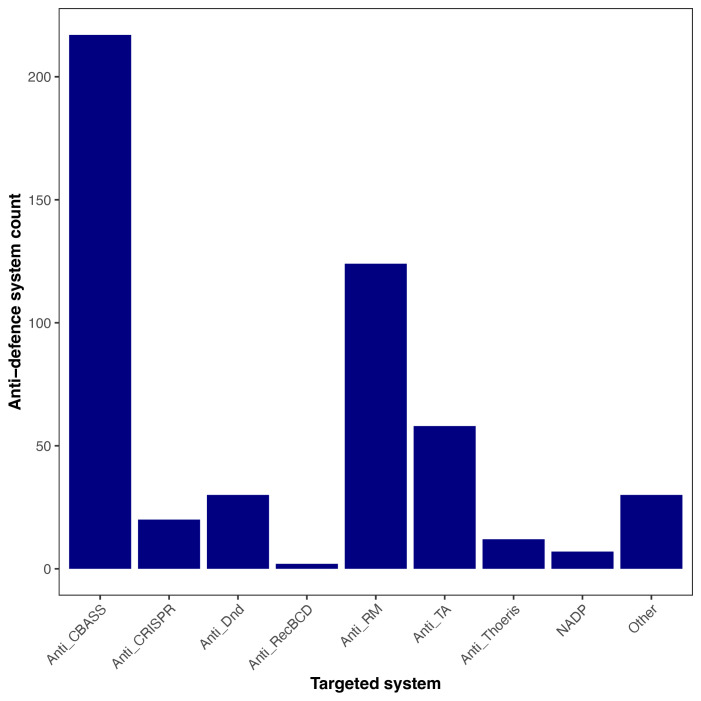 Figure 6
Peer Reviews
No public reviews on file for this paper yet. If you reviewed it on a platform where reviews are public (OpenReview, ICLR, NeurIPS, ICML), you can paste yours below so the community can read it here.
Videos
No videos yet. Explain this paper in a talk, walkthrough, or lecture? Add one.
Taxonomy
TopicsBacteriophages and microbial interactions · Fecal contamination and water quality · Vibrio bacteria research studies