Exploring the metabolite composition and biological activities of Thymus canoviridis via volatile and non-volatile fraction analysis
Ezgi Ersoy, Selami Ercan, Ercan Çınar, Sevcan İzgi, Gülsüm Tuneğ, Gökhan Zengin, Emel Mataracı Kara, Yeter Yeşil, Hasan Şahin, Mehmet Boğa, Esra Eroğlu Özkan

TL;DR
This study explores the chemical composition and health benefits of Thymus canoviridis, a plant native to Türkiye, showing it has strong antioxidant, antimicrobial, and enzyme-inhibiting properties useful for food preservation.
Contribution
The study provides a detailed chemical and biological profile of Thymus canoviridis, emphasizing its high carvacrol and rosmarinic acid content and their functional food applications.
Findings
The essential oil of Thymus canoviridis contains 99.9% carvacrol, making it a potent natural preservative.
Rosmarinic acid is the dominant phenolic compound in both aerial and root extracts of the plant.
The essential oil and root extract show strong antioxidant and antimicrobial activity, with potential for functional food applications.
Abstract
Thymus canoviridis, an endemic species in Türkiye, was studied for its chemical composition and biological activities, with emphasis on food-related applications. GC-MS analysis of the essential oil from aerial parts revealed an exceptionally high carvacrol content (99.9%), highlighting its potential as a natural preservative. LC-MS/MS profiling of ethanol extracts (aerial and root) identified rosmarinic acid as the dominant phenolic (885.53 ± 7.25 μg/g in aerial part; 721.08 ± 6.14 μg/g in root), along with notable levels of apigenin and quinic acid. The aerial extract showed higher total phenolic (114.39 ± 1.86 mg PEs/g) and flavonoid contents (47.80 ± 0.94 mg QE/g) than the root extract. In vitro antioxidant assays revealed strong activity for both extracts: the root was more active in DPPH (IC50: 24.32 ± 0.84 μg/mL) and CUPRAC (A0.5: 9.99 ± 0.02 μg/mL), while the aerial part extract…
Genes, proteins, chemicals, diseases, species, mutations and cell lines named across the full text — each resolved to its canonical identifier and authoritative record.
Click any figure to enlarge with its caption.
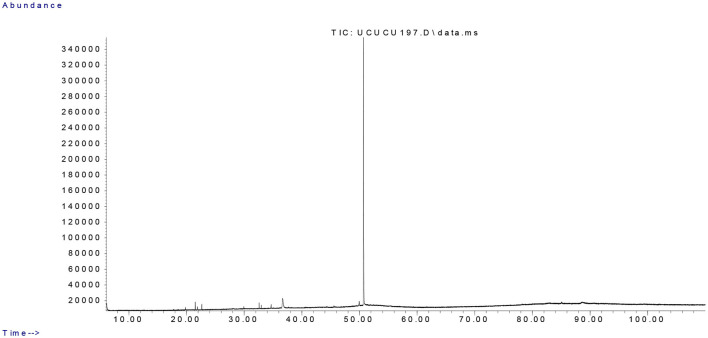 Figure 1
Peer Reviews
No public reviews on file for this paper yet. If you reviewed it on a platform where reviews are public (OpenReview, ICLR, NeurIPS, ICML), you can paste yours below so the community can read it here.
Videos
No videos yet. Explain this paper in a talk, walkthrough, or lecture? Add one.
Taxonomy
TopicsEssential Oils and Antimicrobial Activity · Phytochemicals and Antioxidant Activities · Phytochemistry Medicinal Plant Applications