Arp2/3 complex contributes to the actin-dependent uptake of Aspergillus terreus conidia by alveolar epithelial cells
Natalia Mach, Julien Polleux, Lea Heinrich, Lukas Lechner, Iryna Levytska, Cornelia Lass-Flörl, Susanne Perkhofer

TL;DR
This study reveals how alveolar epithelial cells take up Aspergillus terreus spores using actin remodeling, highlighting the role of the Arp2/3 complex in early infection stages.
Contribution
The study provides the first mechanistic insights into A. terreus internalization by alveolar epithelial cells, emphasizing Arp2/3-mediated actin dynamics.
Findings
Arp2/3 inhibition impairs conidial binding and disrupts actin-positive vesicle formation.
A subset of conidia localizes to Lamp1-positive phagolysosomes and accumulates over time.
Actin flashes at phagolysosomal interfaces are abolished with Arp2/3 inhibition.
Abstract
Aspergillus terreus is an opportunistic fungal pathogen associated with high mortality rates and intrinsic resistance to amphotericin B. Its ability to persist within host tissues without inducing strong immune responses was suggested to contribute to poor clinical outcomes. The cellular mechanisms underlying A. terreus interactions with host cells remain largely unexplored. In this study, we have used a micropattern-based infection model to investigate the early interactions between A. terreus conidia and alveolar epithelial cells, focusing on the role of Arp2/3-dependent actin remodeling. This system allows quantitative analysis of conidia-cell interactions under defined spatial conditions. We show that A. terreus conidia rapidly bind to micropatterned A549 cell islands, with conidial numbers increasing over time. Conidia were found in actin- and Lamp1-positive vesicles already after…
Genes, proteins, chemicals, diseases, species, mutations and cell lines named across the full text — each resolved to its canonical identifier and authoritative record.
Click any figure to enlarge with its caption.
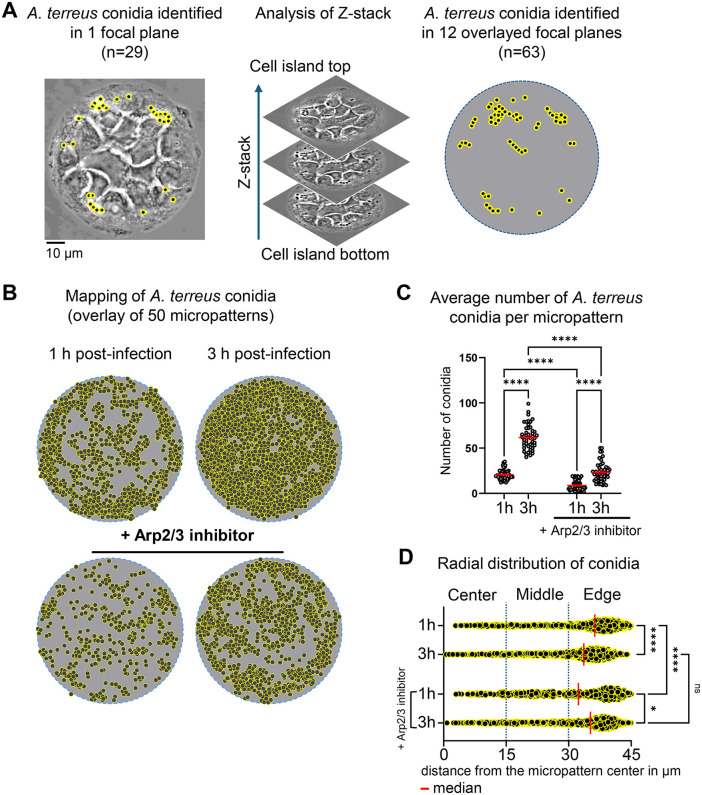 Figure 1
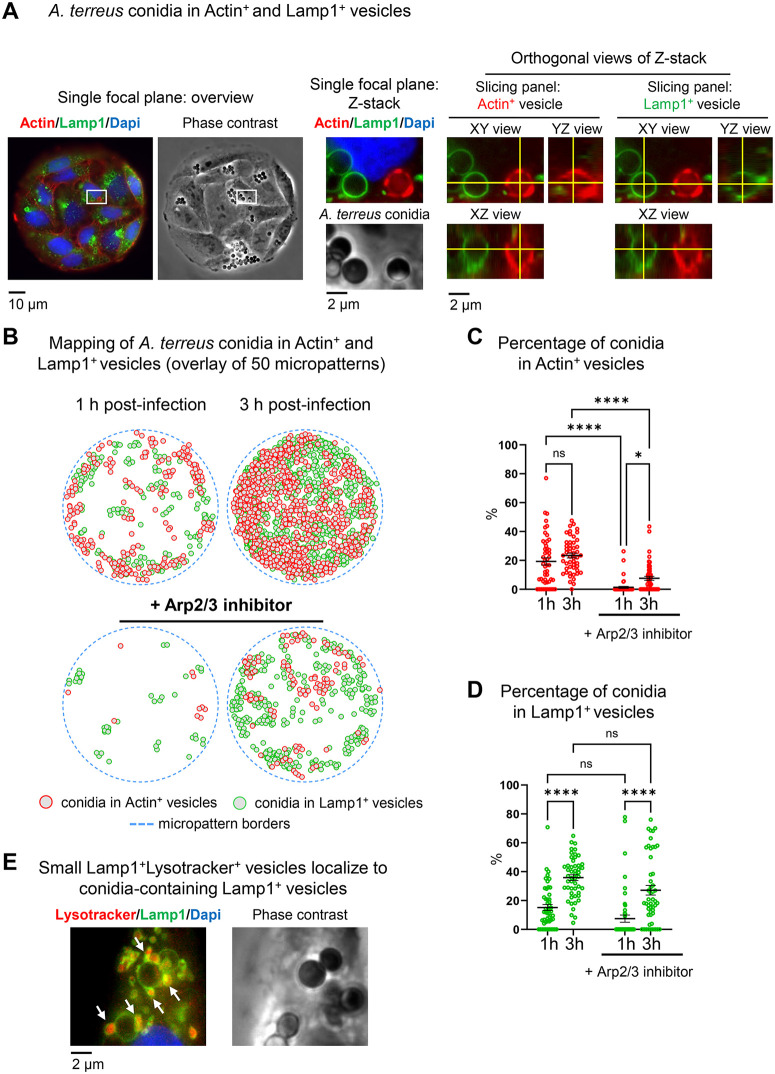 Figure 2
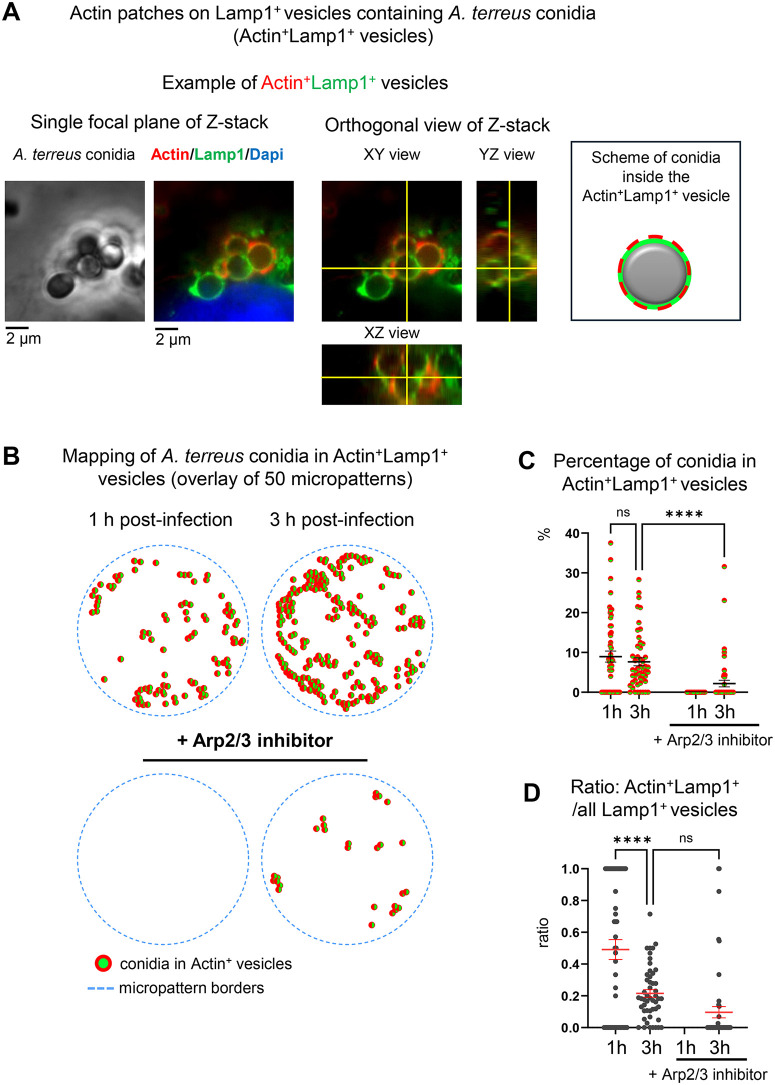 Figure 3
Peer Reviews
No public reviews on file for this paper yet. If you reviewed it on a platform where reviews are public (OpenReview, ICLR, NeurIPS, ICML), you can paste yours below so the community can read it here.
Videos
No videos yet. Explain this paper in a talk, walkthrough, or lecture? Add one.
Taxonomy
TopicsAntifungal resistance and susceptibility · Fungal and yeast genetics research · Fungal Infections and Studies