Transscleral photodynamic therapy with a chlorin e6: An experimental study of exposure parameters and therapeutic window
Ernest V. Boiko, Elena V. Samkovich, Irina E. Panova, Alexander A. Ivanov, Sergey B. Shevchenko, Sergey L. Vorobyev, Elizaveta S. Kalashnikova, Victoria G. Gvazava, Elizaveta A. Masian, Alexandra E. Kim, Vibhuti Agrahari, Vibhuti Agrahari

TL;DR
This study identifies safe and effective laser settings for transscleral photodynamic therapy using chlorin e6 in rabbits, avoiding damage to the retina and sclera.
Contribution
The study defines a therapeutic window for transscleral photodynamic therapy with chlorin e6 using precise laser parameters and real-time thermal monitoring.
Findings
Therapeutic laser settings (0.14–0.17 W for 5 mm probe and 0.48–0.6 W for 10 mm probe) caused selective choroidal damage without retinal or scleral injury.
Suprathreshold settings led to retinal necrosis and scleral coagulation, indicating a clear safety threshold for treatment.
Real-time thermal monitoring helped maintain safe temperature changes (ΔT ≤ 4.5°C) during treatment.
Abstract
To define optimal exposure parameters and the therapeutic window for transscleral photodynamic therapy (TSPDT) with chlorin e6 by evaluating clinical, histological, and thermal effects of subthreshold, therapeutic, and suprathreshold settings in rabbit eyes. The study was conducted on 21 healthy rabbits. TSPDT was performed using a 660 nm laser and chlorin e6 (2.5 mg/kg). Transscleral probes (5 mm: 0.1 W, 0.17 W, 0.3 W; 10 mm: 0.3 W, 0.6 W) with integrated thermosensors were used. Enucleation and histological analysis were performed 14 days post-irradiation. Fundus examination on day 14 revealed distinct treatment zones correlating with laser settings. The therapeutic window was defined as 0.14–0.17 W (5 mm probe; power density: 0.693–0.866 W/cm²; energy density: 415.8–519.6 J/cm²) and 0.48–0.6 W (10 mm probe; 0.611–0.764 W/cm²; 366.6–458.4 J/cm²) with 600 s exposure time, achieving…
Genes, proteins, chemicals, diseases, species, mutations and cell lines named across the full text — each resolved to its canonical identifier and authoritative record.
Click any figure to enlarge with its caption.
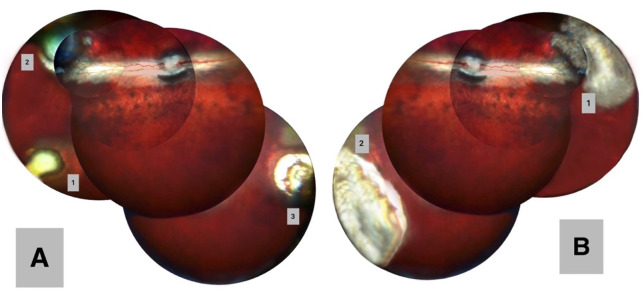 Figure 1
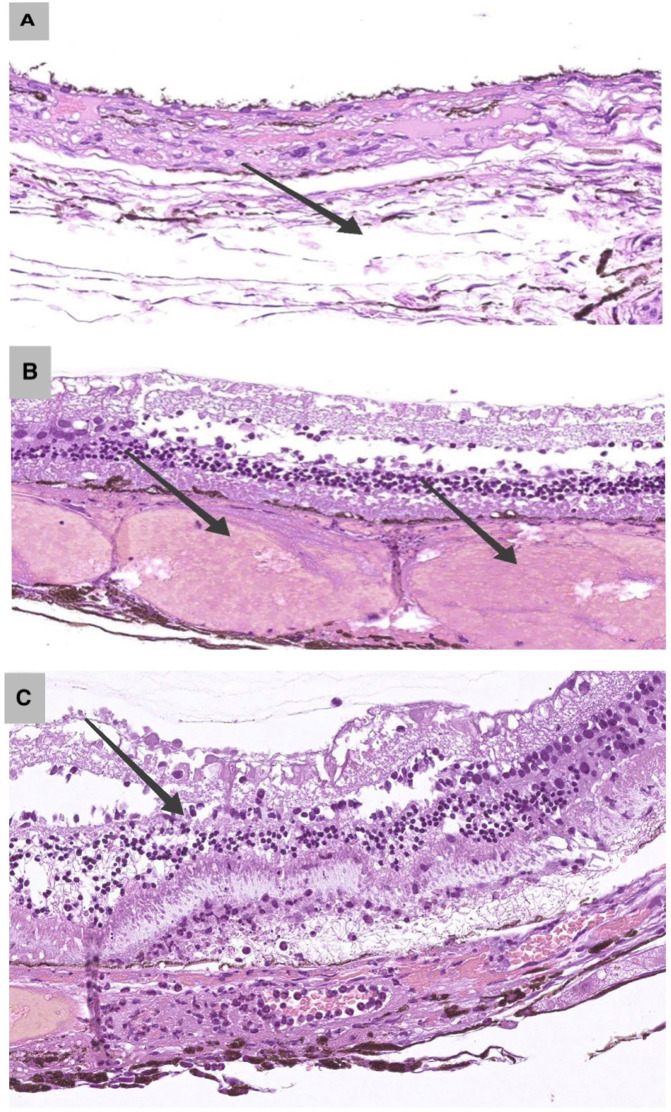 Figure 2
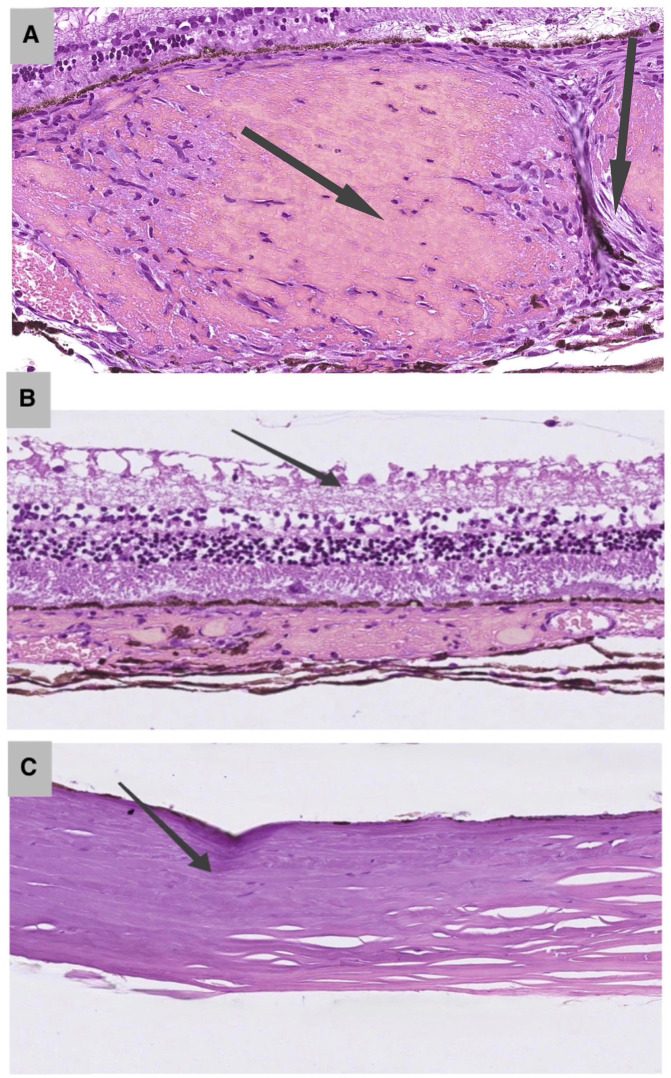 Figure 3
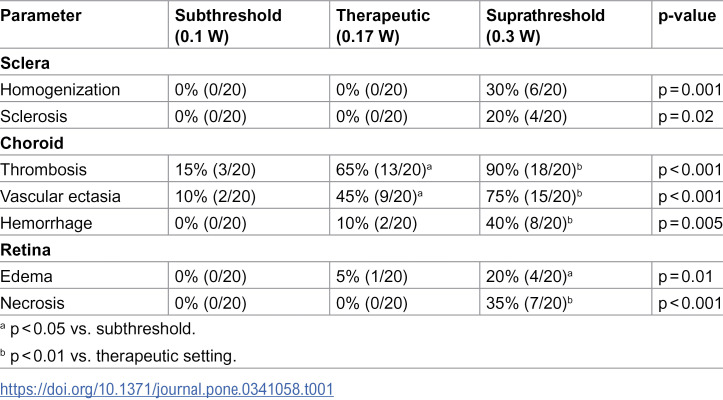 Figure 4
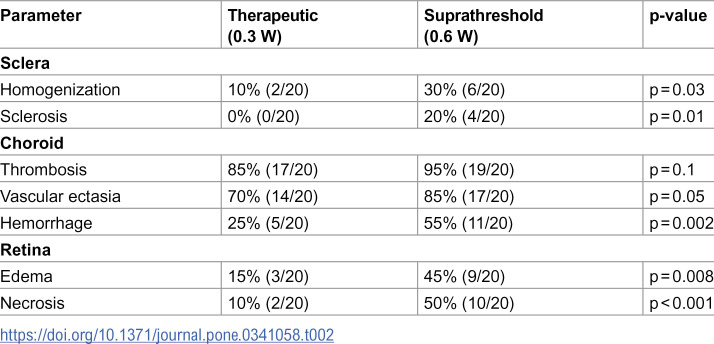 Figure 5
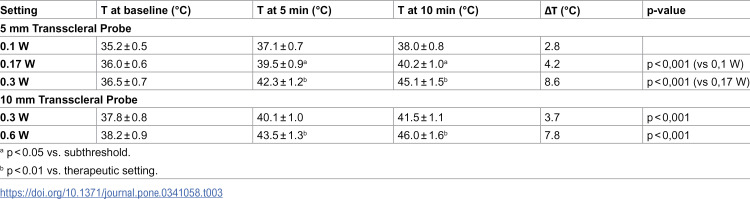 Figure 6
Peer Reviews
No public reviews on file for this paper yet. If you reviewed it on a platform where reviews are public (OpenReview, ICLR, NeurIPS, ICML), you can paste yours below so the community can read it here.
Videos
No videos yet. Explain this paper in a talk, walkthrough, or lecture? Add one.
Taxonomy
TopicsPhotodynamic Therapy Research Studies · Retinal Diseases and Treatments · Photoacoustic and Ultrasonic Imaging