Distinct brain pathways link depressive symptoms due to respiratory dysfunction and reduced physical activity in patients with chronic obstructive pulmonary disease: A single-center observational pilot study
Shunsuke Sakakura, Motoyasu Honma, Yuri Masaoka, Ryo Manabe, Kentaro Okuda, Masaki Yoshida, Akira Yoshikawa, Misako Matsui, Daiki Shoji, Miku Kosuge, Shota Kosuge, Kenta Miyo, Masahiro Ida, Fumihiro Yamaguchi, Takuya Yokoe, Masahiko Izumizaki

TL;DR
The study found two brain pathways linking COPD-related breathing issues and low physical activity to depressive symptoms in patients.
Contribution
This study identifies distinct brain pathways connecting respiratory dysfunction and physical inactivity to depression in COPD patients.
Findings
A pulmonary pathway involving FEV1 and the genu of the corpus callosum links to depressive symptoms in COPD.
A behavioral pathway connects physical activity to the right postcentral gyrus and depressive symptoms in COPD patients.
Abstract
Mental health issues, such as depression, are increasingly recognized as critical comorbidities in chronic obstructive pulmonary disease (COPD). While analyses of individual domains or pairwise relationships among airflow obstruction severity, brain morphological features, and mental health conditions in COPD have provided valuable insights into their direct associations, a more integrative approach may offer additional mechanistic understanding. This study aimed to clarify potential mediators in multiple brain regions between airflow obstruction and depressive tendencies in patients with COPD. We analyzed 19 patients with COPD and 23 age-matched healthy controls. Path analysis was used to evaluate the relationships among respiratory indices, regional brain volumes, and depressive symptoms. The path analysis revealed two potential pathways to depressive symptoms in the COPD group. One…
Genes, proteins, chemicals, diseases, species, mutations and cell lines named across the full text — each resolved to its canonical identifier and authoritative record.
Click any figure to enlarge with its caption.
 Figure 1
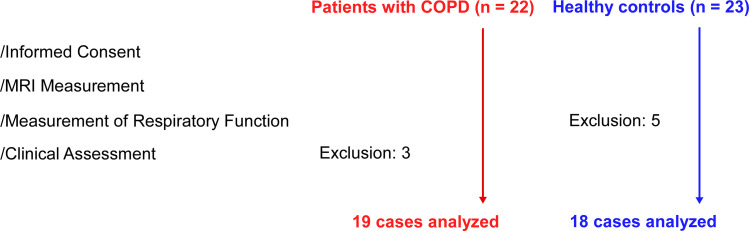 Figure 2
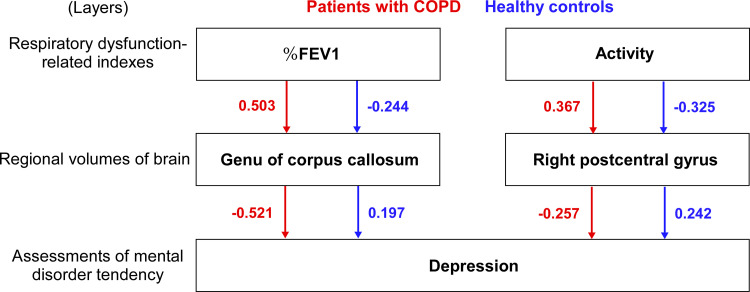 Figure 3
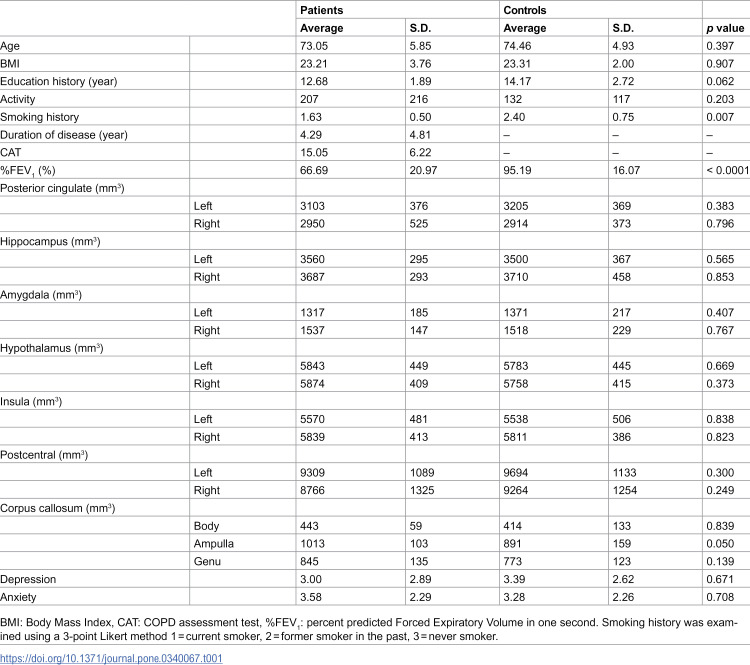 Figure 4
Peer Reviews
No public reviews on file for this paper yet. If you reviewed it on a platform where reviews are public (OpenReview, ICLR, NeurIPS, ICML), you can paste yours below so the community can read it here.
Videos
No videos yet. Explain this paper in a talk, walkthrough, or lecture? Add one.
Taxonomy
TopicsChronic Obstructive Pulmonary Disease (COPD) Research · Inhalation and Respiratory Drug Delivery · Neuroscience of respiration and sleep