When the outcome is compositional: A method for conducting compositional response linear mixed models for physical activity, sedentary behaviour and sleep research
Aaron Miatke, Ty Stanford, Tim Olds, Francois Fraysse, Carol Maher, Josep Antoni Martin-Fernandez, Dot Dumuid

TL;DR
This paper introduces a new statistical method to analyze how time is allocated among sleep, sedentary behavior, and physical activity in health research.
Contribution
A practical framework for compositional multivariate-response linear mixed models to analyze 24h movement-behavior composition.
Findings
The method accounts for covariances across and within response variables at multiple levels.
Results are invariant to the chosen log-ratio basis for constructing response variables.
The approach is demonstrated in a study on how children reallocate time across the school year.
Abstract
Time use is compositional in nature because time spent in sleep, sedentary behaviour and physical activity will always sum to 24 h/day meaning any increase in one behaviour will necessarily displace time spent in another behaviour(s). Given the link between time use and health, and its modifiable nature, public health campaigns often aim to change the way people allocate their time. However, relatively few studies have investigated how movement-behaviour compositions change longitudinally (with repeated measures), due to experimental design elements (e.g., intervention effects), or differences due to participant socio-demographic characteristics (e.g., sex, socio-economic status) within clustered sampling designs. This may be because most mixed-model packages that account for the random effects do not natively support a multivariate outcome such as movement-behaviour composition. In the…
Genes, proteins, chemicals, diseases, species, mutations and cell lines named across the full text — each resolved to its canonical identifier and authoritative record.
Click any figure to enlarge with its caption.
 Figure 1
 Figure 2
 Figure 3
 Figure 4
 Figure 5
 Figure 6
 Figure 7
 Figure 8
 Figure 9
 Figure 10
 Figure 11
 Figure 12
 Figure 13
 Figure 14
 Figure 15
 Figure 16
 Figure 17
 Figure 18
 Figure 19
 Figure 20
 Figure 21
 Figure 22
 Figure 23
 Figure 24
 Figure 25
 Figure 26
 Figure 27
 Figure 28
 Figure 29
 Figure 30
 Figure 31
 Figure 32
 Figure 33
 Figure 34
 Figure 35
 Figure 36
 Figure 37
 Figure 38
 Figure 39
 Figure 40
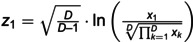 Figure 41
 Figure 42
 Figure 43
 Figure 44
 Figure 45
 Figure 46
 Figure 47
 Figure 48
 Figure 49
 Figure 50
Peer Reviews
No public reviews on file for this paper yet. If you reviewed it on a platform where reviews are public (OpenReview, ICLR, NeurIPS, ICML), you can paste yours below so the community can read it here.
Videos
No videos yet. Explain this paper in a talk, walkthrough, or lecture? Add one.
Taxonomy
TopicsPhysical Activity and Health · Psychometric Methodologies and Testing · Obesity, Physical Activity, Diet