Molecular detection and antibiotic resistance of diarrheagenic Escherichia coli from street food and water in mukuru slums, Nairobi County
Sheillah Mundalo, Regina Ntabo, Kelvin Kering, Rael Too, Kevin Kariuki, Diana Imoli, Brian Silantoi, Evans Kiptanui, Susan Kavai, Samuel Kariuki, Cecilia Mbae, Babak Pakbin, Babak Pakbin, Debdutta Bhattacharya, Debdutta Bhattacharya

TL;DR
This study found high levels of antibiotic-resistant diarrheagenic E. coli in street food and water samples from Nairobi's Mukuru slums, highlighting a serious public health risk.
Contribution
The study provides new insights into the genetic and antimicrobial resistance profiles of E. coli in urban slum environments in Kenya.
Findings
77.4% of isolated E. coli were diarrheagenic, with wastewater being the most contaminated source.
72.6% of E. coli isolates were multidrug-resistant, with high resistance to tetracycline and trimethoprim-sulfamethoxazole.
ESBL genes bla-TEM and bla-CTX-M were detected in 12.9% and 3.2% of isolates, respectively.
Abstract
Globally, diarrheal diseases account for 550 million cases of foodborne illnesses annually. In Kenya, Escherichia coli (E. coli) infections from contaminated food and water pose a serious health concern, especially in settings with poor sanitation and hygiene practices This study examined the genetic characteristics and antimicrobial resistance profiles of diarrheagenic E. coli (DEC) recovered from street foods and water from Mukuru informal settlements, Nairobi. Between September and December 2023, 384 (each 77) samples of street foods (Mandazi, githeri, French fries), wastewater, and drinking water were collected and E. coli isolation performed through microbiological culture and antibiotic susceptibility testing done using Kirby-Bauer disc diffusion method. Conventional Polymerase chain reaction (PCR) was used to screen for six DEC and extended-spectrum beta-lactamase (ESBL)…
Genes, proteins, chemicals, diseases, species, mutations and cell lines named across the full text — each resolved to its canonical identifier and authoritative record.
Click any figure to enlarge with its caption.
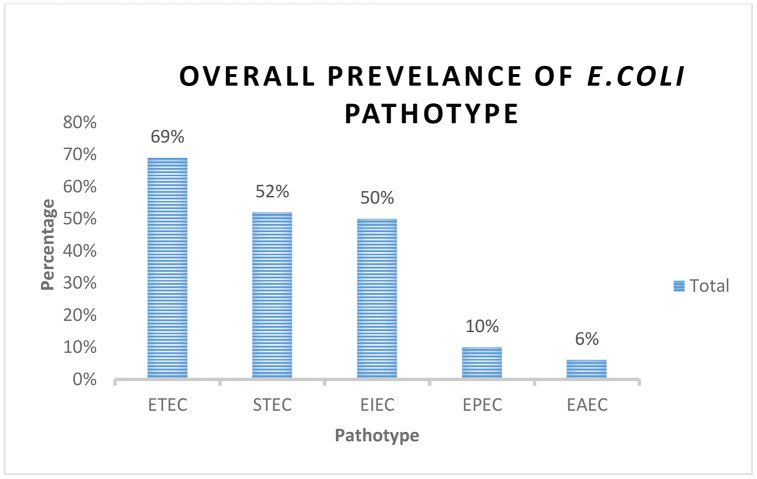 Figure 1
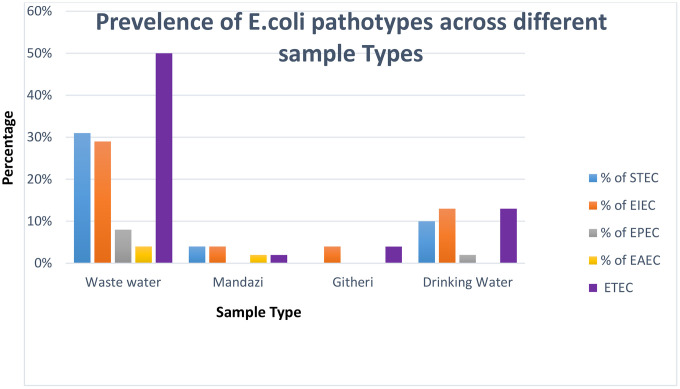 Figure 2
 Figure 3
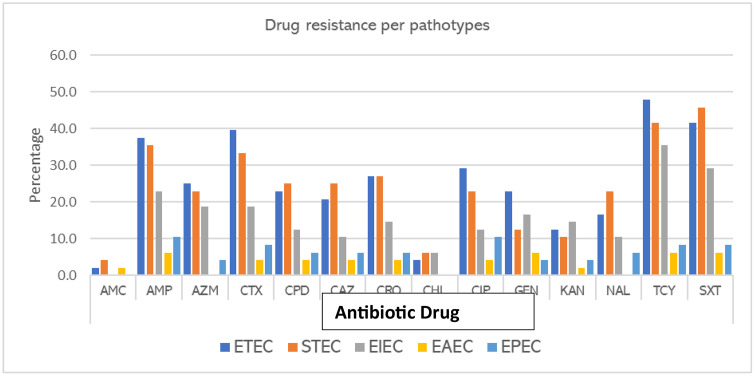 Figure 4
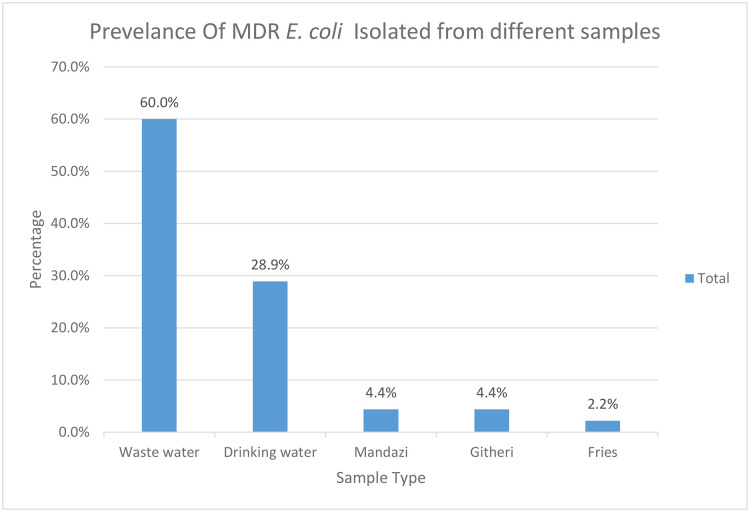 Figure 5
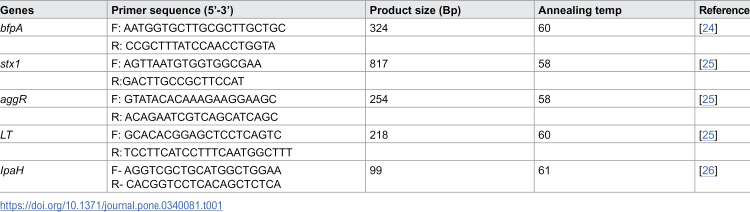 Figure 6
 Figure 7
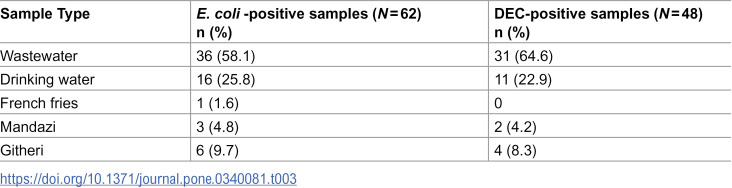 Figure 8
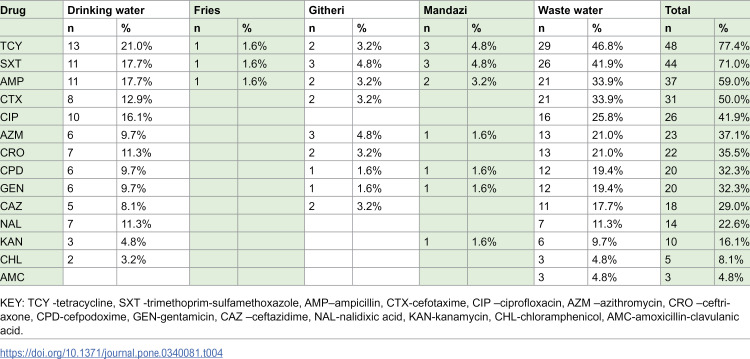 Figure 9
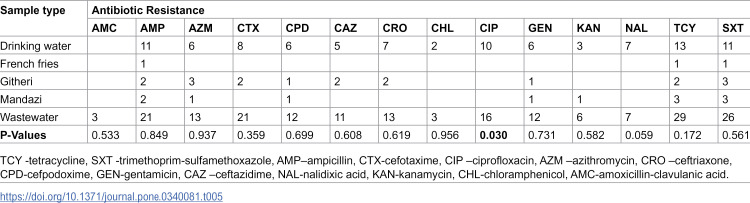 Figure 10
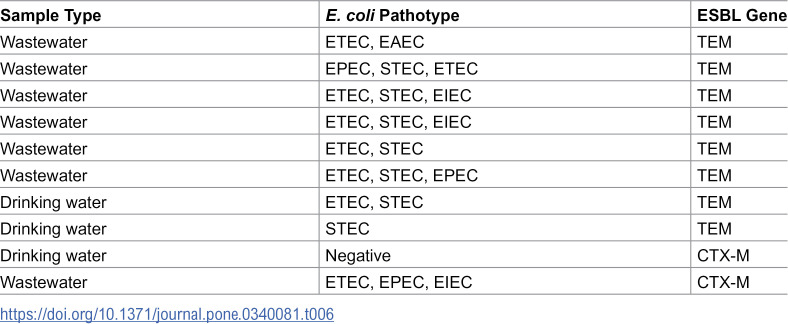 Figure 11
Peer Reviews
No public reviews on file for this paper yet. If you reviewed it on a platform where reviews are public (OpenReview, ICLR, NeurIPS, ICML), you can paste yours below so the community can read it here.
Videos
No videos yet. Explain this paper in a talk, walkthrough, or lecture? Add one.
Taxonomy
TopicsEscherichia coli research studies · Vibrio bacteria research studies · Fecal contamination and water quality