Tissue-specific mitochondrial pathway remodeling linked to longevity in honeybee queens
Clément Joël Lucien Chevret, José Francisco Echegaray, Alexander Walton, Maryam Lo, Olav Rueppell, Hélène Lemieux, Wolfgang Blenau, Wolfgang Blenau, Wolfgang Blenau

TL;DR
Honeybee queens live much longer than workers, and this study finds differences in mitochondrial function in their tissues that may explain this longevity.
Contribution
The study reveals tissue-specific mitochondrial pathway remodeling linked to longevity in honeybee queens.
Findings
Queens showed reduced reliance on NADH-linked pathways in head and fat tissues early in life compared to workers.
Early-life queens compensated for reduced NADH-pathway use with increased glycerophosphate pathway activity.
Queens exhibited reduced phosphorylation-pathway control over OXPHOS in head and fat tissues compared to workers.
Abstract
Mitochondrial metabolism plays a critical role in determining lifespan across animal taxa. In our study, we used the Western honeybee (Apis mellifera) as a model, capitalizing on the stark lifespan difference between queens, which often live more than two years, and summer workers, which survive only about 30 days, despite sharing the same genetic background. We investigated mitochondrial function in head tissue, thoracic muscle, and abdominal fat tissue of queens and workers, comparing early (7 days) and late adult stages (28–30 days in workers; 2 years in queens). No significant differences in mitochondrial flux control ratio for the NADH- Succinate- and glycerophosphate (Gp) pathways were found in thoracic muscles across castes or age groups. In head and abdominal fat tissues, early-life queens showed reduced reliance on NADH-linked pathways for maximal respiratory flux compared to…
Genes, proteins, chemicals, diseases, species, mutations and cell lines named across the full text — each resolved to its canonical identifier and authoritative record.
Click any figure to enlarge with its caption.
 Figure 1
 Figure 2
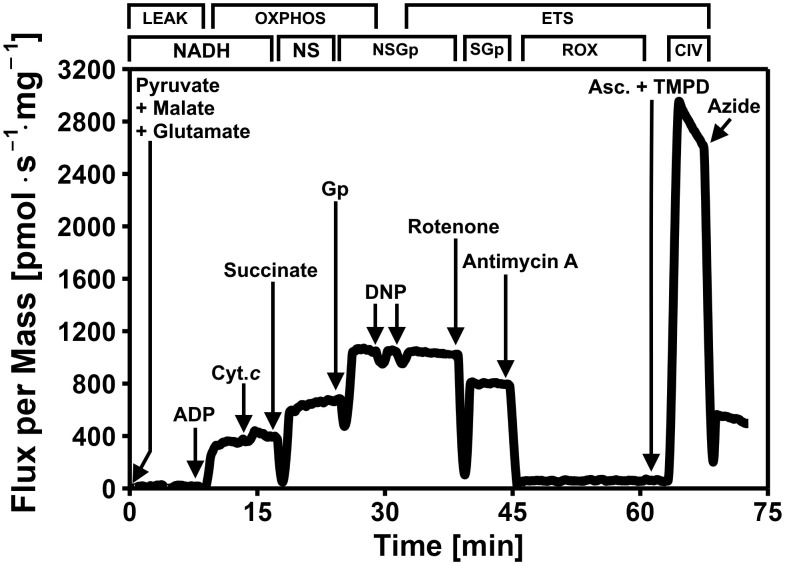 Figure 3
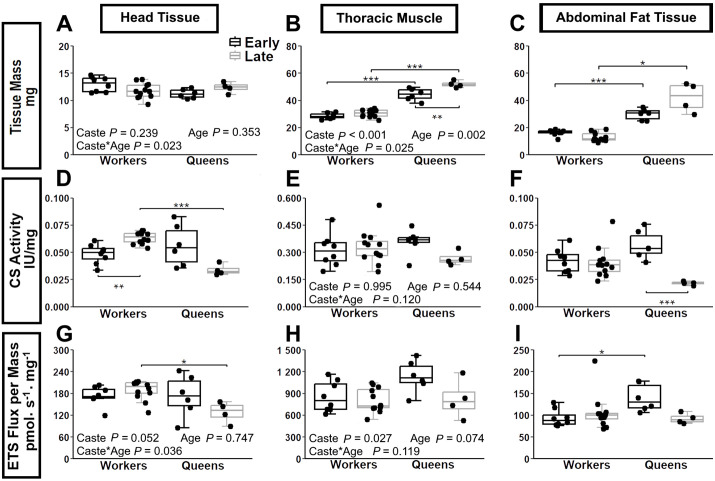 Figure 4
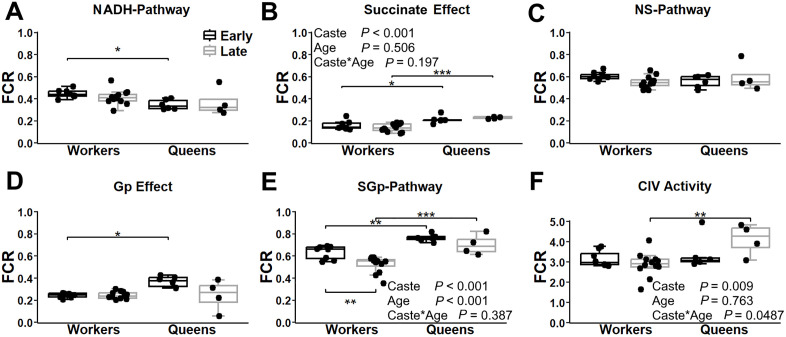 Figure 5
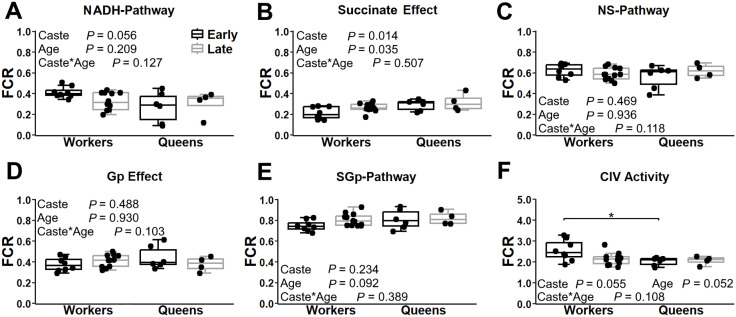 Figure 6
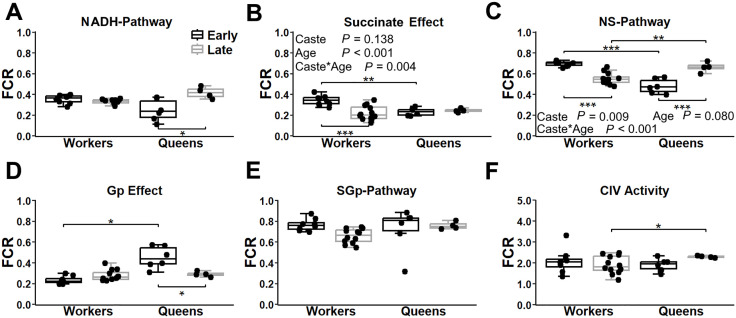 Figure 7
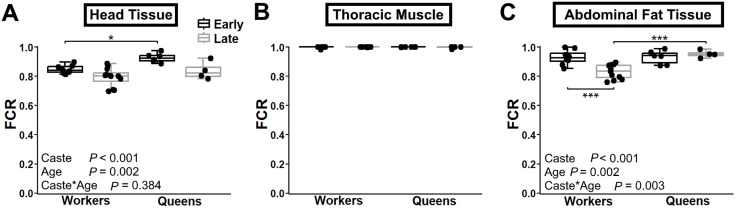 Figure 8
Peer Reviews
No public reviews on file for this paper yet. If you reviewed it on a platform where reviews are public (OpenReview, ICLR, NeurIPS, ICML), you can paste yours below so the community can read it here.
Videos
No videos yet. Explain this paper in a talk, walkthrough, or lecture? Add one.
Taxonomy
TopicsPhysiological and biochemical adaptations · Insect and Arachnid Ecology and Behavior · Genetics, Aging, and Longevity in Model Organisms