Clinical presentation, etiology, and treatment outcomes of mycetoma: A 25-year retrospective study in Southern Thailand
Sorawit Chittrakarn, Siripen Kanchanasuwan, Nattapat Sangkakul, Nonthanat Tongsengkee, Felix Bongomin, Joshua Nosanchuk, Felix Bongomin, Joshua Nosanchuk, Felix Bongomin, Joshua Nosanchuk

TL;DR
A 25-year study in southern Thailand found that mycetoma is caused by diverse fungi and bacteria, with modest treatment success and frequent complications.
Contribution
The study provides the first detailed 25-year analysis of mycetoma in southern Thailand, revealing distinct regional epidemiology and treatment challenges.
Findings
Eumycetoma was more common than actinomycetoma, caused by diverse fungi like Exophiala jeanselmei and Scedosporium.
Cure rates were modest at 54%, with 10% recurrence and 3% requiring amputation despite combined medical and surgical treatment.
Histopathology was more reliable than culture for diagnosing mycetoma, especially for actinomycetoma.
Abstract
Mycetoma is a chronic subcutaneous infection caused by fungi (eumycetoma) or filamentous bacteria (actinomycetoma). Although recently recognized by the World Health Organization as a neglected tropical disease, data from Southeast Asia are scarce. Previous reports from Thailand were limited and outdated. We conducted a 25-year retrospective study (2000–2025) at a tertiary referral hospital in southern Thailand. Patients were identified from hospital records and confirmed by histopathology and/or culture. Fifty patients met inclusion criteria: 31 (62%) had eumycetoma and 19 (38%) had actinomycetoma. The median age was 50 years (IQR 41.8-58.0), and 62% were male. The foot was the most common site (80%), with bone involvement in 28%. Sinus tracts occurred in 43%, but visible grains were recorded in only 12%. Histopathology (performed in 86%) reliably distinguished fungal from bacterial…
Genes, proteins, chemicals, diseases, species, mutations and cell lines named across the full text — each resolved to its canonical identifier and authoritative record.
Click any figure to enlarge with its caption.
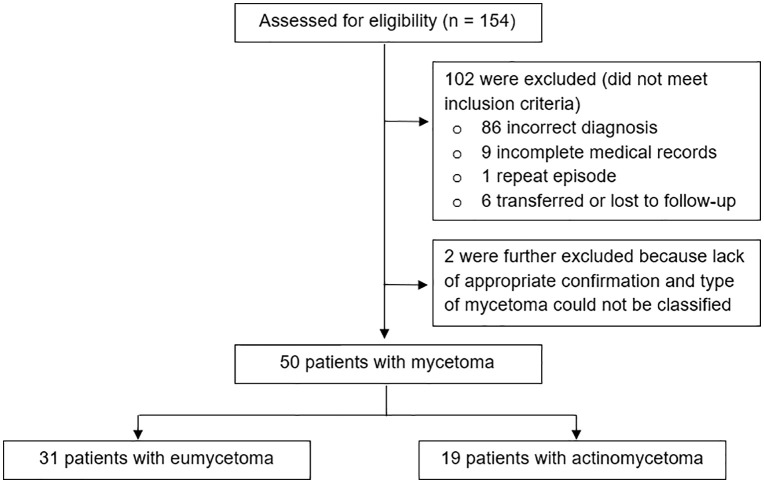 Figure 1
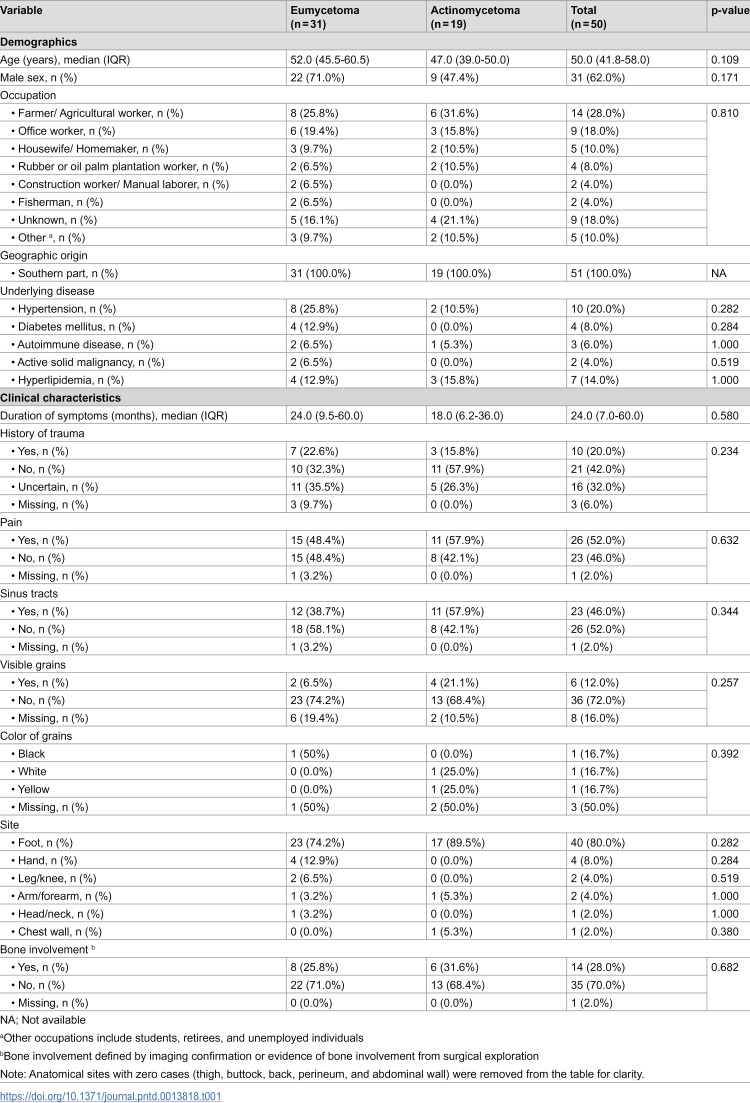 Figure 2
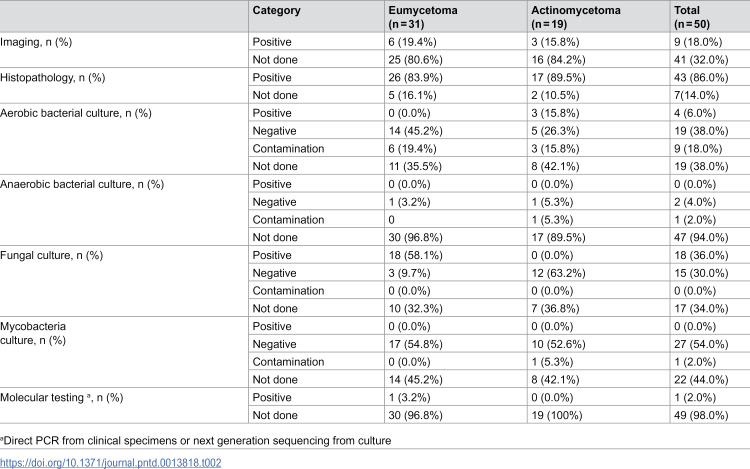 Figure 3
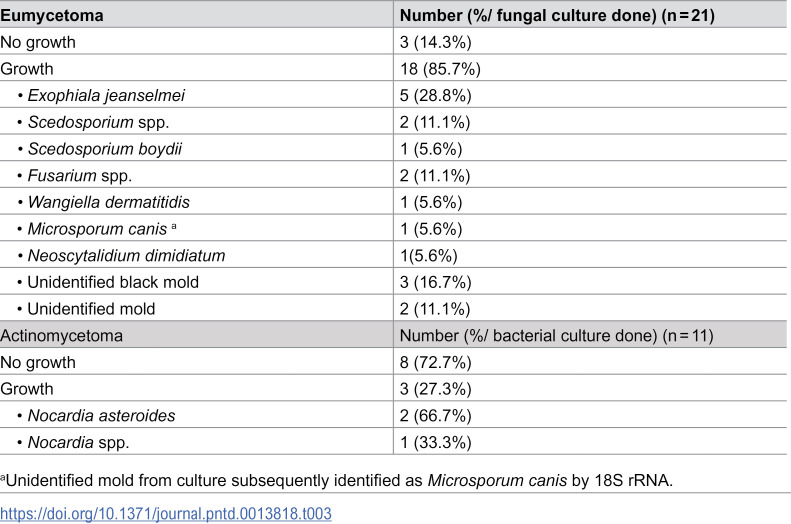 Figure 4
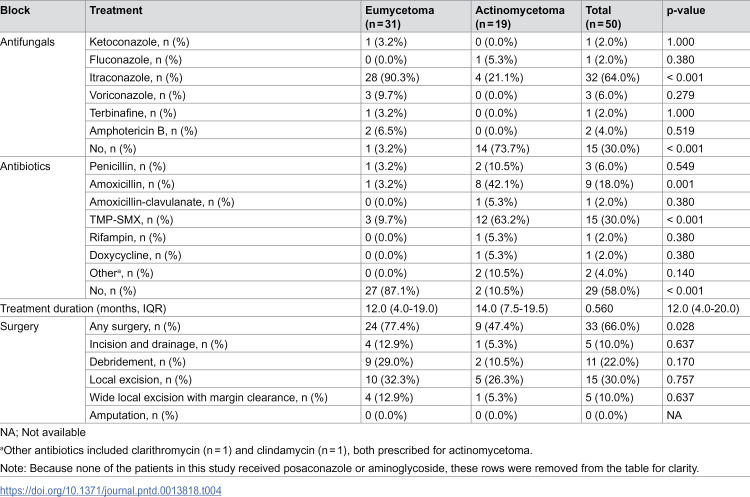 Figure 5
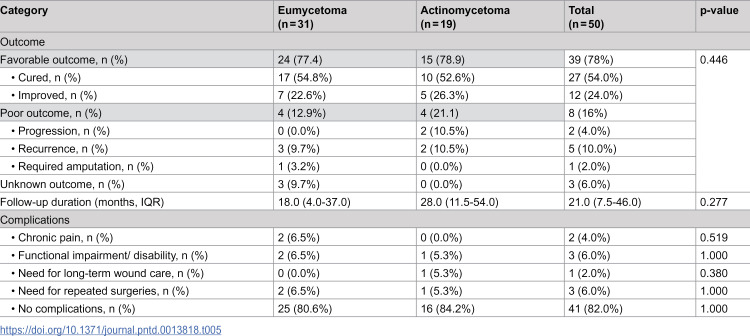 Figure 6
Peer Reviews
No public reviews on file for this paper yet. If you reviewed it on a platform where reviews are public (OpenReview, ICLR, NeurIPS, ICML), you can paste yours below so the community can read it here.
Videos
No videos yet. Explain this paper in a talk, walkthrough, or lecture? Add one.
Taxonomy
TopicsActinomycetales infections and treatment · Infectious Diseases and Mycology · Fungal Infections and Studies