Pregnant women’s attitudes and intentions toward tuberculosis, malaria, group B streptococcus, and respiratory syncytial virus vaccines in pregnant: Findings from a cross-sectional study of pregnant women living in Brazil, Ghana, Kenya, and Pakistan
Rupali Limaye, Jessica Schue, Berhaun Fesshaye, Prachi Singh, Emily Miller, Renato Souza, Saleem Jessani, Marleen Temmerman, Caroline Dinam Badzi, Molly Sauer, Vanessa Brizuela, Ruth Karron, Giridhara Rathnaiah Babu, Giridhara Rathnaiah Babu

TL;DR
This study explores pregnant women's attitudes toward vaccines for TB, malaria, GBS, and RSV in four countries, finding that safety and protecting the baby are key factors in vaccine acceptance.
Contribution
The study provides novel insights into vaccine attitudes among pregnant women in low- and middle-income countries for four specific maternal vaccines.
Findings
Vaccine safety for the baby was the most important factor in vaccine acceptance for participants.
Approximately 30% of participants would definitely intend to receive a GBS vaccine, the highest among the four vaccines.
About 40% of participants believed vaccines are unnatural, indicating significant vaccine hesitancy.
Abstract
There are numerous infections that can adversely impact a developing fetus, neonates, and pregnant women, and there is limited research related to how specific infections experienced during pregnancy can affect these populations. Tuberculosis (TB), malaria, Group B streptococcus (GBS) and respiratory syncytial virus (RSV) can cause negative outcomes to maternal and neonatal health. For TB and GBS, there are vaccines in various stages of clinical trial development, and malaria and RSV vaccines are available. This study aimed to examine pregnant women’s attitudes toward TB, malaria, GBS, and RSV vaccines in Brazil, Ghana, Kenya, and Pakistan. We administered a cross-sectional survey to pregnant women, recruiting women seeking care in primarily urban health facilities. We surveyed 1,603 pregnant women. Participants indicated that vaccine safety for the baby was the most important factor in…
Genes, proteins, chemicals, diseases, species, mutations and cell lines named across the full text — each resolved to its canonical identifier and authoritative record.
Click any figure to enlarge with its caption.
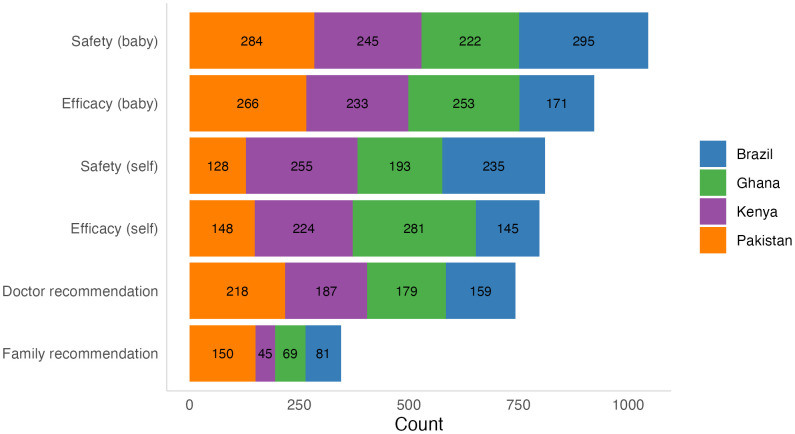 Figure 1
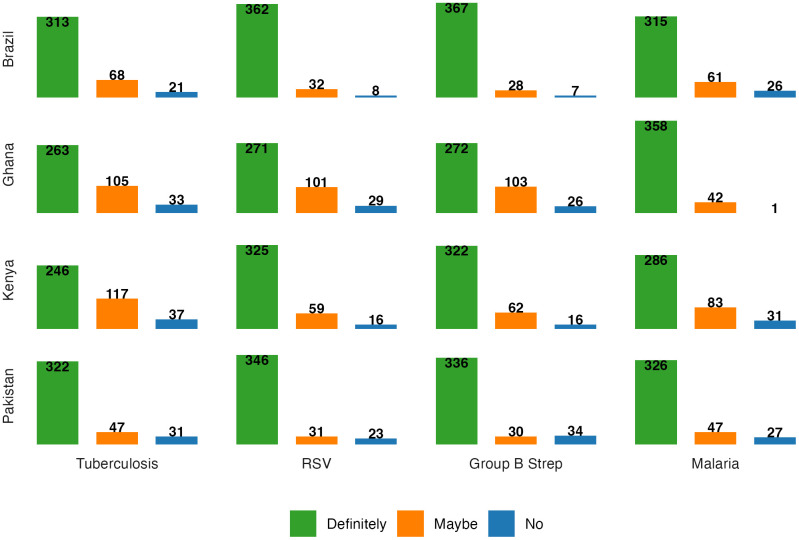 Figure 2
 Figure 3
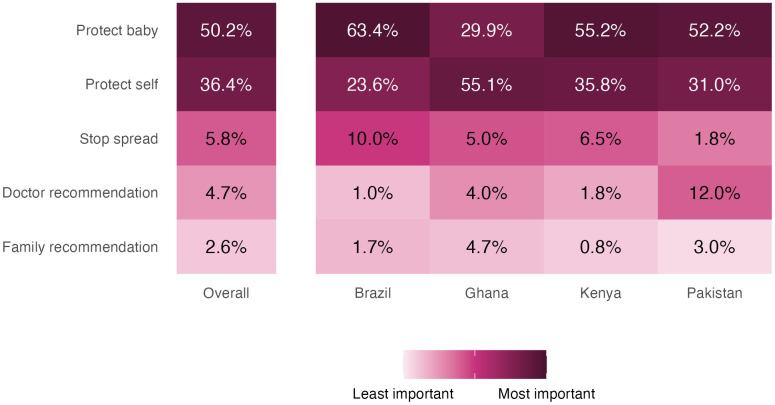 Figure 4
 Figure 5
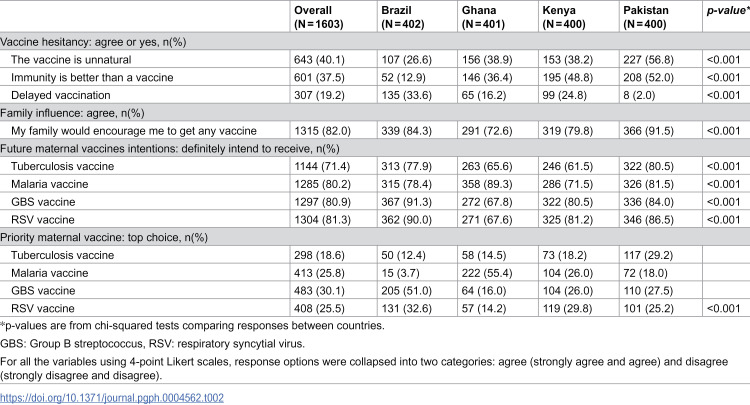 Figure 6
Peer Reviews
No public reviews on file for this paper yet. If you reviewed it on a platform where reviews are public (OpenReview, ICLR, NeurIPS, ICML), you can paste yours below so the community can read it here.
Videos
No videos yet. Explain this paper in a talk, walkthrough, or lecture? Add one.
Taxonomy
TopicsNeonatal and Maternal Infections · Immune responses and vaccinations · COVID-19 Impact on Reproduction