Mechanisms and Clinical Implications of the Post-traumatic Stress Disorder (PTSD)–Cardiovascular Disease Link
Abubakar I. Sidik, Vladislav V Dontsov, Mikhail G Ruchkin, Nina S Kapieva, Bushra M Alimagomaev, Olga S Epimakhova, Nadiya M Toktarova, Amatuni A Badoyan, Anton N Falchinsky, Noemi D Kirkevich, Anton A Kolyada

TL;DR
This paper reviews how PTSD increases heart disease risk through biological and behavioral pathways, suggesting integrated care models for better outcomes.
Contribution
The paper synthesizes current evidence on PTSD-CVD mechanisms and clinical implications, emphasizing modifiable risk factors and multidisciplinary care.
Findings
PTSD is linked to higher rates of hypertension, coronary disease, and cardiovascular mortality.
Biological pathways include autonomic dysfunction, inflammation, and endothelial impairment.
Integrated care models and trauma-focused therapies may reduce cardiovascular risk in PTSD patients.
Abstract
Post-traumatic stress disorder (PTSD) is increasingly recognized as a significant contributor to cardiovascular morbidity and mortality. The aim of this review was to synthesize current evidence on the biological, behavioral, and clinical mechanisms linking PTSD with cardiovascular disease (CVD) and to highlight clinical implications for screening, prevention, and management. To achieve this, relevant studies were identified through targeted searches of PubMed, Scopus, Web of Science, and Google Scholar using combinations of terms related to PTSD, CVD, autonomic dysfunction, inflammation, endothelial function, and trauma-informed care. Priority was given to original clinical studies, systematic reviews, meta-analyses, and experimental research published between 1990 and 2025. Findings across large epidemiologic studies show that PTSD is associated with significantly higher rates of…
Genes, proteins, chemicals, diseases, species, mutations and cell lines named across the full text — each resolved to its canonical identifier and authoritative record.
Click any figure to enlarge with its caption.
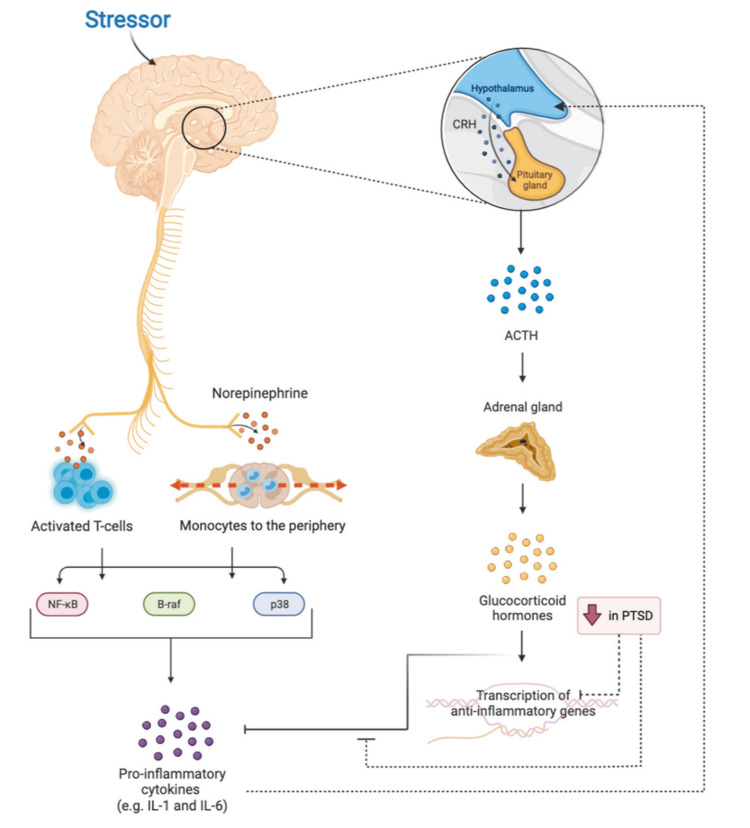 Figure 1
Peer Reviews
No public reviews on file for this paper yet. If you reviewed it on a platform where reviews are public (OpenReview, ICLR, NeurIPS, ICML), you can paste yours below so the community can read it here.
Videos
No videos yet. Explain this paper in a talk, walkthrough, or lecture? Add one.
Taxonomy
TopicsPosttraumatic Stress Disorder Research · Stress Responses and Cortisol · Cardiac Health and Mental Health