A regioselective sustainable neat approach to naphtho[2,3-b]thiophene-4,9-dione: detailed mechanistic study and DFT analysis
Soumen K. Manik, Sk Asraf Ali, Nayim Sepay, Aniruddha Deb, Manik Shit, Paritosh Barik, Jyotirmoy Rath, Kankan K. Maity, Sudhir C. Pal, Shubhankar Samanta, Nirmal K. Hazra

TL;DR
A sustainable, solvent-free method for making anticancer compounds called naphtho[2,3-b]thiophene-4,9-dione is developed and studied using detailed mechanisms and DFT analysis.
Contribution
A new solvent-free, regioselective synthesis method for naphtho[2,3-b]thiophene-4,9-dione with a detailed mechanistic and DFT analysis is introduced.
Findings
A solvent-free, one-pot three-component reaction successfully synthesizes naphtho[2,3-b]thiophene-4,9-dione derivatives.
The reaction mechanism involves regioselective Michael addition, a domino reaction, and aromatization confirmed via DFT studies.
The method is scalable and sustainable, with a wide substrate scope and confirmed biological activity.
Abstract
An environment friendly simple, solvent-free, and lower E-factor technique has been developed for synthesizing anticancer property-containing substituted naphtho[2,3-b]thiophene-4,9-dione derivatives via a one-pot three-component reaction using active methylene compounds, alkyl/aryl isothiocyanate, and 1,4-naphthoquinone derivatives. The reaction proceeds through the regioselective Michael addition between the di-anionic intermediate and 1,4-naphthoquinone derivatives, followed by a domino reaction, which has been established via DFT study. Finally, it undergoes a Krapcho reaction followed by aromatization in a basic environment, yielding the desired product naphtho[2,3-b]thiophene-4,9-dione. The reluctant addition of a di-anionic intermediate to the naphthalene-1,4-dione or 2-bromonaphthalene-1,4-dione in the solvent medium has been overcome using a neat approach. Practicability of the…
Genes, proteins, chemicals, diseases, species, mutations and cell lines named across the full text — each resolved to its canonical identifier and authoritative record.
Click any figure to enlarge with its caption.
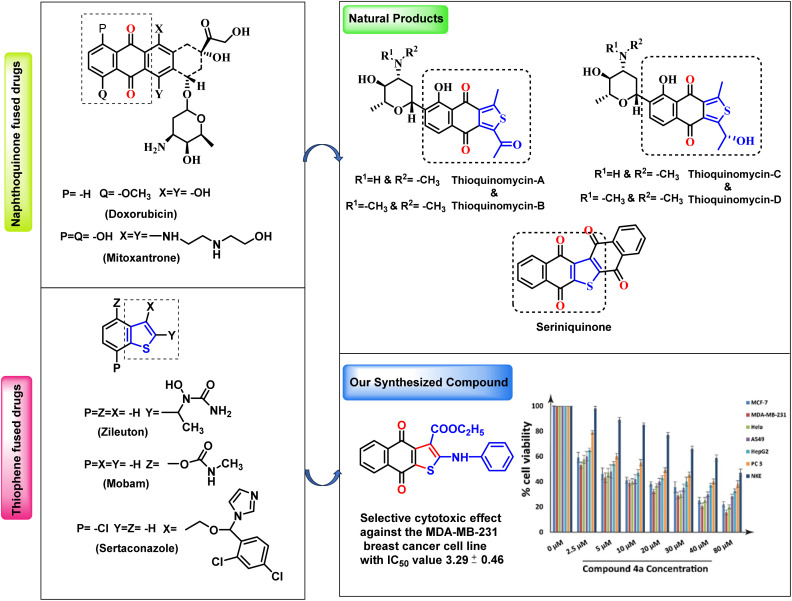 Figure 1
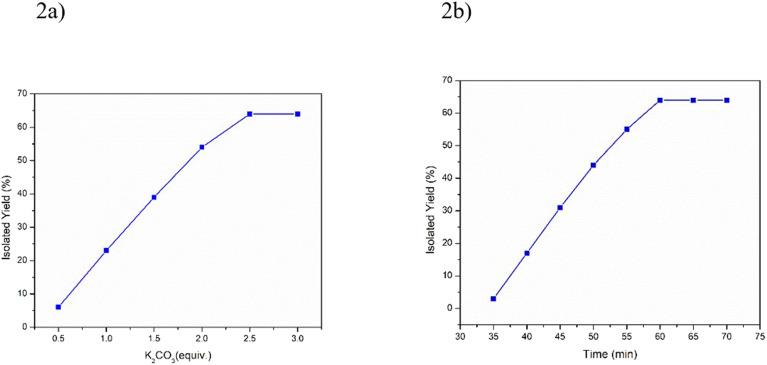 Figure 2
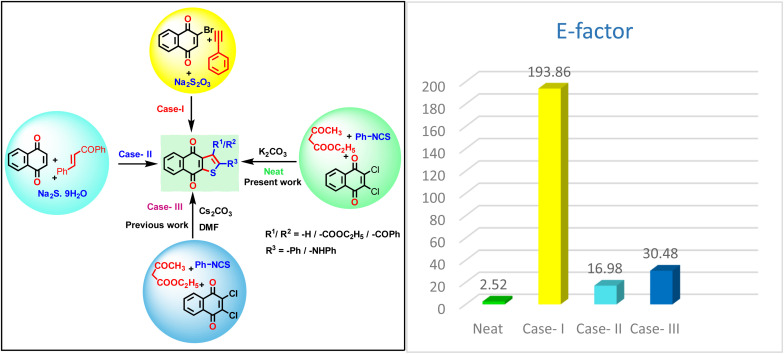 Figure 3
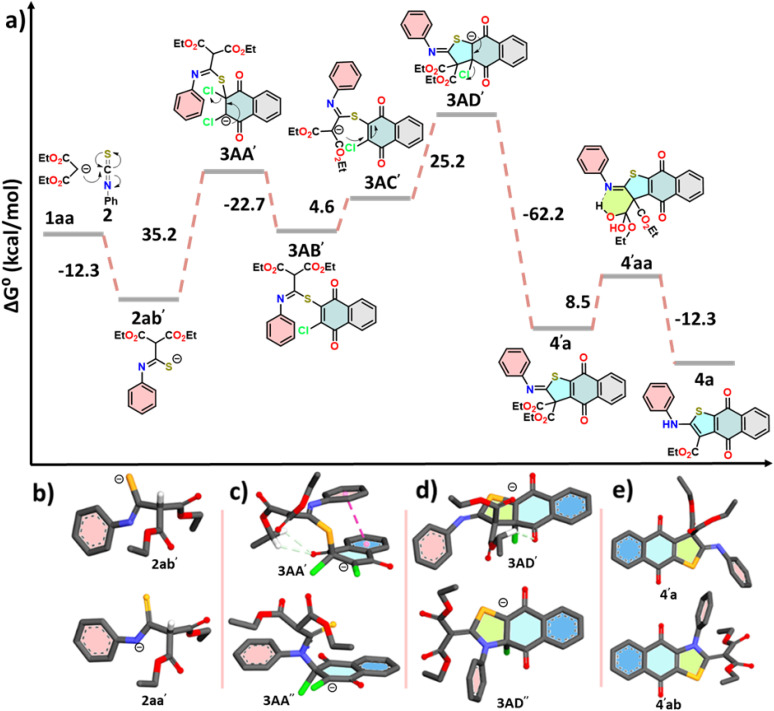 Figure 4
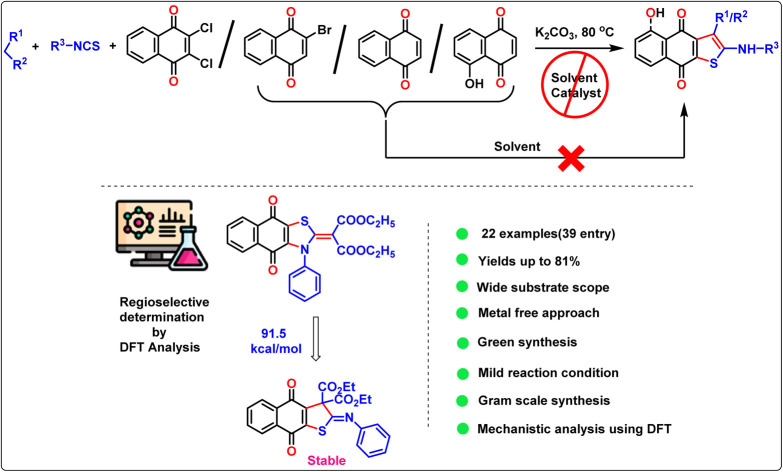 Figure 5
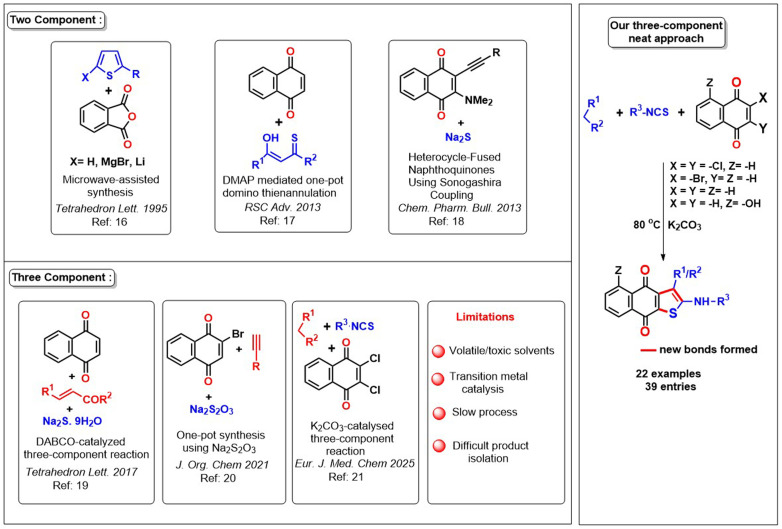 Figure 6
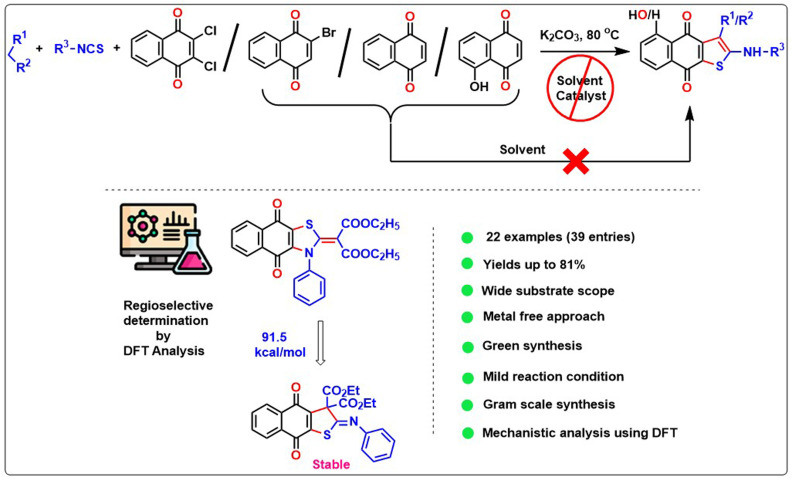 Figure 7
 Figure 8
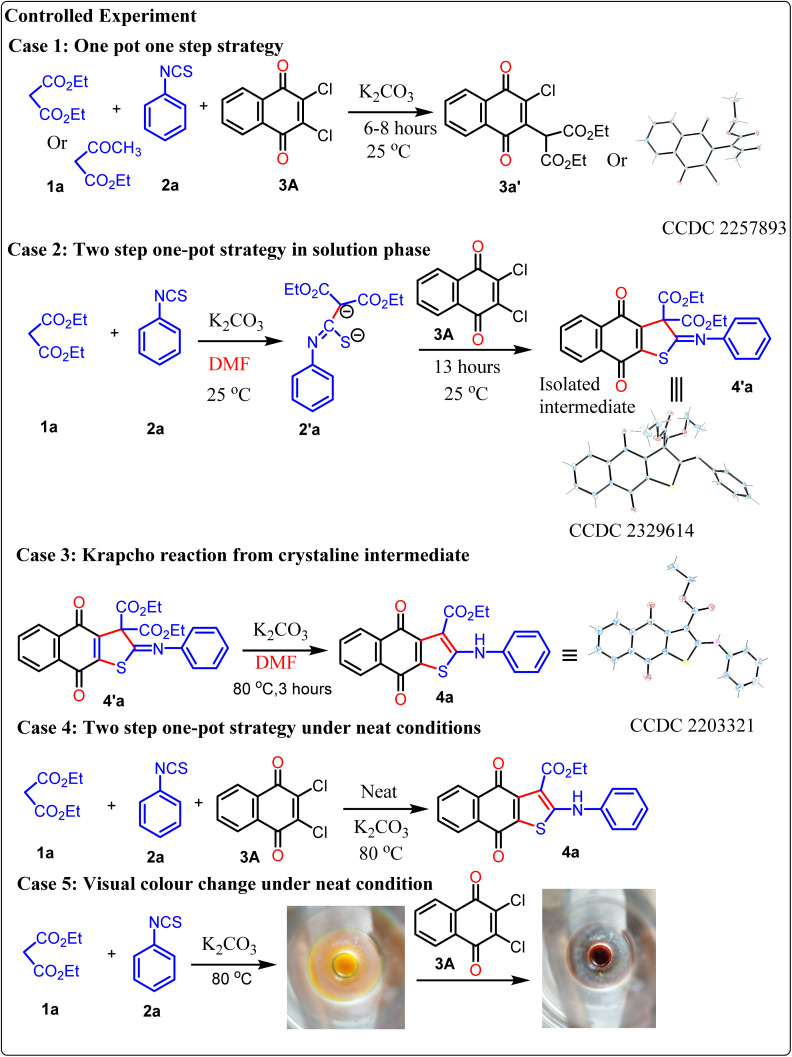 Figure 9
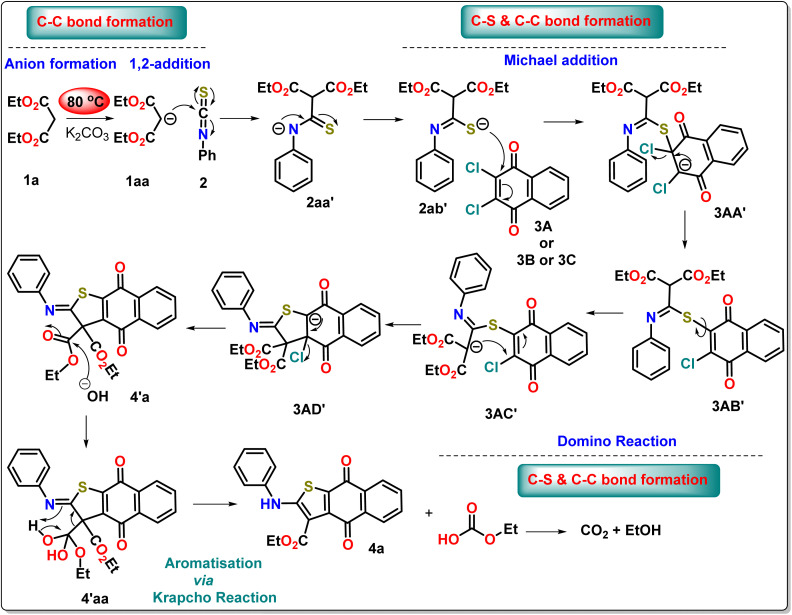 Figure 10
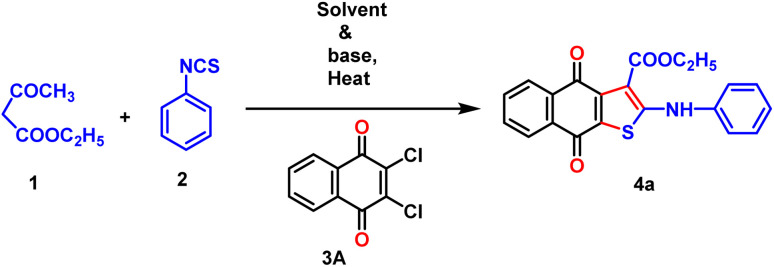 Figure 11
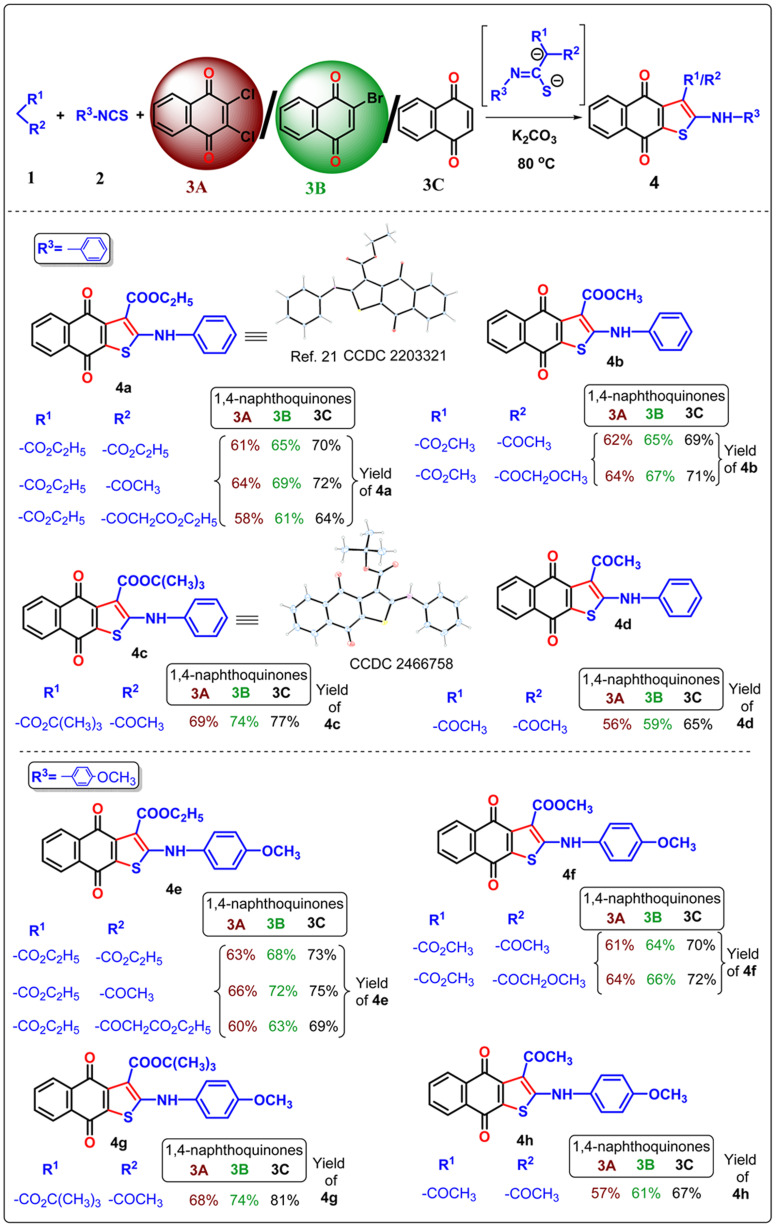 Figure 12
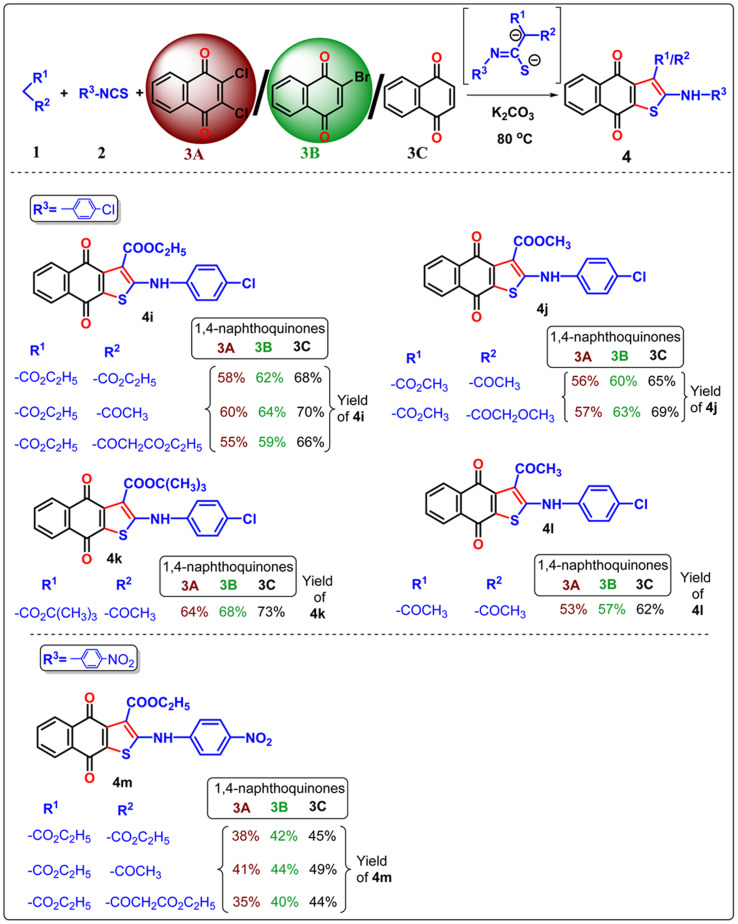 Figure 13
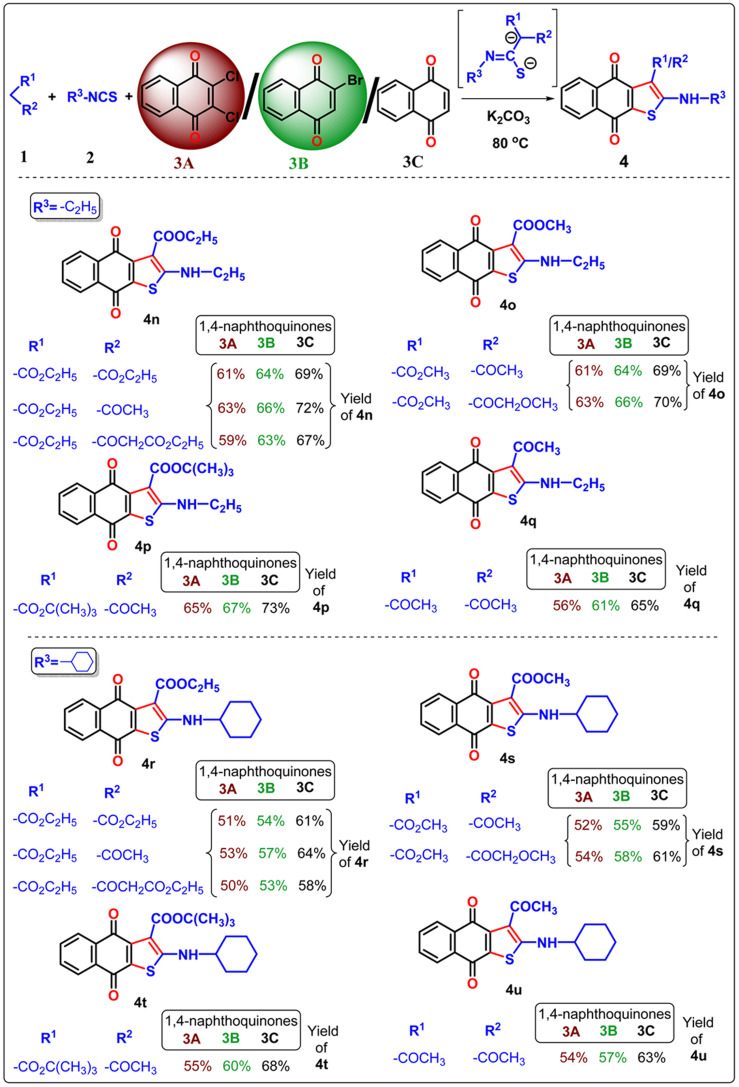 Figure 14
 Figure 15
Peer Reviews
No public reviews on file for this paper yet. If you reviewed it on a platform where reviews are public (OpenReview, ICLR, NeurIPS, ICML), you can paste yours below so the community can read it here.
Videos
No videos yet. Explain this paper in a talk, walkthrough, or lecture? Add one.
Taxonomy
TopicsOrganic Chemistry Cycloaddition Reactions · Chemical Reaction Mechanisms · Synthesis and Characterization of Pyrroles