One-stop strabismus digital diagnosis via AI-integrated skin-like and wearable “Eyelectronics”
Yong Yang, Xin Liu, Jiankai Tang, Hengyi Guo, Jinsong Zhang, Yuntao Wang, Yonghong Jiao, Yihao Chen, Xue Feng

TL;DR
A skin-like wearable device with AI can accurately diagnose strabismus in one step, improving objectivity and reducing costs.
Contribution
A wearable, AI-integrated system for one-stop strabismus diagnosis with high accuracy and real-time measurement.
Findings
The Eyelectronics system achieves 96.6% accuracy in classifying eye movement directions.
It measures ocular motility with 1.2° accuracy and shows strong agreement with clinical standards.
The device is ultrathin, breathable, and conforms to the eyelid for unobtrusive use.
Abstract
Strabismus, affecting ~4% of children, impairs vision and psychosocial health. However, clinical diagnosis requires multiple instruments and stepwise examinations of ocular alignment, extraocular muscle function, and deviation angle. It is limited by low diagnostic objectivity, poor pediatric compliance, and high cost. Here, we propose a strategy for one-stop strabismus digital diagnosis via artificial intelligence (AI)–integrated, skin-like, and wearable “Eyelectronics.” The ultralightweight, imperceptible eye-wearable system features an ultrathin (~60 micrometers in thickness), breathable, and multidirectional (0°/45°/90°) strain-sensing array conformally adapted to the sensitive eyelid. It enables wireless, mild-restricted measurement of eyelid deformation during eye movements. Through biomechanical modeling validated by ocular magnetic resonance imaging simulations, we establish a…
Genes, proteins, chemicals, diseases, species, mutations and cell lines named across the full text — each resolved to its canonical identifier and authoritative record.
Click any figure to enlarge with its caption.
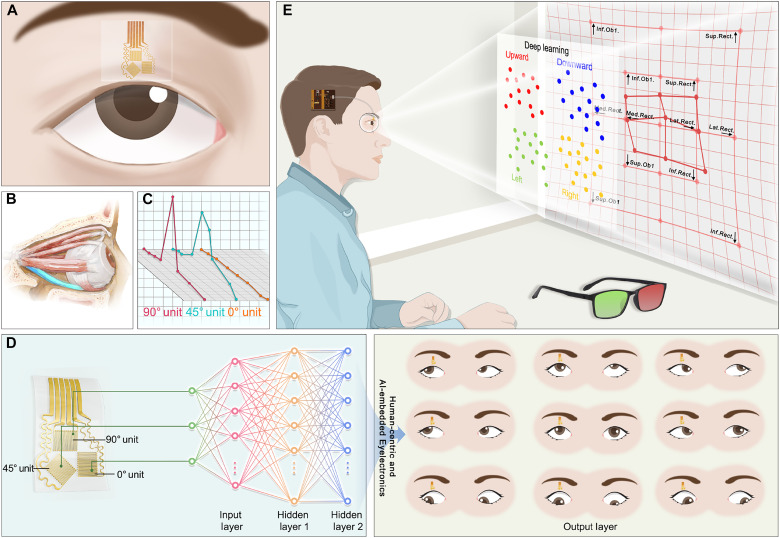 Figure 1
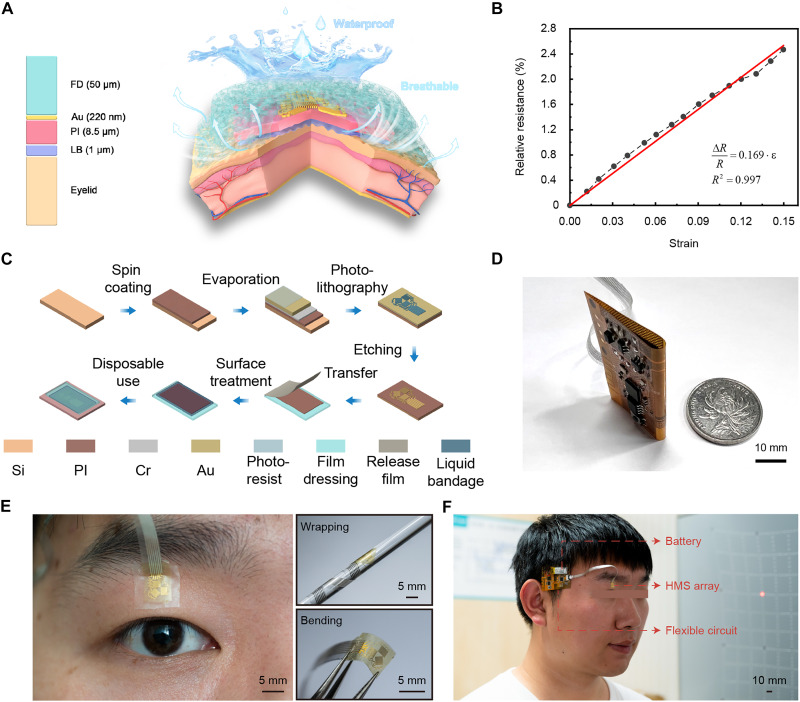 Figure 2
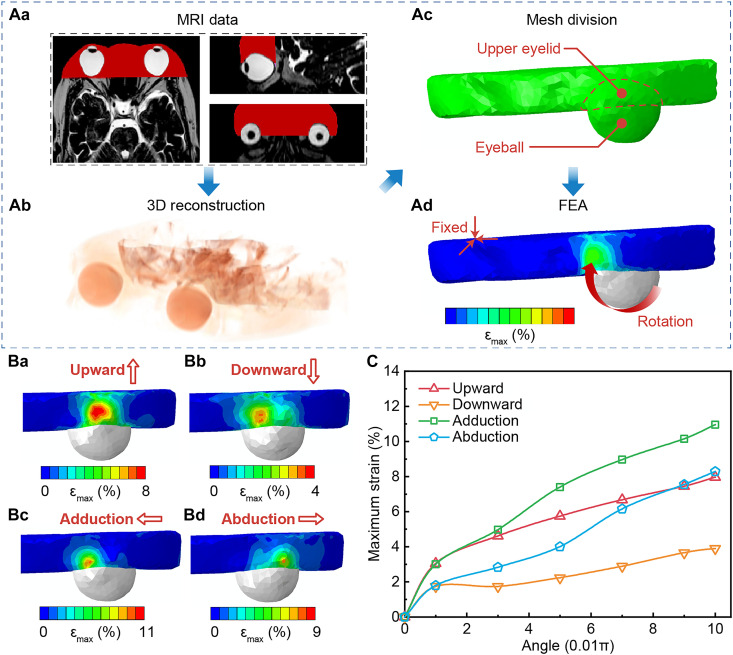 Figure 3
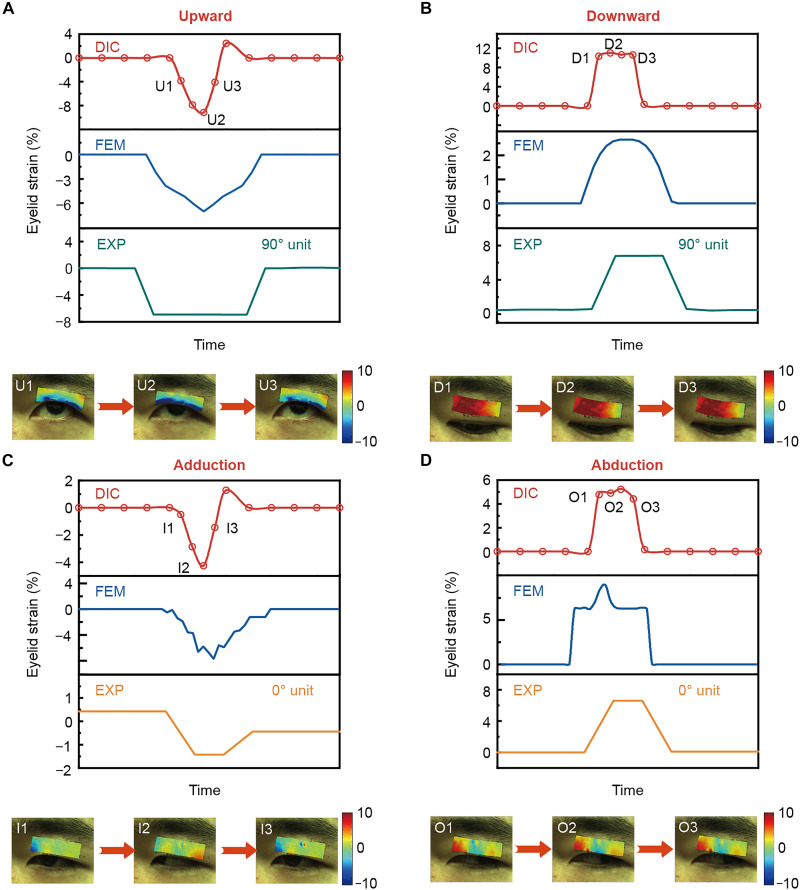 Figure 4
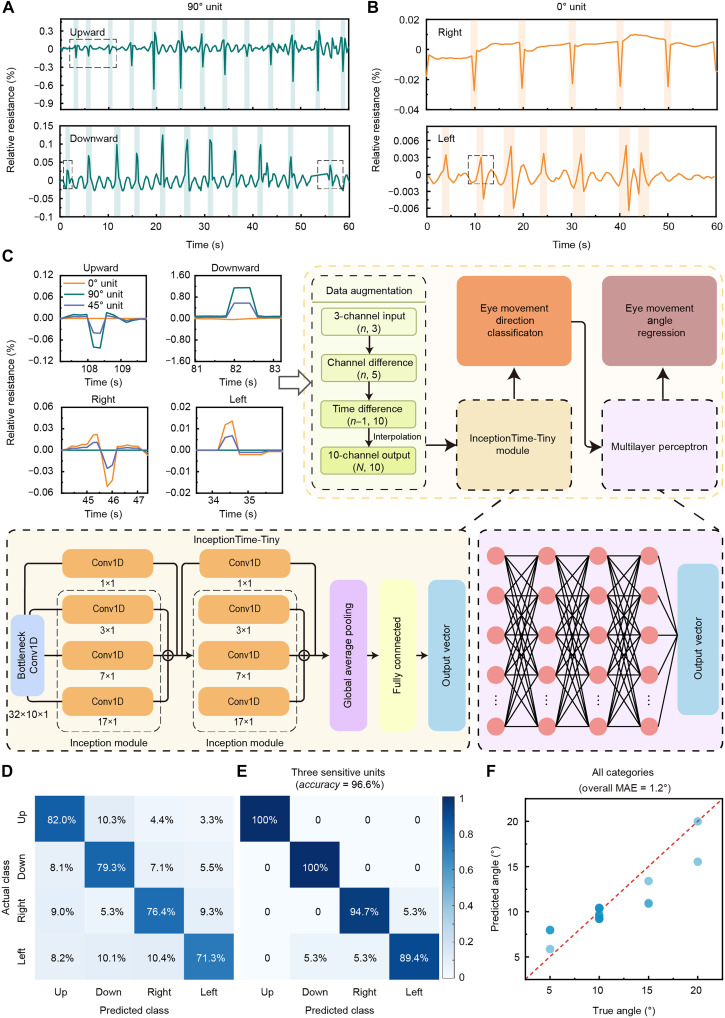 Figure 5
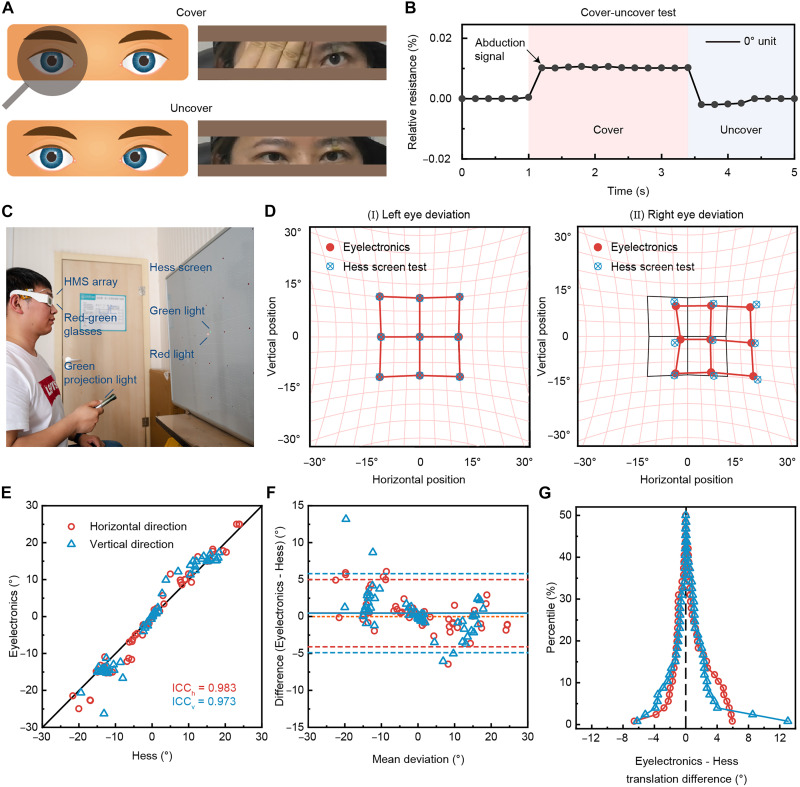 Figure 6
Peer Reviews
No public reviews on file for this paper yet. If you reviewed it on a platform where reviews are public (OpenReview, ICLR, NeurIPS, ICML), you can paste yours below so the community can read it here.
Videos
No videos yet. Explain this paper in a talk, walkthrough, or lecture? Add one.
Taxonomy
TopicsGaze Tracking and Assistive Technology · Ophthalmology and Eye Disorders · Vestibular and auditory disorders