Absence of dehydration due to superionic transition at Earth’s core-mantle boundary
Yu He, Wei Zhang, Qingyang Hu, Shichuan Sun, Jiaqi Hu, Daohong Liu, Li Zhou, Lidong Dai, Duck Young Kim, Simon A. T. Redfern, Yun Liu, Heping Li, Ho-kwang Mao

TL;DR
This study shows that water can remain stable in Earth's deep mantle due to a superionic transition, forming a long-term reservoir at the core-mantle boundary.
Contribution
The discovery of a doubly superionic transition in δ-AlOOH and its role in stabilizing water in the deep mantle is novel.
Findings
δ-AlOOH undergoes a superionic transition with highly diffusive hydrogen and aluminum ions.
Water tends to freeze under deep mantle conditions, making dehydration energetically unfavorable.
Superionic water may accumulate as a long-term reservoir at the base of Earth's mantle.
Abstract
The properties and stability of hydrous phases are crucial to unraveling the mysteries of the deep water cycle. Under deep lower mantle conditions, water and hydrous phases transition into a superionic state. However, superionic effect on their stability and dehydration behavior remains unclear. Using ab initio and deep learning potential molecular dynamics simulations, we discovered a doubly superionic transition in δ-AlOOH, characterized by the highly diffusive behavior of both hydrogen and aluminum ions within the oxygen sublattice. These highly diffusive elements contribute external entropy to the system, stabilizing the structure at 140 GPa and 3800 K. Our free-energy calculations reveal that water tends to freeze under deep lower mantle conditions, so dehydration becomes energetically and kinetically unfavorable even under core-mantle boundary (CMB) conditions. This implies that…
Genes, proteins, chemicals, diseases, species, mutations and cell lines named across the full text — each resolved to its canonical identifier and authoritative record.
Click any figure to enlarge with its caption.
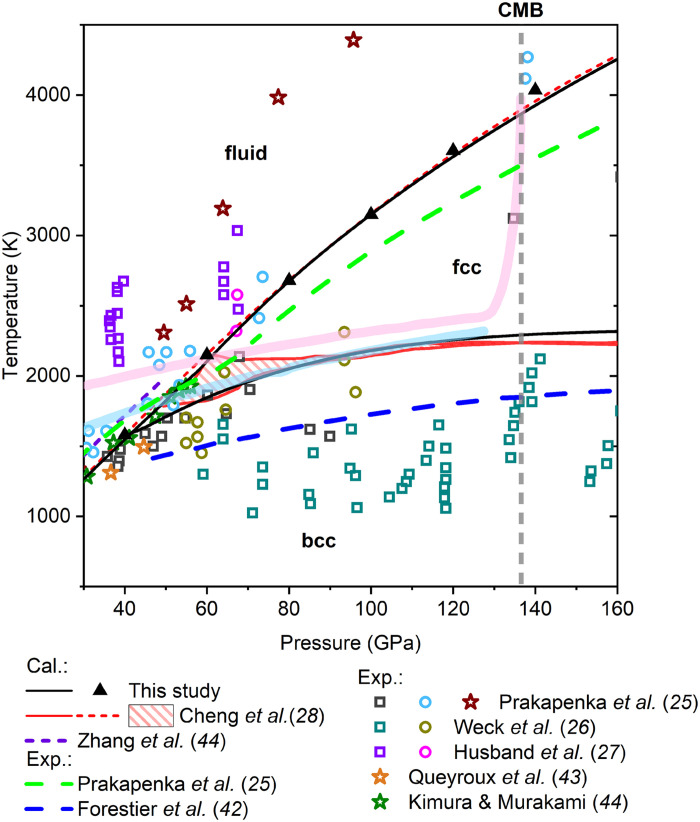 Figure 1
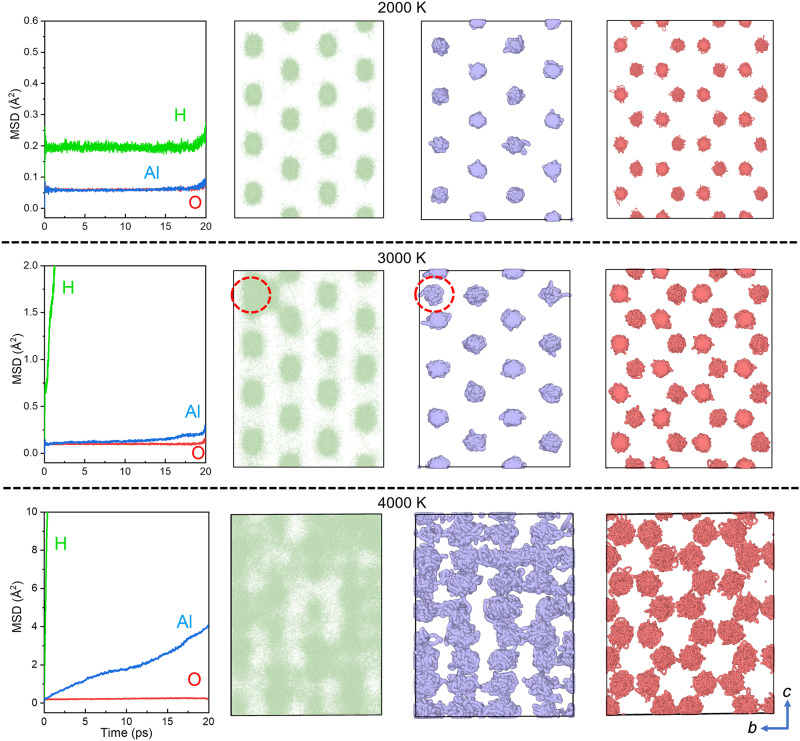 Figure 2
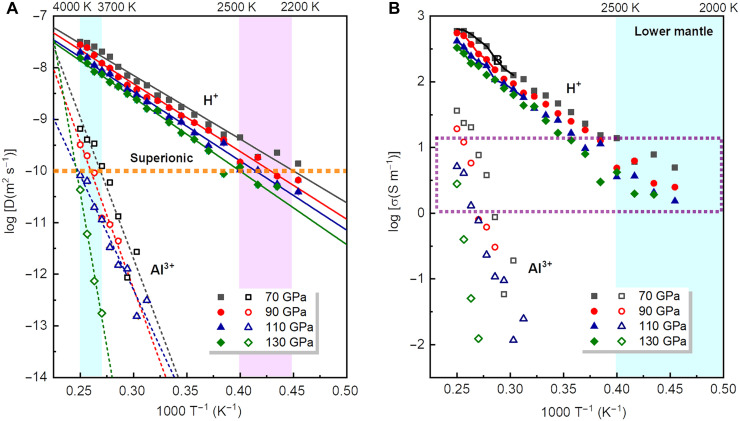 Figure 3
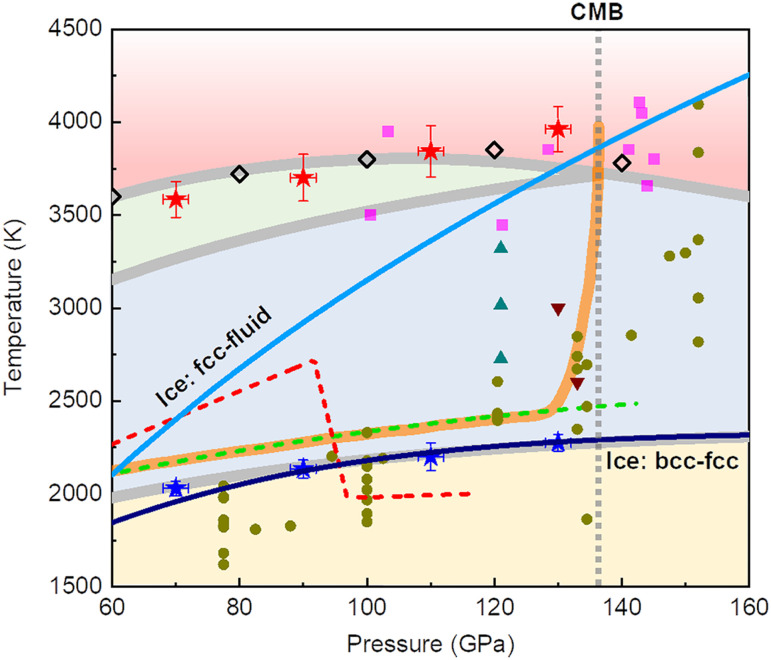 Figure 4
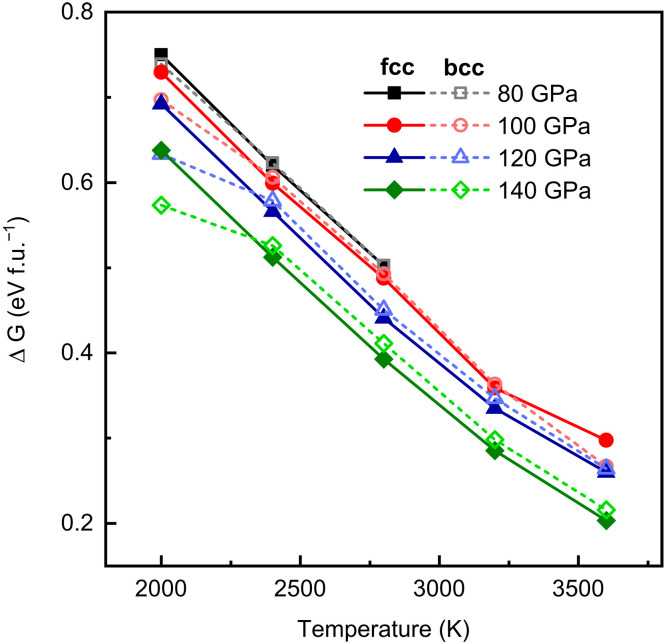 Figure 5
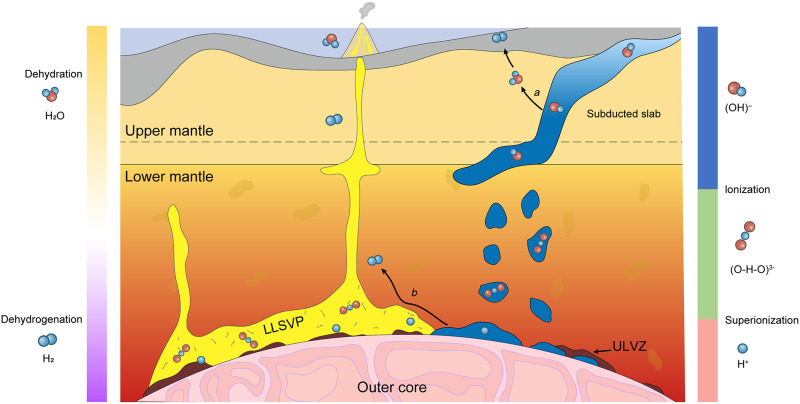 Figure 6
Peer Reviews
No public reviews on file for this paper yet. If you reviewed it on a platform where reviews are public (OpenReview, ICLR, NeurIPS, ICML), you can paste yours below so the community can read it here.
Videos
No videos yet. Explain this paper in a talk, walkthrough, or lecture? Add one.
Taxonomy
TopicsHigh-pressure geophysics and materials · earthquake and tectonic studies · Material Dynamics and Properties