Single-particle surface-enhanced coherent anti–Stokes Raman scattering: Nanoparticle design and mechanism
Sanjun Fan, Ran Cheng, Haonan Lin, Zhewen Luo, Abigail E. Smith, Chih-Feng Wang, Jinna He, Brian T. Scarpitti, Deben N. Shoup, Hannah C. Schorr, Erjun Liang, Jian Ye, Ji-Xin Cheng, Zachary D. Schultz

TL;DR
This study explores how nanoparticle design affects SECARS signals, identifying optimal shapes for high-speed Raman imaging.
Contribution
The paper identifies star-core core-satellite nanoparticles as effective for single-particle SECARS imaging.
Findings
Only star-core core-satellite NPs produced single-particle SECARS signals.
NP properties like size, morphology, and polarization influence SECARS enhancement.
Findings guide the design of NPs for biological imaging and chemical sensing.
Abstract
Surface-enhanced coherent anti–Stokes Raman scattering (SECARS) is believed to increase the signal intensity and sensitivity by combining the localized surface plasmon resonance and coherent Raman enhancement. However, the realization of SECARS is more complex than for surface-enhanced Raman scattering (SERS) and remains challenging. Unlike SERS, the nonlinear CARS process requires the coherent interaction of three distinct fields. The interactions between the electric fields and nanoparticle (NP) morphology for single-particle SECARS remain unexplored, and the underlying mechanisms generating the SECARS signal are not fully understood. Here, 27 distinct NPs were synthesized and screened using a CARS microscope. Among them, only star-core core-satellite NPs show single-particle SECARS signals, which were affected by laser polarization, two-photon luminescence background, photoinduced…
Genes, proteins, chemicals, diseases, species, mutations and cell lines named across the full text — each resolved to its canonical identifier and authoritative record.
Click any figure to enlarge with its caption.
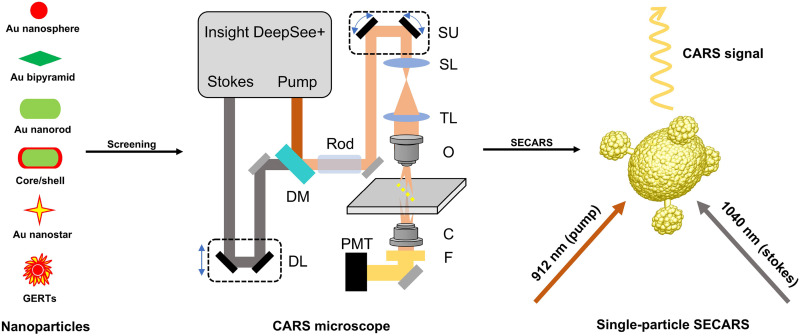 Figure 1
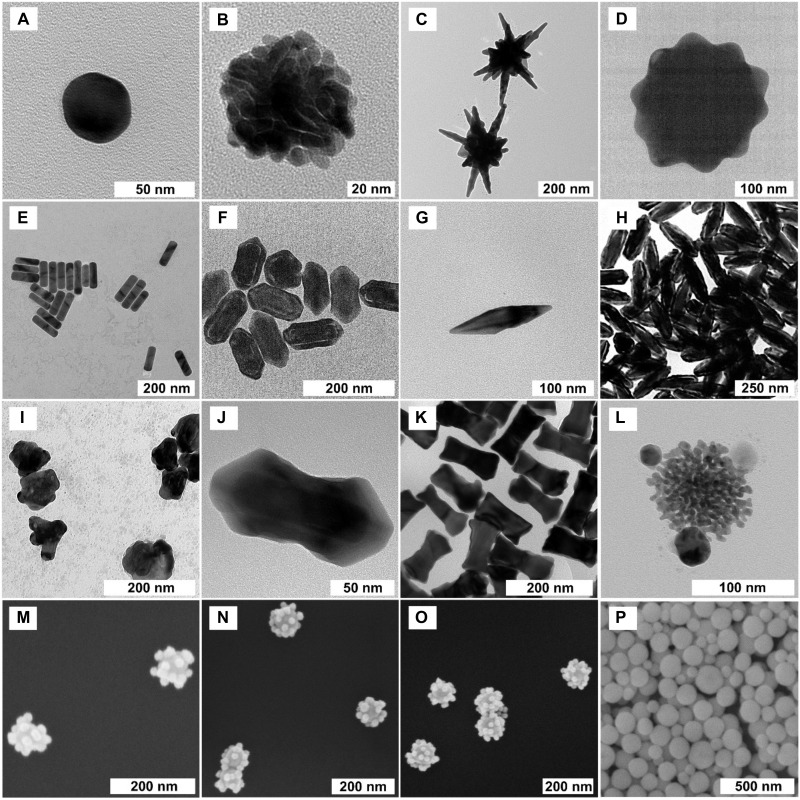 Figure 2
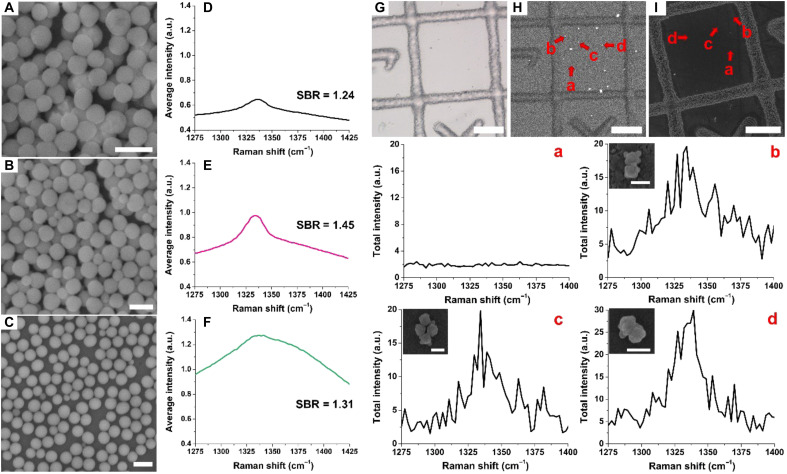 Figure 3
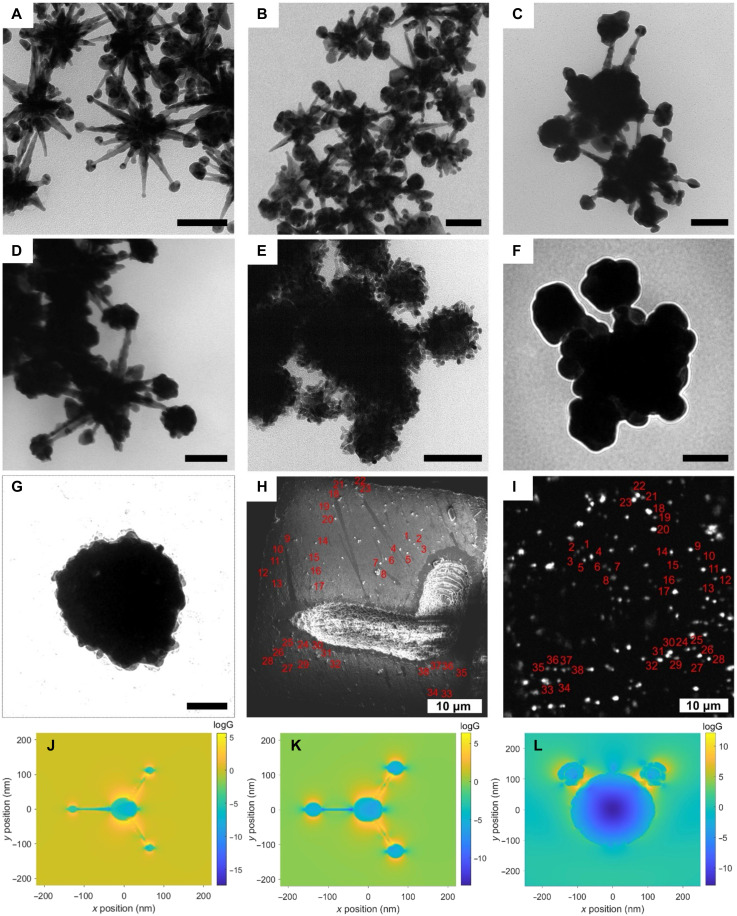 Figure 4
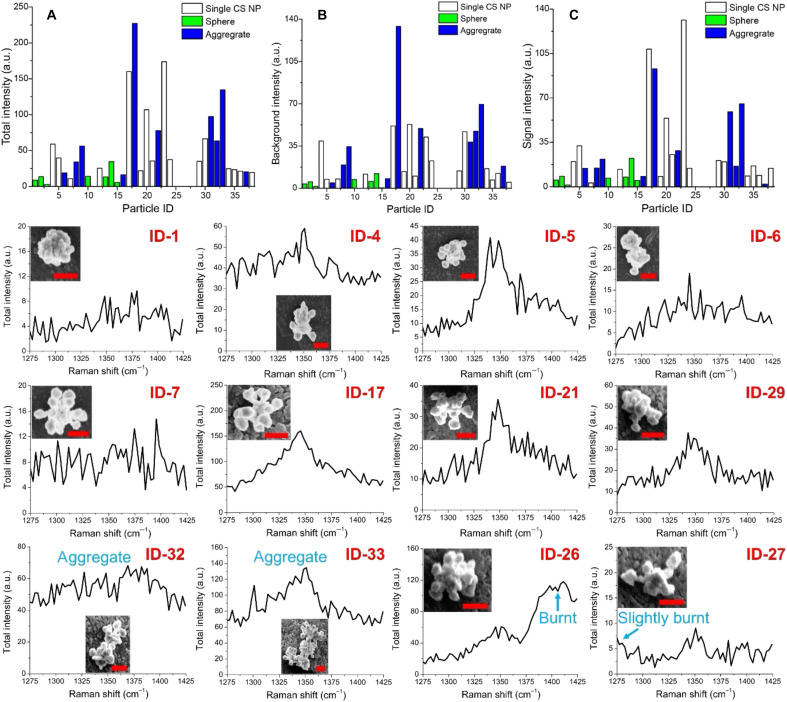 Figure 5
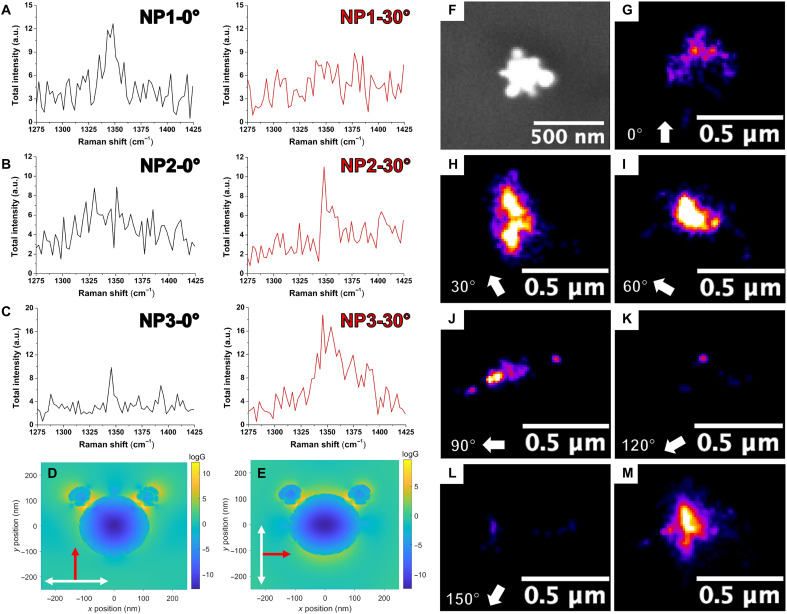 Figure 6
 Figure 7
Peer Reviews
No public reviews on file for this paper yet. If you reviewed it on a platform where reviews are public (OpenReview, ICLR, NeurIPS, ICML), you can paste yours below so the community can read it here.
Videos
No videos yet. Explain this paper in a talk, walkthrough, or lecture? Add one.
Taxonomy
TopicsGold and Silver Nanoparticles Synthesis and Applications · Spectroscopy Techniques in Biomedical and Chemical Research · Combustion and flame dynamics